Portuguese
  Spanish


Discover MODEC’s progress in the construction of the FPSO Gato do Mato. The company has completed the forward section of the hull using new global production technology.
A decisive step in the infrastructure of oil and gas exploration was taken by MODEC, with the completion of the forward section of the hull for the new floating production system (FPSO) of the Gato do Mato field.
According to PetroNotícias, the structure departed from facilities in Japan heading to a Chinese shipyard, where the final integration will take place. This project is one of the strategic bets for the Santos Basin, managed by Shell Brasil, with the participation of Ecopetrol and Pré-Sal Petróleo S.A. (PPSA).
Historically, the Gato do Mato project was consolidated from discoveries in two fronts: the BM-S-54 block, held by Shell since 2005, and the South Gato do Mato block, added to the portfolio in 2017 through production sharing.
-
This Massive 12-Meter, 21-Ton Underwater Drone Can Operate Autonomously for Up to Five Days

-
Global Shipping Faces Shortage of Certified Maritime Officers, Salaries in the U.S. Can Exceed $100,000 Annually

-
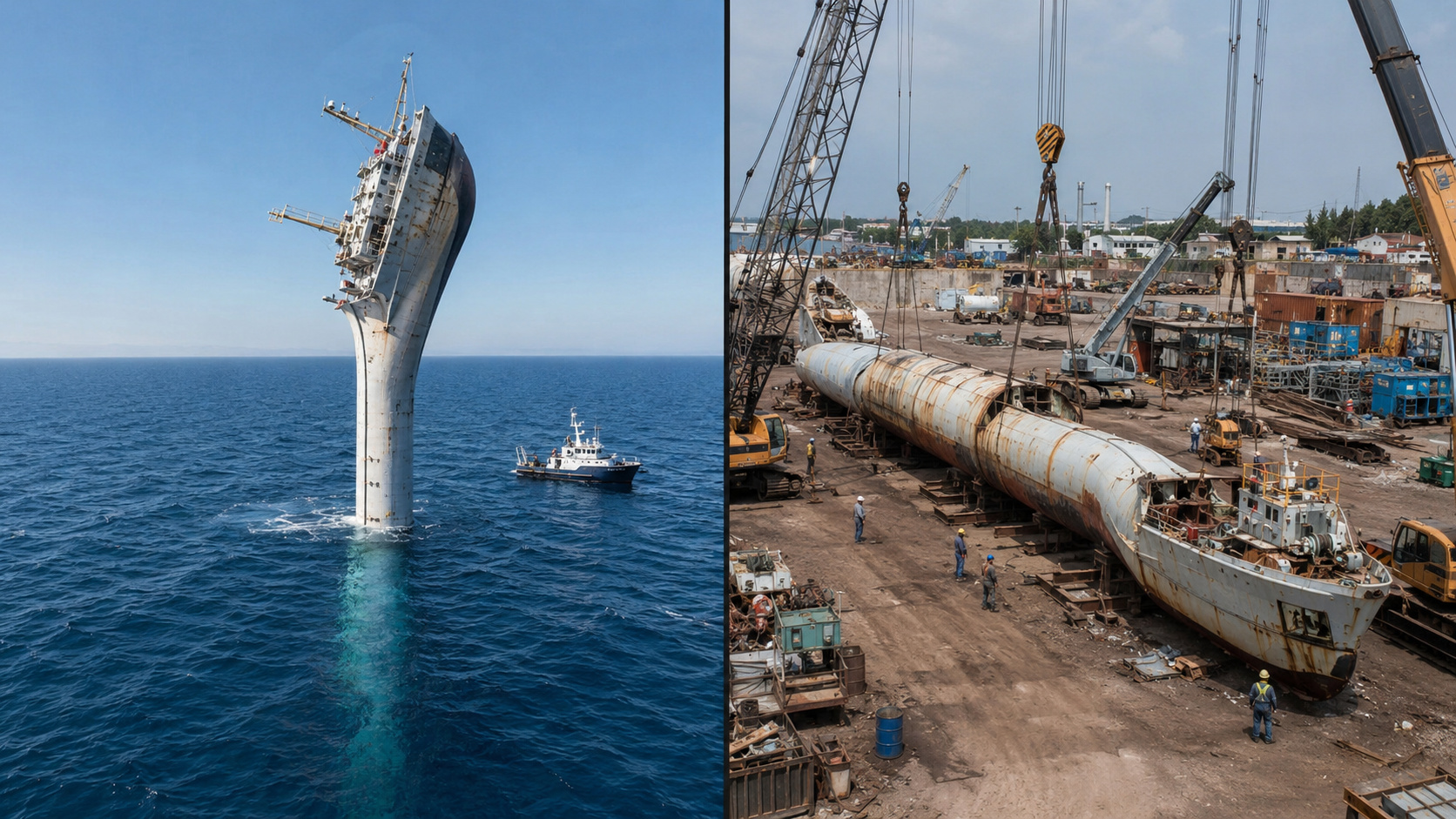
The FLIP: A 108-Meter Ocean Laboratory That Stood Vertically for 60 Years, Dismantled in 2023
-
North Korean Fiasco: Launch of the Largest Warship Ends in Sinking




MODEC acts as a key player in this operation, being responsible for delivering its 19th production or storage unit for Brazil and the second directly for Shell in the country.
The NGH design differential of MODEC
The unit under construction is pioneering in the application of the “Next Generation Hull” (NGH) concept, a proprietary technology of the Japanese company.
This design was created to bring more flexibility and efficiency to the construction of high-complexity offshore assets.
The strategy reflects a new phase of execution, in which MODEC adopts manufacturing in multiple shipyards, increasing its global delivery robustness.
The assembly of the FPSO Gato do Mato follows a construction model distributed among different shipyards.
The next stage will occur in China, where the forward section of the hull, manufactured at the Yokosuka shipyard of Sumitomo Heavy Industries Marine & Engineering (SHI-ME), in Japan, will be integrated with the rear part of the structure. After this union, the complete hull will advance to the next phases of construction.
“The milestone represents more than the completion of an important section of the hull. It demonstrates how innovation and collaboration are shaping the future of FPSO construction,“ stated Soichi Ide, director of MODEC’s Floating Production Solutions business unit.
“By partnering with SHI-ME for the first time for the construction of an FPSO hull and adopting a multi-shipyard construction model, we are implementing a new approach to hull fabrication, which expands execution flexibility and strengthens our global delivery capability,“ he added.
Technical data of the project
The FPSO Gato do Mato is designed to operate in extreme conditions, ensuring safety and efficiency in the flow of condensate gas from the pre-salt.
The structure will feature cutting-edge specifications to sustain a productive long-term lifespan:
- Production capacity: About 120 thousand barrels of oil per day.
- Anchoring technology: Spread mooring system designed by SOFEC.
- Positioning: Approximately 200 kilometers south of the coast of Rio de Janeiro.
- Operational environment: Water depth of approximately 2 thousand meters.
The movement of the forward section from the Yokosuka shipyard in Japan to a shipyard in China for final assembly illustrates the level of coordination required for projects of this magnitude.
MODEC uses this global logistics model to overcome limitations and optimize the unit’s delivery schedule.
Impact of MODEC in the Santos Basin
The integration of the hull is just one of the critical phases of this enterprise.
The company’s ability to manage complex supply chains between Japan and China ensures that the Gato do Mato project remains aligned with the contractual commitments made with the consortium led by Shell.
Therefore, while the hull heads towards China, the energy sector observes the use of NGH as a potential standard for future FPSO constructions.
Source: PetroNotícias