Portuguese
  Spanish


USS Alexandria concludes 35 years of operations after 14 deployments, missions in the Arctic, Middle East, and Indo-Pacific.
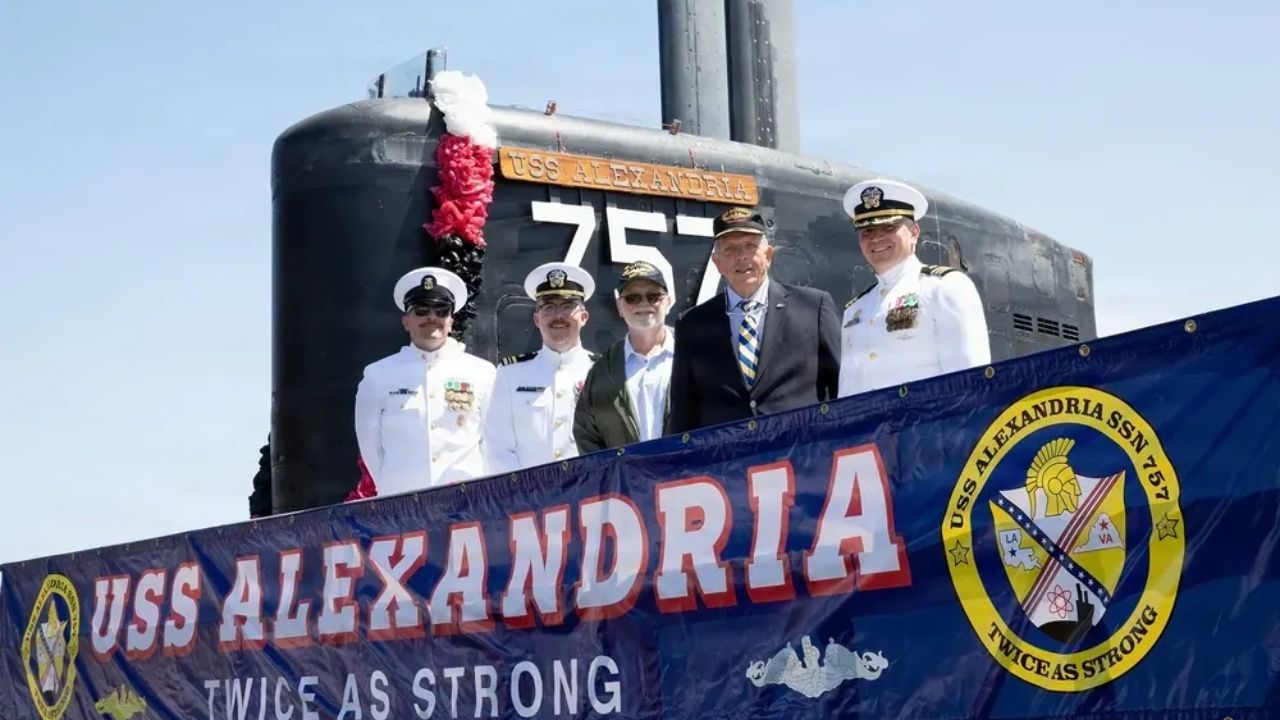
The Navy of the United States concluded, on June 29, 2026, the operational trajectory of the USS Alexandria, a nuclear attack submarine that remained active for 35 years and accumulated more than one million miles sailed. The deactivation ceremony took place at Naval Base Point Loma, in San Diego, exactly on the anniversary of the vessel’s commissioning.
According to Naval Power, current and veteran crew members, members of the first team, former commanders, family members, and guests participated in the farewell. After the ceremony, the submarine will proceed to the Puget Sound Naval Shipyard, in the state of Washington, where it will undergo the formal decommissioning stages.
The departure of the Alexandria represents another move in the gradual reduction of the Los Angeles class fleet, progressively replaced by more recent Virginia class submarines.
-
MODEC Introduces New Hull Design for FPSO Gato do Mato to Produce Up to 120,000 Barrels of Oil Per Day in Brazil’s Pre-Salt Region

-
This Massive 12-Meter, 21-Ton Underwater Drone Can Operate Autonomously for Up to Five Days

-
Global Shipping Faces Shortage of Certified Maritime Officers, Salaries in the U.S. Can Exceed $100,000 Annually

-
The FLIP: A 108-Meter Ocean Laboratory That Stood Vertically for 60 Years, Dismantled in 2023


Farewell date repeated the commissioning day
The calendar gave a symbolic character to the end of the submarine’s career.
The USS Alexandria officially entered service on June 29, 1991. Thirty-five years later, on the same day, the U.S. Navy gathered different generations of sailors to mark the end of its operations.
Rear Admiral Todd Weeks, who commanded the submarine between 2011 and 2013, participated in the ceremony and highlighted the accumulated contribution of the vessel and its crews over more than three decades.
The tribute was not limited to the hull or equipment. The gathering also recognized the military personnel who worked on board during missions carried out in different regions of the world.
Submarine completed 14 deployments abroad
Throughout its career, the Alexandria carried out 14 deployments outside the United States.
The operations took the vessel to the Mediterranean Sea, Persian Gulf, Arctic Ocean, and Indo-Pacific. The variety of destinations shows how the submarine was employed in different phases of U.S. naval strategy.
Among the main records of the trajectory are:
- a world tour conducted in 2004;
- crossing the Arctic during this commission;
- support for Enduring Freedom and Iraqi Freedom operations;
- participation in exercises in polar regions;
- security missions in the Indo-Pacific;
- more than one million miles traveled.
These activities spanned the post-Cold War period, the conflicts in the Middle East, and the increasing military focus on the Indo-Pacific.
The 2004 world tour became part of the vessel’s history
One of the most remarkable episodes occurred in 2004, when the USS Alexandria completed a commission around the globe.
The journey included a passage through the Arctic region, an environment that requires specific preparation due to navigation conditions and long periods of operation under the ice.
The mission reinforced the submarine’s ability to remain distant from its base and operate in geographically distinct areas.
The Arctic would again become part of its history in later exercises, while the Mediterranean, the Persian Gulf, and the Indo-Pacific concentrated other missions over the years.
Alexandria was designed to operate unnoticed
As a fast attack nuclear submarine, the Alexandria had functions that went beyond combat against other submerged vessels.
Its design allowed it to perform attack missions, gather intelligence, and support naval forces in different scenarios.
Main capabilities of the USS Alexandria
- locate and engage adversary submarines;
- combat surface ships;
- strike land targets with Tomahawk missiles;
- support special operations units;
- conduct intelligence, surveillance, and reconnaissance;
- escort naval battle groups.
Nuclear propulsion gave the submarine the ability to remain submerged for extended periods, an essential characteristic for discreet missions.
Much of its work occurred without public exposure, due to the nature of submarine operations.
Operations that marked part of the career
The Alexandria was involved in actions related to Operations Enduring Freedom and Iraqi Freedom.
These missions integrated the submarine into the United States’ military strategy during the conflicts and operations conducted in the Middle East.
Due to its capability to launch missiles against land targets, gather information, and monitor naval movements, fast attack submarines perform different functions within a broader operation.
The use of the USS Alexandria in these scenarios shows how the vessel was adapted to the needs of each period, even though it was built in the final context of the Cold War.
Indo-Pacific gained importance in recent years
In the more recent periods of its trajectory, the submarine also participated in security missions in the Indo-Pacific.
The region has taken on an increasing role in the United States’ defense planning, and fast attack nuclear vessels have become important assets for presence, surveillance, and support to other naval units.
The Alexandria remained attached to the Commander, Submarine Squadron 11, based in San Diego. The squadron gathers Los Angeles-class nuclear submarines, which continue to operate even with the gradual introduction of Virginia-class models.
Name honored two American cities
The submarine was the third ship of the United States Navy to be named Alexandria. The tribute referred to two cities: Alexandria, in the state of Virginia, and Alexandria, in Louisiana.
The motto “Twice as Strong” was related to this dual origin. The USS Alexandria was the 46th unit built within the Los Angeles class, one of the most numerous and influential submarine families of the U.S. naval force.
Los Angeles class loses another unit
The deactivation is part of a broader process of fleet renewal. The Los Angeles submarines are being gradually retired, while Virginia-class units are taking on an increasing role in operations.
Even with this replacement, the older class remains relevant due to the number of vessels built and the role played over decades.
Their submarines participated in missions in different oceans and accompanied significant changes in United States defense policy. The withdrawal of the Alexandria reduces the number of available units, but does not immediately end the class’s presence in the fleet.
Next step will be decommissioning
The ceremony in San Diego marked the operational deactivation, but the administrative and technical process will still continue. The submarine will be taken to the Puget Sound Naval Shipyard, in Washington, to undergo formal decommissioning.
This phase occurs after the vessel ceases to carry out missions and ends its active connection with the squadron. The transfer to the shipyard opens the last chapter of a journey that began in 1991.
When it entered service, the international scenario still bore the effects of the end of the Cold War. In the following decades, the submarine was employed in operations in the Middle East, exercises in the Arctic, and missions in the Indo-Pacific.
This sequence shows how the same naval platform can go through profound strategic changes. Upon leaving service, the USS Alexandria ends a career defined less by public appearances and more by long periods submerged, distant patrols, and operations carried out away from the public eye.
The numbers summarize part of this legacy: 35 years of activity, 14 international deployments, and more than one million miles traveled before the final journey to the Washington shipyard.
With information from Poder Naval