Portuguese
  Spanish


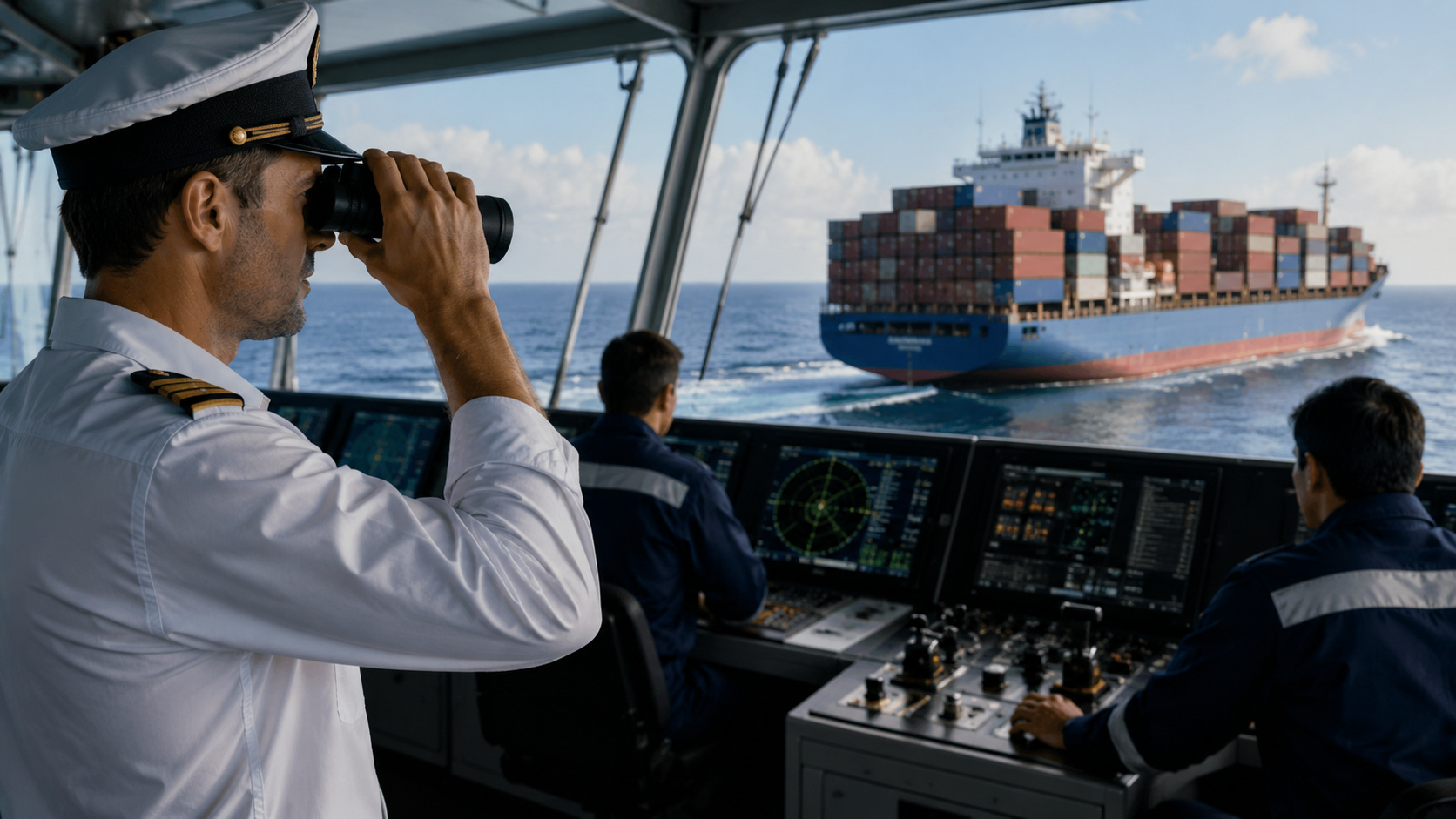

The maritime industry faces a global shortage of officers, while salaries for naval engineers and onboard officers exceed US$ 100,000 per year.
Almost everything that reaches supermarkets, supplies factories, moves fuels, transports grains, ore, and containers between continents passes by sea. The UNCTAD itself states that more than 80% of the volume of international merchandise trade is transported by sea, highlighting the global dependency on commercial navigation. Behind this mechanism lies a profession little known outside the sector but crucial for the functioning of the world economy.
Deck officers, engine officers, commanders, and chief engineers keep ships operational, oversee safety, navigation, propulsion, and technical routines of vessels that sustain entire production chains. Check out the details about the shortage of maritime officers.
Shortage of maritime officers has become a global problem for the merchant fleet
The lack of qualified maritime labor is no longer a concern restricted to the naval sector and has become a strategic bottleneck for global trade.
-
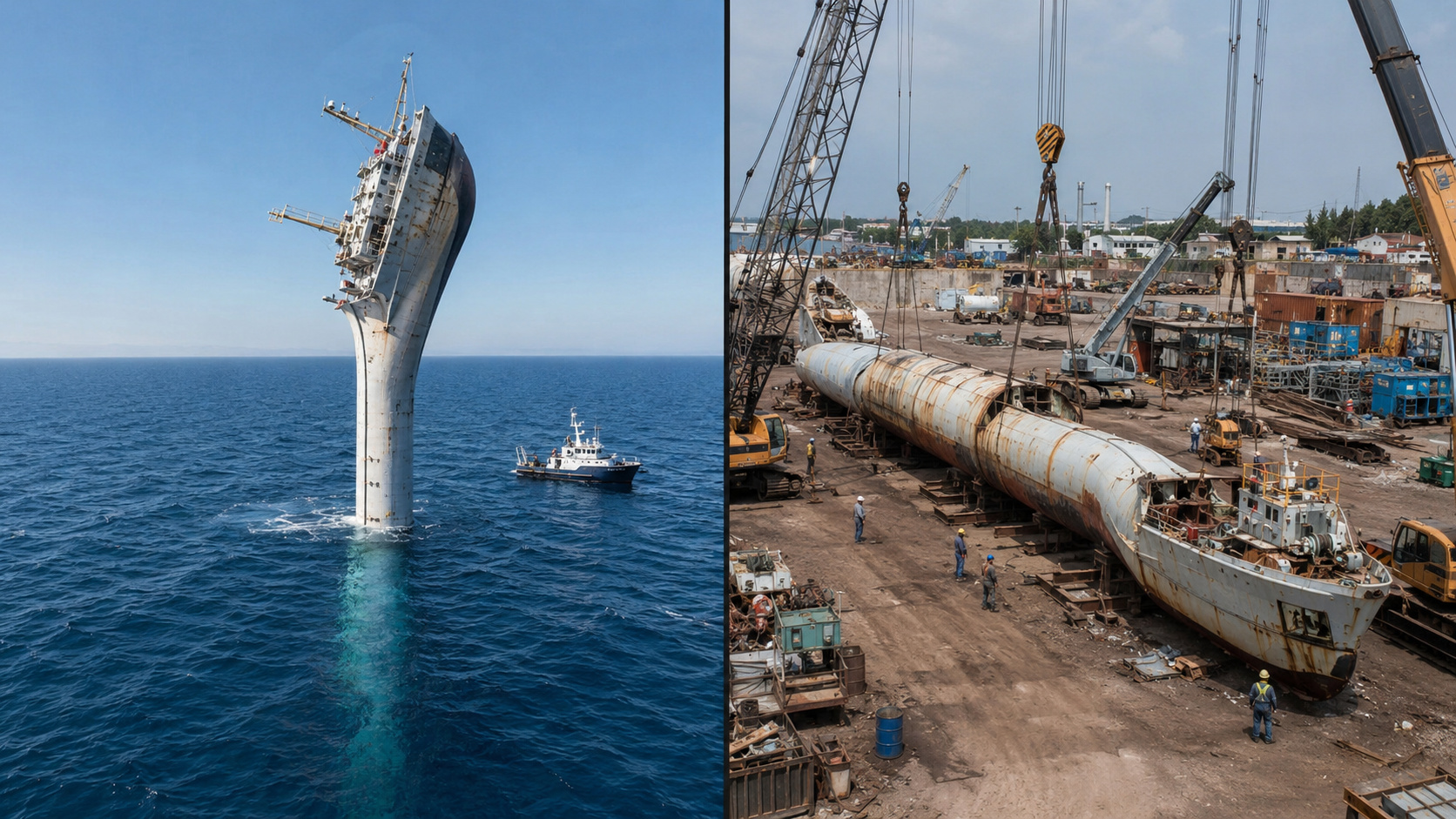
The FLIP: A 108-Meter Ocean Laboratory That Stood Vertically for 60 Years, Dismantled in 2023

-
North Korean Fiasco: Launch of the Largest Warship Ends in Sinking

-
While giant ships still burn heavy fuel and the maritime sector races against climate targets, Maersk and Vale are starting to bet on ethanol as a new route to reduce emissions at sea.

-
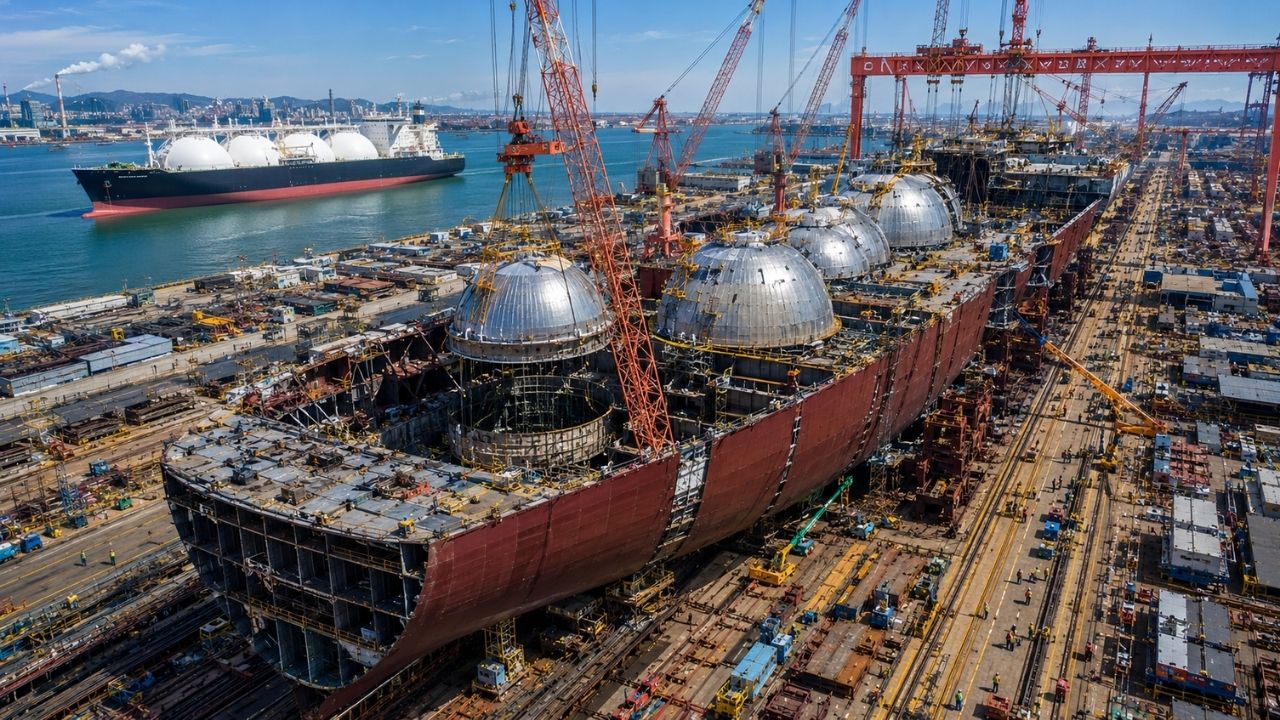
China begins construction of the world’s largest LNG ship, a 344-meter giant capable of supplying 4.7 million homes for a month, carrying 271,000 m³ of gas, and placing QatarEnergy in the largest naval order ever recorded in world history.


On June 25, 2026, BIMCO and the International Chamber of Shipping, the ICS, announced that the global merchant fleet will need 113,735 additional officers by 2030 to meet projected demand.
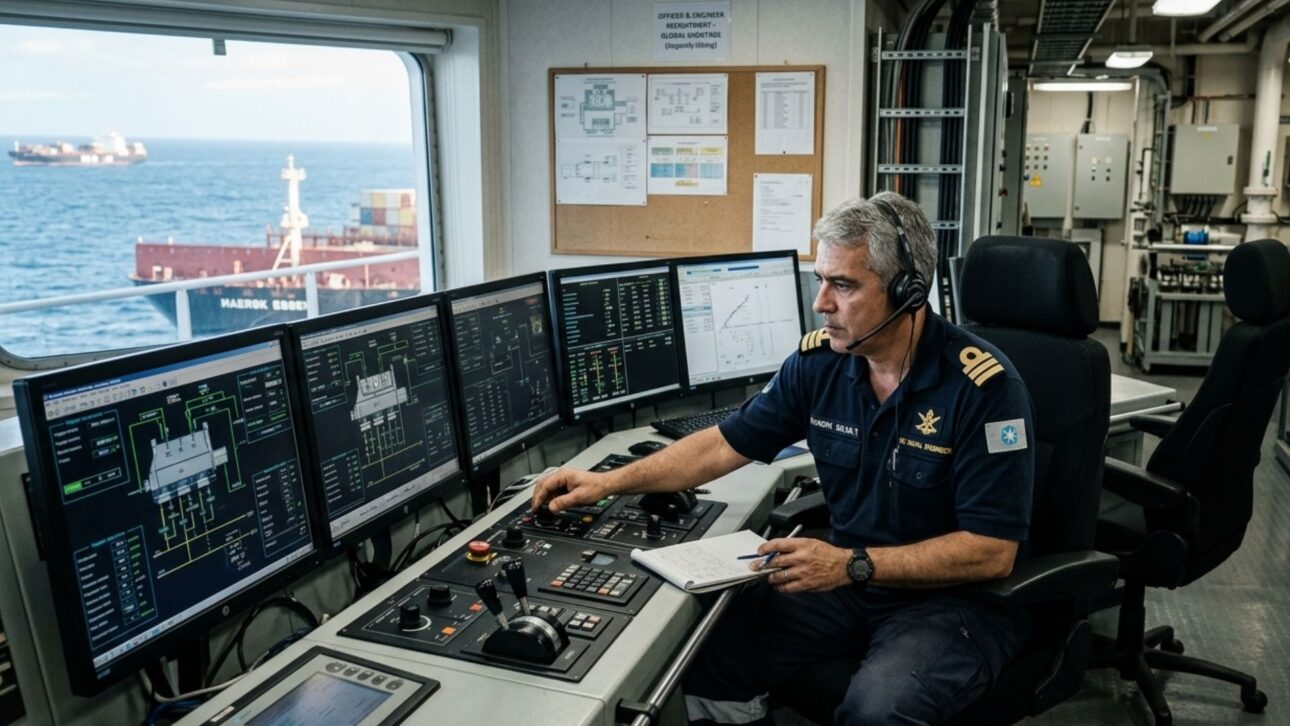
The same survey estimates that the sector is already facing a deficit of 39,100 officers certified by the STCW standard in 2026, while the global maritime workforce totals 2.57 million seafarers operating 85,148 merchant ships worldwide.
This scenario helps explain why the shortage has ceased to be just a recruitment issue. When there are not enough officers capable of operating the fleet, the problem affects shipowners, ports, exporters, importers, and the entire logistics chain that depends on maritime transport to continue functioning.
Salaries in maritime transport exceed US$ 100,000 and show the weight of the career
Although still little known outside the sector, the role of ship engineer is among the highest paid in water transportation in the United States. In the Occupational Outlook Handbook, the Bureau of Labor Statistics reports that the median annual salary of these professionals was $101,320 in May 2024.


In the same survey, the group of captains, mates, and pilots of water vessels recorded a median annual salary of $85,540. Meanwhile, the set of water transportation workers had a median of $66,490, while the top 10% highest paid in the sector earned above $139,270 per year.
These numbers show that roles with greater technical and operational responsibility can offer high remuneration, especially in positions that require command, certification, onboard experience, and mastery of critical vessel systems. The salary data does not eliminate the shortage but highlights the strategic value of these roles.
Maritime profession remains little known despite driving the world’s economy
Even though it is essential for global supply, the profession remains practically invisible to a large part of the people. Maritime transport supports the international flow of goods on a massive scale, but the professionals responsible for operating this structure rarely appear at the center of the public debate on the labor market.

The BLS highlights that water transportation workers often spend weeks or months away from home, onboard and in an intense work regime. The routine involves continuous operation, attention to safety, equipment monitoring, technical coordination, and prolonged coexistence on board.
In practice, it is a demanding, specialized, and highly responsible career. These professionals keep ships operating on routes that connect industrial centers, export ports, energy terminals, and international supply chains.
Demand for maritime officers grows with larger fleets and more complex ships
The pressure on maritime labor does not stem solely from the growth of trade. According to BIMCO and ICS, the demand for certified seafarers has increased 35% since 2021, with a rise of 23.1% in the demand for officers and 46.3% in the demand for ratings, the other operational categories on board.
At the same time, the sector operates in an increasingly technical environment. The expansion of the merchant fleet, the modernization of vessels, and the need to adapt to new operational standards increase the importance of professional qualification and make it difficult to quickly replace this workforce.
This explains why the shortage is so concerning. It is not enough to hire more people; it is necessary to train professionals capable of taking on critical roles on board, meeting technical requirements, and operating vessels in an industry that remains central to international trade.
Lack of maritime officers can affect supply, costs, and global chains
When there is a shortage of certified officers, the impact is not limited to the deck or the engine room. The potential consequence spreads across entire production chains because maritime transport remains the backbone of the global circulation of goods.
If the supply of professionals does not keep up with the fleet’s growth, sectors that rely on ships to transport containers, grains, fuels, fertilizers, ore, and industrial cargo may face more operational pressure, capacity constraints, and higher costs along the logistics chain. This relationship is consistent with the structural importance of maritime transport in world trade and the deficit highlighted by BIMCO and ICS.

Therefore, the shortage of maritime officers is not just a recruitment problem for the naval sector. It has become a topic of competitiveness, operational safety, and logistical resilience in a world that remains deeply dependent on the sea for supply.
Maritime career remains essential while the world discusses other professions of the future
While much of the work discussions focus on artificial intelligence, automation, and digital professions, a technical and strategic career continues to struggle to attract new professionals on a sufficient scale.
The paradox is clear: the more the world relies on global logistics, the more critical the lack of people capable of commanding and operating the ships that keep this structure standing becomes.
The latest data shows that the profession is neither secondary nor peripheral. It combines relevant remuneration in specific roles, high technical demand, and a central role in supporting international trade. Nevertheless, it remains distant from the visibility that usually accompanies other strategic careers.
The question, therefore, is no longer just where to find new maritime officers. The point now is how the world will train, retain, and renew the workforce responsible for operating the merchant fleet in the coming decades.