Portuguese
  Spanish


At Lake Pend Oreille, submarine tests use deep and quiet waters to measure noise, compare designs, and avoid some ocean costs
The submarine tests of the United States Navy are also conducted in a lake in inland Idaho. Lake Pend Oreille is over 350 meters deep and offers an environment that helps isolate the noises produced by submerged vessels.
An institutional publication from September 13, 2022 presented the facilities and tests conducted at the lake. The information was released by NAVSEA, the United States Navy’s organization responsible for naval systems.
The choice matters because sound in water can be measured more clearly when it is not mixed with other noises. The hull, the propeller, and the mechanical parts generate vibrations that help technicians evaluate a design before a larger testing phase.
-
British Factory Transitions from Mechanical Parts to Producing 420,000 Electric Power Units Annually, Supplying 70% of Ford’s Electric Cars Sold in Europe

-
France Launches Network to Recycle 20 Million Cookware Pieces by 2027, Accepting All Brands for Aluminum and Coating Separation
-
Nuclear Submarine USS Alexandria Retired After 35 Years, Having Completed Over 1 Million Miles in Missions

-
MODEC Introduces New Hull Design for FPSO Gato do Mato to Produce Up to 120,000 Barrels of Oil Per Day in Brazil’s Pre-Salt Region


A deep and quiet lake improves underwater listening
A lake is not free of sounds, but it has fewer noise sources compared to the open sea. Lake Pend Oreille is presented by the Navy as the largest, deepest, and quietest body of water in Idaho.
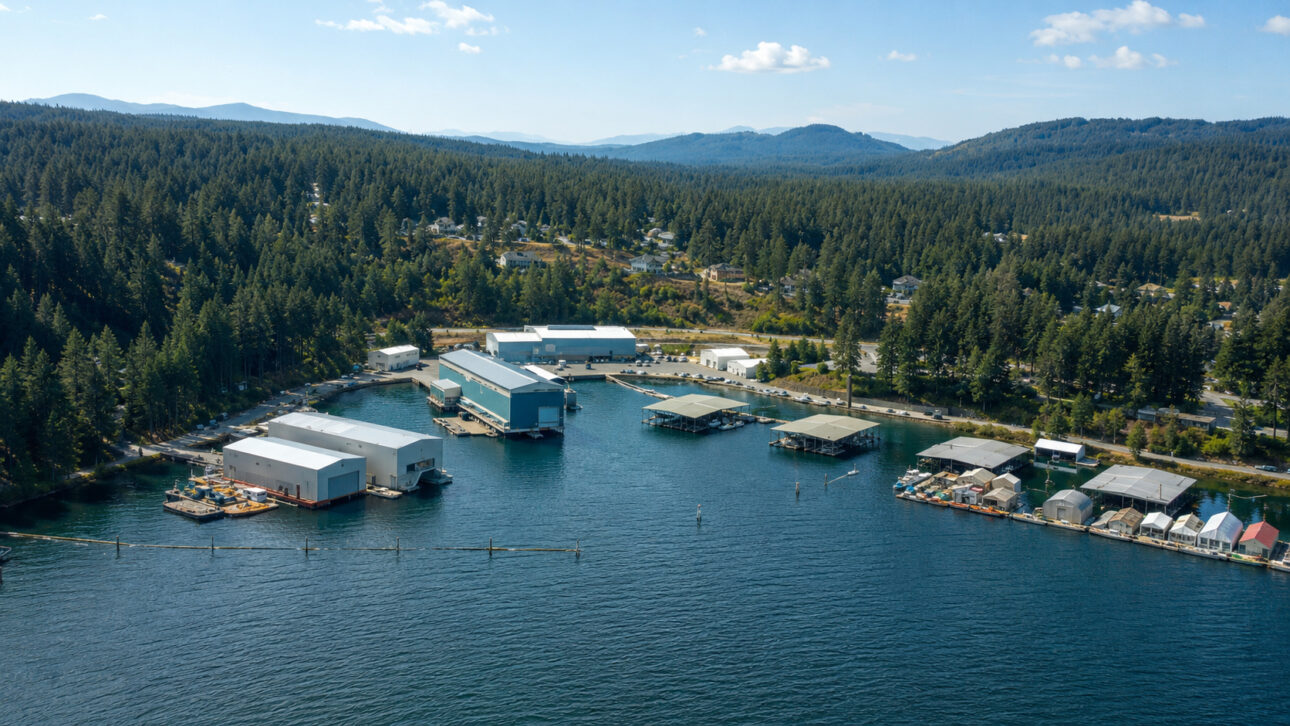
In testing conditions, boat traffic and bad weather can still interfere with measurements. Therefore, a relatively quiet area helps separate the model’s sound from the noise coming from the environment.
Acoustic signature is the sound mark that a vessel leaves in the water
Acoustic signature is the set of sounds and vibrations that a submarine, a ship, or a submerged equipment produces in the water. It is not a single sound, but the combination of signals generated by the movement and parts of the vessel.
The analysis includes the radiated noise, which is the sound that leaves the vessel and spreads through the water. These measurements help identify design features that need adjustment.
Hull, propeller, and internal vibrations can change test results
Hull is the outer part that forms the body of the submarine. Propeller is the assembly that moves the vessel in the water. The geometry of these parts and the vibrations of the machines change the way sound spreads.
The detachment’s work includes research on propellers, structural acoustics, and acoustics in water. In simple terms, these areas observe the sounds related to the structure, moving parts, and the vessel’s contact with the water.
Measuring these differences in models allows for evaluating changes before taking the design to larger-scale tests.
The lake avoids some problems and costs of an ocean operation
NAVSEA, the United States Navy organization responsible for naval systems, details that Lake Pend Oreille offers a suitable environment for acoustic tests without some of the problems and costs of operations in the open ocean.
This does not mean that the sea ceases to be important. The lake serves as a controlled step between smaller experiments and full-scale vessel evaluations, reducing the difficulty of repeating measurements in similar conditions.
In open sea, boats and weather can contaminate the data. In the lake, the team focuses the analysis on the effect of the hull, the propeller, and other sound-generating parts.
Submarine models help test changes without using a complete vessel
The structure in Bayview uses large-scale submarine models, test areas, and equipment to measure sound. These smaller versions preserve important characteristics of the submarine and make it possible to analyze components before using a complete vessel.
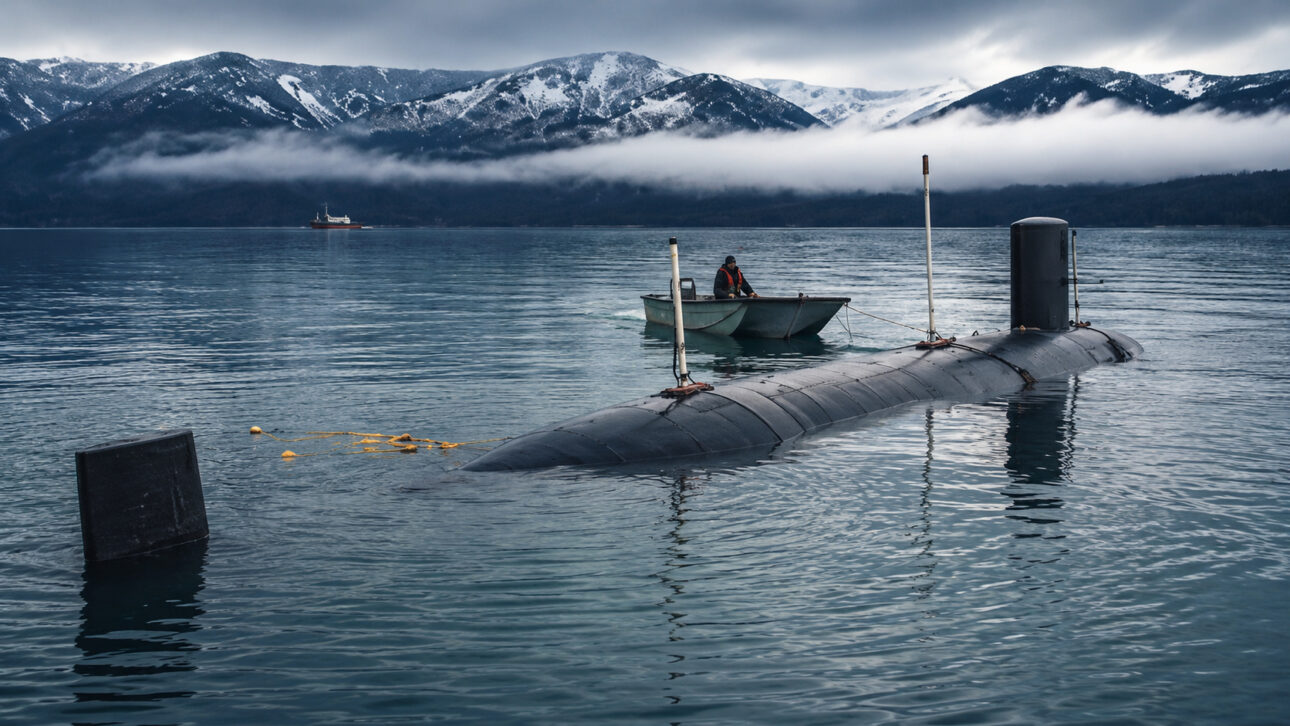
Among the work are propeller research and acoustic transducer calibration. An acoustic transducer is a device that emits or captures sound in the water, useful for making measurements more precise.
Previous experiments contributed to the design of propellers, parts related to sonar, and to avoiding costs in submarine construction. Sonar is a device that uses sound to detect objects underwater.
The same care with noise applies to ships and submerged equipment
Outside the military environment, the same principle of measuring noise and vibration can be useful for evaluating ships, research equipment, and other devices operating underwater. Acoustic engineering allows for the observation of sounds, vibrations, and failures before they become a bigger problem.
The facility also works with private organizations and academic research, in addition to groups linked to the Navy. The institutional material does not point to a specific commercial product that has emerged from these tests.
The choice of Lake Pend Oreille shows that naval engineering does not rely solely on the ocean to study submarines. More than 350 meters deep and a quieter environment help measure sounds that could be lost in noisier conditions.
For those outside the naval area, the idea is simple: before a vessel goes to sea, models and instruments allow for listening, comparing, and correcting details that affect underwater operation.
Do you think a deep lake can offer answers that the ocean hides? Tell us in the comments and share this story with those who love engineering and technology.