






 Portuguese
  Spanish
 4 min of reading
  0 comments


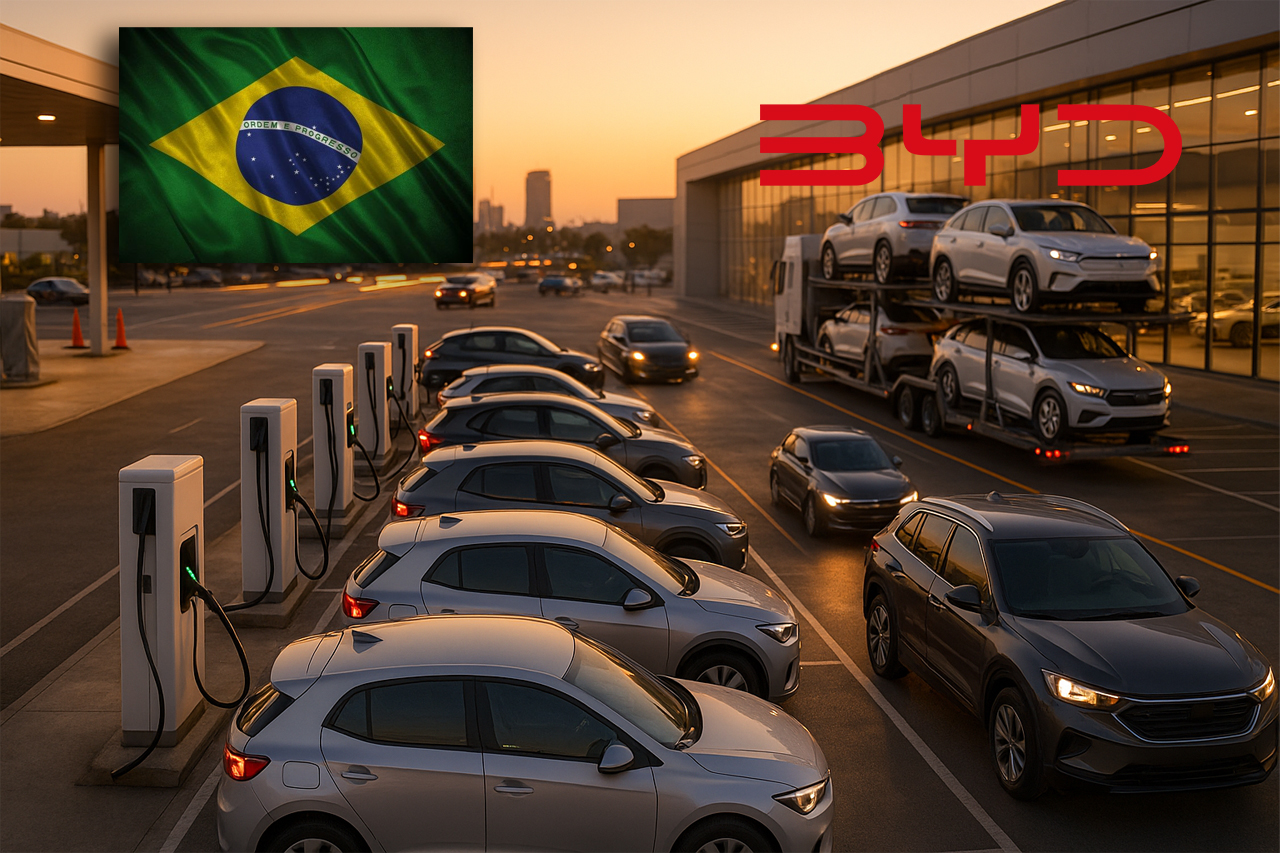
BYD Accelerates Expansion In Brazil With 180+ Active Stores And Goal Of 250 By December, With More Charging Points And The Camaçari Plant, Prices And Availability Are Expected To Improve For Those Who Want To Migrate To An Electric.
BYD is going through an aggressive expansion phase of its dealership network, with more than 180 active stores and a public goal of reaching 250 by the end of 2025, according to the company itself. The progress is not limited to the capitals: the strategy is to bring showrooms, test drives, and after-sales to regional hubs and mid-sized cities, bringing electric vehicles closer to the daily lives of Brazilian consumers. According to recent statements from BYD Brazil, this reach is a central part of the plan to consolidate the brand in the country.
This broader geography improves the shopping experience and reduces practical barriers. More stores mean more demonstration cars, more workshops, and shorter wait times for services and deliveries. BYD claims that the network, combined with a wide portfolio, has been decisive for the market shift towards electrified vehicles.
Beyond the showrooms, this internalization creates a trust effect. Consumers who previously only saw electric vehicles on social media begin to test, compare, and talk with local owners. In emerging markets, this proximity tends to accelerate the adoption of new automotive technologies, and BYD makes this a competitive advantage.
-
Uber Faces Shareholder Scrutiny as Board Accused of Ignoring Safety, Compliance, and Harassment Warnings Amid Over 3,500 U.S. Lawsuits

-
Ferrari’s First Electric Car Divides Fans, Priced at $630,000, Amid Concerns Over Limited Editions; Brand Clarifies It’s Not Just for Future Perks
-
BYD Dolphin Mini: The Electric Car That Defies Depreciation, Losing Only 3.58% in a Year and Becoming the Best-Selling Retail Model Under $22,000

-
Electric Car JAC E-JS4 Loses $19,000 in Value in One Year, Leading Record Depreciation of Used Cars in Brazil Due to Expensive Battery and New Models


Why BYD’s Network Expands: Demand For Electric Cars
The jump in stores responds to a demand that has grown consistently. BYD surpassed 150,000 electrified vehicles sold in three years in Brazil, a milestone celebrated this month, and reports comfortable leadership among pure electric vehicles and significant participation among hybrids. In official communications, the company emphasizes that, by 2025, eight out of every ten electric cars sold in the country will be from the brand, as well as three out of every ten hybrids.
Independent indicators help contextualize this leadership. In January 2025, for example, BYD achieved about 68% of the BEV electric market in Brazil, according to an industry survey published by InsideEVs based on licensing data. The reading is clear: there is room to grow outside the capitals, and the network follows this demand.
The result is also reflected in the overall retail of automobiles. In May, the brand reached the top 5 in sales in the country, a move that pressures competitors to rethink prices and strategies for 2025 and 2026. For consumers, competition often means more supply and more aggressive commercial conditions.
BYD’s Charging Infrastructure Helps Internalization
A network of stores only works with available charging. In February 2025, Brazil had 14,827 public and semi-public charging stations, with presence in 25% of municipalities, according to data released by ABVE. Recent progress has not been trivial: the number of points grew significantly from the end of 2024 to 2025, expanding travel corridors and user confidence.
Besides quantity, the quality of charging is evolving. There is a faster expansion of fast DC chargers, essential for intercity and highway travels. For those in rural areas, this means shorter and more predictable stops. Industry reports confirm the trend of spreading charging stations and greater coverage outside major centers.
In practice, the combination of more charging points with more dealerships creates a virtuous cycle: the customer tests the car in their city, finds viable travel routes, and has after-sales support nearby, reducing range anxiety and doubts about maintenance.
BYD’s Plant In Bahia And Its Effect On The Network
Another pillar of the strategy is the Camaçari plant in Bahia, which starts with assembly from kits (SKD) and is expected to be fully operational by the end of 2026, according to authorities and international reports. The initial assembly phase in 2025 helps reduce dependency on imports amid rising tariffs, while the installed capacity goal could reach 150,000 vehicles per year when the plant is fully operational.
The industrial ramp-up tends to lower logistics costs and shorten delivery times, benefiting the network that is already spread across the country. For consumers, the expectation is for greater availability of parts, diversity of versions, and shorter delivery times as local production gains traction. BYD and state authorities also project the generation of thousands of direct and indirect jobs over the maturation of the complex.
What Changes For The Consumer: Price, After-Sales, And Availability
With 250 planned stores by December, more charging stations, and local production ramping up, the scenario points to a simpler and more predictable shopping experience. Easy test drives, maintenance close to home, and shorter wait times should become the standard in the served regions. For those who have always wanted to switch to an electric vehicle, BYD’s network reduces friction that previously weighed on the decision.
On pricing, there are forces in opposing directions. On one hand, import tariffs on electric vehicles put pressure on costs. On the other hand, local assembly, economies of scale, and a more efficient network tend to cushion some of the impact over time. The final result will depend on the mix of models (BEV and hybrids), exchange rates, and increasing competition in the segment.
BYD is using its reach and local production to turn intent into purchase, mainly outside the capitals. If the network goal is met and the infrastructure continues to advance, 2025 could consolidate the first year that the interior of Brazil fully enters the map of electrics.





-

-

-

-

-

12 people reacted to this.