






 Portuguese
  Spanish


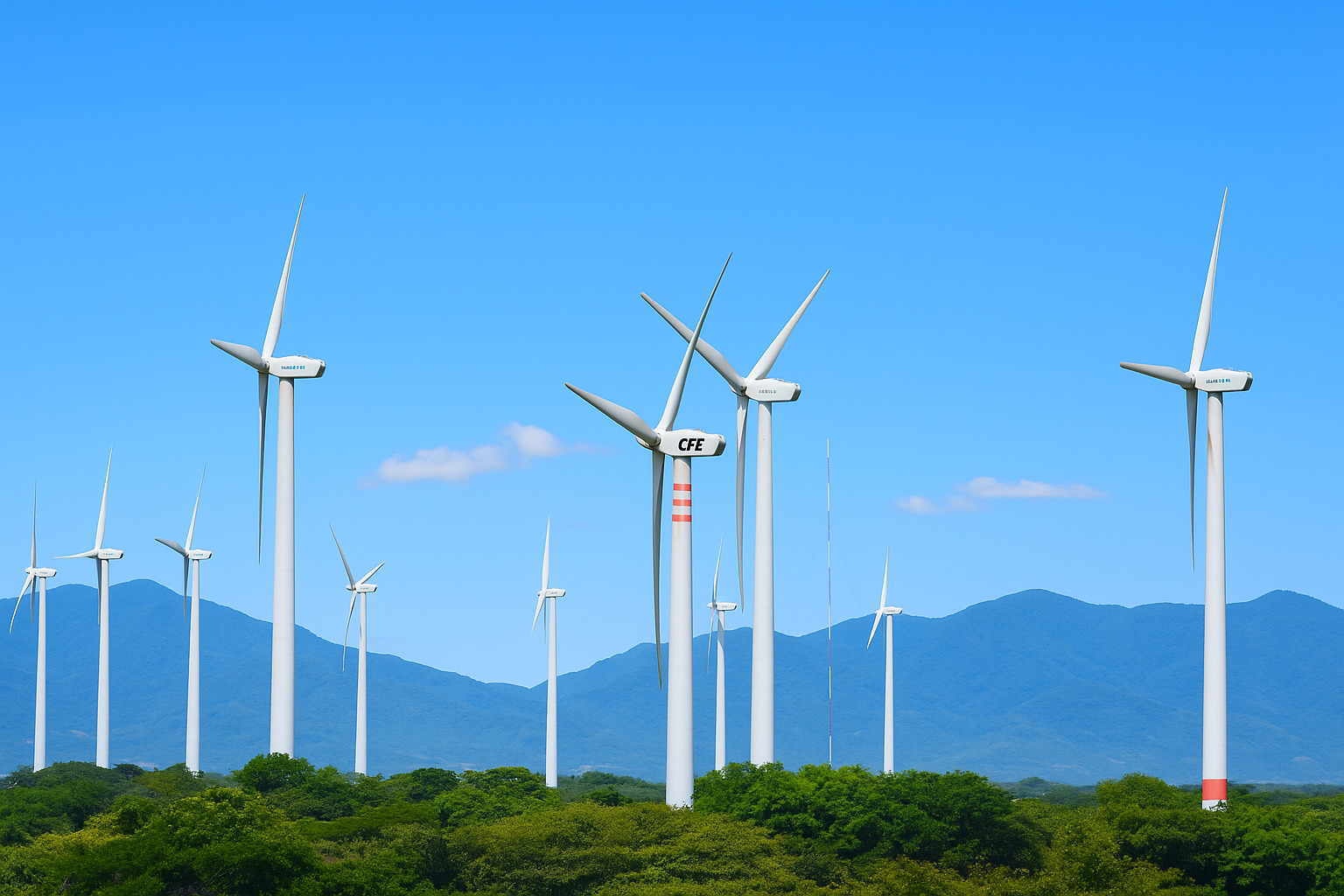

Learn About the Key Aspects of the Energy Reform in Mexico and How It Affects Renewable Energy Production and the Country’s Sovereignty.
The energy reform in Mexico represents a significant change in how the country manages its energy production. Additionally, it directly impacts the economy, sustainability, and the energy future of the nation.
For this reason, the topic gains international attention, especially because it expands the generation of renewable energy and maintains state control over strategic sectors, such as oil and electricity.
Historically, Mexico has maintained a complex relationship with its energy matrix. For decades, oil production has been at the center of the national economy, and consequently, the state-owned Pemex held a dominant role.
-
Brazilian scientists are simultaneously advancing two research projects on clean hydrogen and driving solutions that could transform the energy matrix, enhance industrial competitiveness, and accelerate large-scale emission reduction targets.

-
Advancement in renewable energy: A R$ 150 million project launched by Petrobras and Finep aims to create state-of-the-art electrolyzers for green hydrogen, strengthening national research and preparing Brazil to compete in a billion-dollar energy market.
-
Illiterate or semi-literate grandmothers were trained to repair solar systems, open rural workshops, and light up homes that still depended on kerosene.
-
The world has bet on green hydrogen as the fuel of the future, but now faces the side effect: producing 1 kilogram requires about 9 liters of ultrapure water, and the largest projects on the planet are precisely in the driest regions of the Earth, where water is already scarce for people.





Between 2010 and 2020, the country made progress in renewable sources; however, the government frequently limited projects, hindering private participation and, therefore, the expansion of cleaner alternatives.
In this context, the recent energy reform proposal in Mexico attempts to balance state tradition with the need for innovation and sustainability.
Moreover, President Claudia Sheinbaum has made a clear commitment to make renewable energy one of the pillars of her government. In this way, she intends to leverage the country’s vast solar and wind resources, positioning Mexico as a regional leader in clean energy.
Unlike her predecessor, Andrés Manuel López Obrador, who focused efforts on increasing Pemex’s production, Sheinbaum seeks to diversify the energy matrix and allow greater participation of private initiative in clean generation projects.
Additionally, the energy reform encourages the incorporation of innovative technologies that improve energy generation efficiency. That is, the installation of storage systems and smart grids allows for better electricity distribution.
Furthermore, these systems optimize consumption, reduce waste, and enhance system reliability.
Key Legal Changes and Private Participation
In this regard, the energy reform proposal in Mexico provides for important constitutional and legal changes. Thus, the approved legislation allows private companies to expand distributed generation, decentralizing energy production and directly supplying their operations.
Previously, the amount of self-generated energy allowed was limited to 0.7 megawatts; however, with the new law, the limit rises to 20 megawatts, encouraging private investments in larger-scale renewable energy projects.
Moreover, the reform maintains state dominance in the sector. The Federal Electricity Commission (CFE) will produce at least 54% of the country’s electricity.
Meanwhile, Pemex, despite its high debt, will receive support to recover its crude oil production capacity. Thus, this strategy is part of Sheinbaum’s goal to achieve the so-called “energy sovereignty”, reducing Mexico’s dependence on energy imports and strengthening the role of state-owned companies in the domestic market.
To achieve these objectives, the government plans to invest more than US$ 22 billion over the next five years to improve electricity generation and distribution. Additionally, it is expected to attract between US$ 6 billion and US$ 9 billion in private investments, allowing the clean energy capacity to increase from 6.4 gigawatts to 9.5 gigawatts by 2030.
Therefore, this effort integrates the energy reform in Mexico into a broader strategy for sustainable development and economic competitiveness.
Furthermore, the incentive for private participation includes training programs and technical support, which prepare small and medium enterprises to operate in the energy sector.
Consequently, these programs stimulate the emergence of innovative technological solutions and strengthen the local economy.
Changes in the Regulatory Model
From a regulatory perspective, the reform significantly alters the structure of the sector. In this sense, the Energy Regulatory Commission (CRE) and the National Hydrocarbons Commission (CNH) have been dissolved.
Thus, their functions are now concentrated in the National Energy Commission (CNE), subordinate to the Ministry of Energy. This centralization reduces bureaucracies and unifies oversight, although it also raises concerns about the potential reduction of competition and the dominance of state-owned companies over private enterprises.
Moreover, a central point of the energy reform in Mexico is the so-called “energy justice”, which seeks to ensure that all citizens, especially in rural areas and marginalized communities, have reliable access to electricity.
For this reason, the government is gradually replacing the still widely used wood stoves with cleaner alternatives, reducing air pollution and associated environmental impacts.
To support this, the Universal Energy Services Fund was created, managed by the Ministry of Energy in partnership with other agencies and with state-owned companies CFE and Pemex, prioritizing access to electricity for the most vulnerable.
Additionally, the reform encourages the use of emerging energies, such as hydrogen and biomass, diversifying the energy matrix and reducing the country’s carbon footprint.
In this way, these investments complement efforts in solar and wind energy, reinforcing Mexico’s ability to meet international climate goals.
Challenges and Perspectives
Despite the optimism, the implementation of the reform faces complex challenges. For instance, the government needs to carefully manage the relationship with the United States, the main supplier of natural gas to Mexico.
Moreover, critics question whether the strengthening of state-owned companies will limit the expansion of renewable energies and whether the limits on private investments will allow the sector to fully reach its potential.
On the other hand, analysts and experts view the reform with a combination of caution and expectation. The expansion of solar, wind, hydroelectric, and hydrogen projects represents an opportunity to diversify the energy matrix.
However, the reinforced state control requires a balance between public investment and private participation for the sector to meet sustainability and clean energy goals.
Historically, Mexico has had to reconcile economic and energy needs with growing environmental demands. In this context, the energy reform in Mexico seeks to balance these objectives: strengthen state-owned companies to ensure sovereignty and energy security, while encouraging private participation and expanding renewable sources.
Thus, this model meets both expectations for economic growth and international climate goals, aligning the country with global trends in energy transition.
Furthermore, investments in research, technological innovation, and education are essential to maximize the benefits of the reform.
In this sense, universities, research centers, and startups in the energy sector can accelerate sustainable solutions and generate skilled jobs.
Social and Environmental Impacts
The reform also significantly improves quality of life, especially in rural areas. In this way, the expansion of access to electricity facilitates advancements in education, health, and local economic development.
Additionally, the replacement of polluting technologies contributes to environmental preservation, showing that energy policy can be a tool for inclusion and sustainability.
In summary, the energy reform in Mexico represents a strategic effort to modernize the energy matrix, strengthen state-owned companies, encourage private investments, and expand participation of renewable energies.
Thus, the country attempts to overcome historical limitations and move towards a greener and fairer energy future.
Therefore, the proposal, while ambitious, establishes a legal and regulatory framework that will shape how Mexico generates, distributes, and consumes energy in the coming decades, balancing sovereignty, sustainability, and economic development.









