






 Portuguese
  Spanish


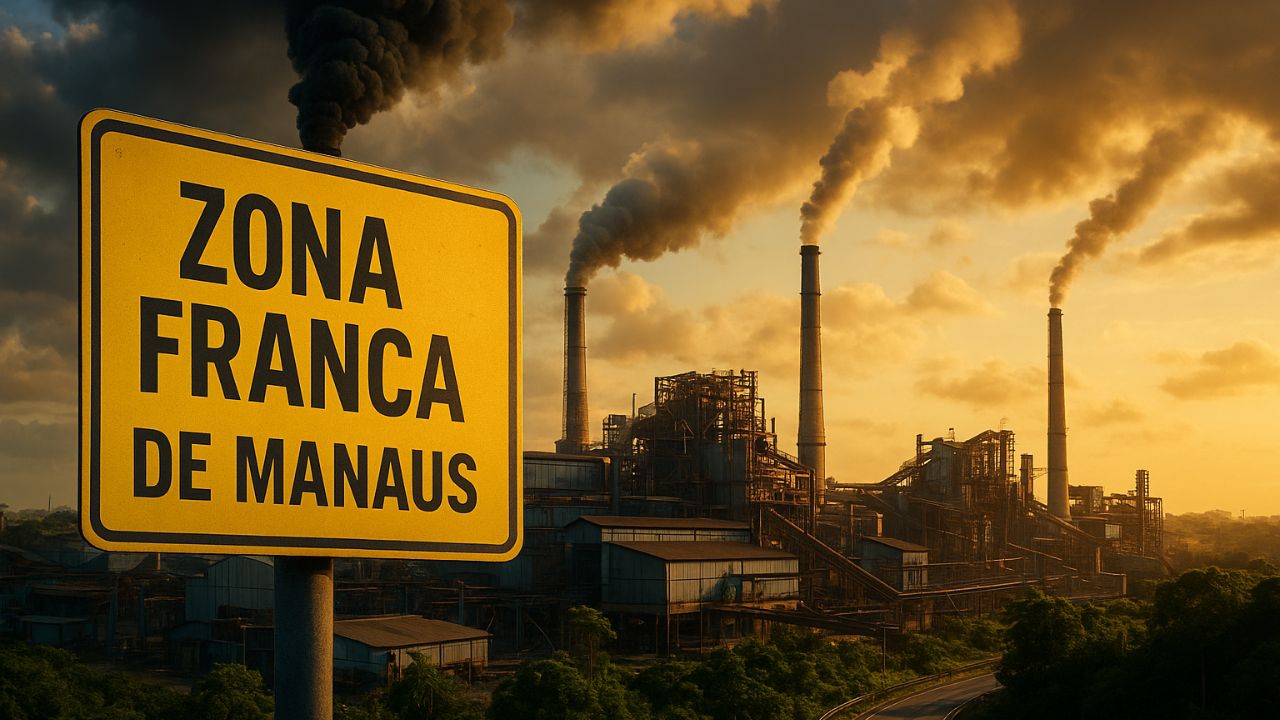

With the New Tax Reform, the Model That Employs Over 100,000 People and Helps Keep the Forest Standing Changes Radically, Replacing Exemptions with a Complex Subsidy System.
The tax reform, enacted by Constitutional Amendment No. 132/2023, has redesigned Brazil’s fiscal rules and put the future of the Manaus Free Trade Zone (ZFM) into question. The model, historically viewed as a “tax haven” due to its robust incentives, will not be abolished, but will undergo a deep transformation that raises uncertainty about its competitiveness. The main change is the replacement of the exemption system with a new mechanism for presumed credits, a type of managed subsidy that fundamentally alters the operation of companies in the Manaus Industrial Hub (PIM), which is responsible for over 100,000 direct jobs.
The impact of this change transcends the economy. The Free Trade Zone is widely defended as a model of development that, by concentrating economic activity in Manaus, has decisively contributed to keeping over 97% of its forest cover intact. Now, the success of the industrial hub and its role as a guardian of the “standing forest” will depend on the effectiveness of a complex legal framework that is still not fully tested, raising fears of a possible deindustrialization process in the Amazon.
What Was the Free Trade Zone? The “Tax Haven” Explained
To understand the magnitude of the change, one must look to the past. The Manaus Free Trade Zone was created in 1967 not only as an economic project but also as a geopolitical initiative to integrate the Amazon with the rest of Brazil and ensure national sovereignty over a vast and isolated territory. The model was designed to compensate for the enormous disadvantages of the region, such as the absence of roads connecting Manaus to the major consumer centers in the Southeast and the high logistical costs, relying on river and air transport.
-
Brazil’s Lula Government Allocates $463 Million Quota for Electric Car Parts, Waives Import Tax Until December, Sparking Competition Among BYD, Automakers, and Unions as Consumers Question Impact on Prices and Local Industry

-
Clarification and Right of Reply Notice

-
Elon Musk Becomes World’s First Trillionaire with $1.1 Trillion Fortune; Could This End Global Hunger?
-
Brazilian Executive Takes Helm of Heineken Amid Decline in Sales: 51-Year-Old Has Led Operations Across Four Continents and Managed a $7 Billion Empire




The competitiveness of the hub was built on a pillar of tax benefits. The main one was the exemption from the Industrialized Products Tax (IPI), which made products manufactured in Manaus, such as TVs, cell phones, and motorcycles, significantly cheaper than their national competitors. In addition, there were exemptions from the Import Tax (II) for inputs and robust ICMS incentives granted by the government of Amazonas. According to an analysis by the Tax Group portal, the success of the ZFM was directly linked to the dysfunctions of the old Brazilian tax system; its advantage existed because of the complexity and high tax burden that the reform aims to correct.
The Tax Reform and the Reality Shock
The logic of the tax reform represents a paradigm shift that strikes at the heart of the Manaus model. The creation of a dual Value Added Tax (VAT), composed of the Contribution on Goods and Services (CBS) and the Tax on Goods and Services (IBS), introduces the principle of destination taxation. This means that, in the new system, the tax will be collected in the state or municipality where the product is consumed, not where it is produced.
This change alone would nullify the main advantage of the ZFM. If the location of the factory no longer matters for tax collection, the incentive for a company to set up in a region with high operational costs like Manaus disappears. A product sold in São Paulo would have the same tax burden, regardless of whether it was manufactured in the Amazon capital or in a neighboring city. It was this existential threat that forced intense political negotiation in the National Congress to create an exception system, ensuring the survival of the hub.
The Hybrid Solution: How Will the ZFM Survive in the New Scenario?
To keep the Manaus Free Trade Zone standing, the tax reform created a set of safeguards that, in practice, transform the incentive model. The first and most direct mechanism was the selective maintenance of the IPI. While most products manufactured in Brazil will have the tax eliminated starting in 2027, it will continue to apply to goods produced outside of Manaus that compete with those manufactured in the industrial hub. This measure acts as a shield, artificially maintaining the price difference that favors local production.
The second and more complex mechanism is the creation of presumed IBS and CBS credits. Instead of simply not paying the tax (exemption), the industries in the ZFM will receive tax credits to ensure their competitiveness. As pointed out by the Tax Group portal, this change transforms the tax advantage of the ZFM from an exemption to a managed subsidy. Although competitiveness has been guaranteed in the Constitution until 2073, the model now depends on the government’s efficiency in managing and releasing these credits, creating a new layer of bureaucracy and dependence on public cash flow.
The Real Risk: 100,000 Jobs and the Threat of Deindustrialization
The restructuring imposed by the tax reform puts the economic engine of Amazonas at stake. The Manaus Industrial Hub is a force that goes far beyond its over 100,000 direct jobs, supporting a chain of services and commerce that, according to estimates, involves over half a million people. By 2025, the projected revenue of the hub is R$ 216 billion, highlighting its centrality to the economy of the entire Northern Region.
The main concern is that the complexity of the new model and the uncertainty about its practical application could lead to a process of deindustrialization. If companies determine that the combination of maintained IPI and presumed credits is insufficient to offset Amazonian costs, the natural tendency would be to move production closer to the large consumer markets. This specter is real and is based on historical precedents, such as the crisis of the 1990s when trade liberalization led to the closure of tens of thousands of jobs in Manaus.
The Final Argument: The Free Trade Zone as the Guardian of the “Standing Forest”
One of the pillars that ensured the survival of the ZFM in the tax reform was not economic, but environmental. Proponents of the model argue that it is the largest environmental conservation project in Brazil. The logic is that, by creating a strong urban industrial hub, the ZFM offered a viable economic alternative for the population, reducing pressure on the forest and discouraging predatory activities such as illegal mining, land grabbing, and deforestation for agriculture.
Studies from institutions like Ipea (Institute of Applied Economic Research) reinforce this thesis, showing a direct correlation between industrial activity in Manaus and the reduction of deforestation rates in the state. This argument elevates the debate beyond the fiscal issue, framing the incentives granted not as a loss of revenue but as a payment for an invaluable environmental service for Brazil and the world. The weakening of the hub, therefore, would represent not only a social risk but also an imminent environmental danger.
The tax reform was not the end of the Manaus Free Trade Zone, but the beginning of a long and managed transition. The “tax haven” gave way to a more transparent subsidy model, yet operationally more complex. The future of the industrial hub and its role in protecting the Amazon will depend on the new system’s ability to effectively ensure the competitiveness that previously existed on paper.
Do you agree with this change? Do you think it impacts the market? Leave your opinion in the comments; we want to hear from those who live this in practice.





Desculpe discordar, mas a reforma do consumo, ao contrário preservou a competitividade do Polo Industrial da Zona Franca de Manaus. Veja que a regra do Art 92-b do ADCT impôs assegurar a competitividade do modelo e foi fielmente observada na LC 214/2025 o que trouxe segurança jurídica e superou até os questionamentos pré-existentes. Sucintamente. Foi desonerada a aquisição de insumos importados (hj tributada) e mantido os mecanismos de crédito presumido na aquisição de insumos nacionais e no exato mesmo nível de créditos fictos aplicáveis nas saídas.