Portuguese
  Spanish


Where a frozen and empty desert was imagined, explorers encountered a true carpet of creatures. On a single rock, the scientist counted more than a dozen species with the naked eye. The most curious: the stars of the show are invertebrate animals, like a living portrait of oceans from hundreds of millions of years ago.
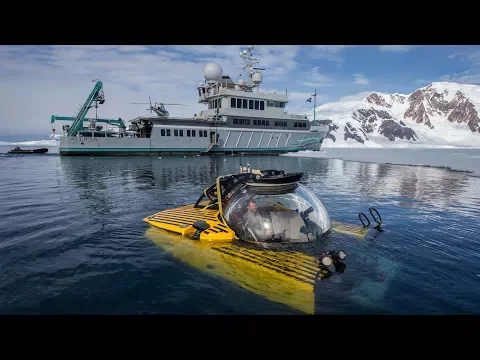
During the first manned dive to a thousand meters deep in the Antarctic Ocean, a BBC team alongside scientist Jon Copley found a seabed teeming with life. According to the researcher’s own description, the biodiversity found was so rich that it resembled the abundance of tropical coral reefs, a surprise in one of the least explored places on Earth, where little was expected to be found.
The expedition was conducted for the acclaimed documentary Blue Planet II, by the BBC, in partnership with the ocean exploration organization OceanX. An important context clarification: this historic dive and the images that recorded it are from 2017, when the series was produced, and they resurface on social media from time to time due to their impressive nature. Therefore, it is not a recent expedition, but a milestone in ocean exploration that continues to fascinate the public to this day, as we will see below.
A dive to the ends of the Earth
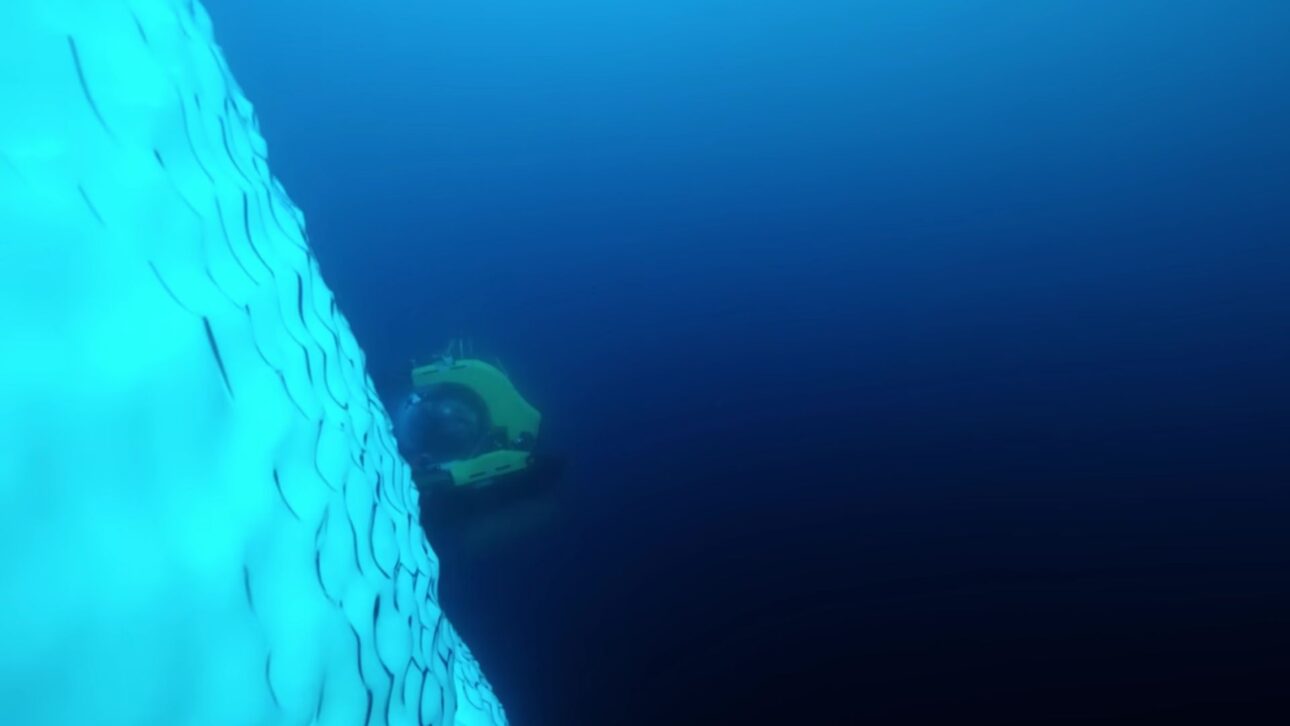
Although humanity has been exploring Antarctica by land for more than a century, the deep ocean around the icy continent remained practically as mysterious as it was 200 years ago, and cutting-edge technology was needed for divers to reach the mark of a thousand meters deep in these icy waters for the first time in a manned way.
-
Peruvian Mountain’s 5,200 Aligned Holes May Unveil Ancient Indigenous Market for Corn and Cotton

-
The Little-Known Story of a Home-Built Airplane That Promised Freedom but Faced Safety Issues After Numerous Accidents

-
He Didn’t Build a Plane, But Spent Decades Trying to Make Bicycles Fly with Wings and Pedals; Remaining Models Tell This Unusual Story in Germany
-
Roraima Security Secretary Poses as Doctor to Expose Technician Charging $600 for Free Public Health MRI in Brazil; Technician Confessed




Jon Copley, now a professor at the University of Southampton in the United Kingdom, is one of the most experienced deep-water explorers in the world, having been the first Briton to dive more than five kilometers deep.
Leading this immersion in the Antarctic Ocean, aboard a small submersible, he and the team described a mixture of excitement and apprehension about what they might find, knowing they were seeing, in their words, parts of the planet that no one had ever visited.
A Seabed Full of Life
What they found down there exceeded expectations.
Instead of a frozen, lifeless desert, the explorers described the Antarctic Ocean floor as a kind of living carpet, with Copley reporting having counted more than a dozen different species on a single rock, just with the naked eye, in a landscape he described as lush.
According to the scientist, the explanation for such richness lies in the oxygen-rich water circulating there, combined with an impressive amount of marine snow, the name given to particles of organic matter that slowly sink and serve as food for bottom-dwelling animals.
Copley stated that this marine snow was thicker than he had ever seen in any other ocean in the world, which helps sustain this entire chain of life in the depths.
Krill and Exotic Deep-Sea Creatures
Among the inhabitants of this frozen world, some caught special attention.
The krill, a small crustacean that is one of the most important components of the local ecosystem, appeared in large numbers, serving as food for numerous species, while the curious icefish, adapted to the extremely cold waters, was also spotted during the dive in the Antarctic Ocean.
But the star of the dive, literally, was an animal nicknamed by the team as “Death Star.”
This is the Antarctic sun starfish, which can have up to 50 arms, whose tips are covered by tiny pincers that close at the slightest touch.
According to Copley, as there are not many predatory fish capable of withstanding the extreme cold there, this starfish can move its arms freely to capture food, without the risk of being bitten, an example of the unique adaptations of that environment.
A Journey Back 250 Million Years

Perhaps the most fascinating aspect is what this ecosystem represents.
According to Jon Copley, diving into that environment was like traveling back in time, because there it is the invertebrates, animals without a backbone, that dominate as predators, exactly as the oceans were more than 250 million years ago, before fish assumed this role in most of the planet’s seas.
This peculiarity makes the Antarctic ocean floor a kind of living window into the remote past of life on Earth.
The extreme cold conditions have created a refuge where ancient creatures continue to thrive according to evolutionary logics that, elsewhere, were replaced millions of years ago.
For science, closely observing this type of environment is a rare opportunity to understand how marine life was organized in very distant eras.
Why exploring the Antarctic ocean matters
More than just beautiful images, the expedition has scientific and environmental value.
Studying the Antarctic seabed up close helps scientists understand, for example, how the so-called stones that fall from icebergs, known as dropstones, create islands of rocky habitat that harbor filter-feeding species and influence the distribution of life in that environment, something difficult to perceive only with samples collected by nets, as was done in the past.
For Jon Copley, when everyone participates, even from a distance, in the exploration of the planet, everyone begins to value it and feel involved in its preservation for the future.
This is the great message behind initiatives like Blue Planet II: to reveal the hidden wonders of the oceans to awaken in the public the desire to protect them, at a time when the seas face threats such as pollution and climate change.
The first manned dive to a thousand meters in the Antarctic ocean, conducted by Jon Copley for Blue Planet II, is a powerful reminder that there is still much to discover on our own planet.
By revealing a seabed full of life, with exotic creatures and ecosystems that seem to come from a remote past, the expedition shows that the ocean depths are among the last great frontiers of exploration.
Even though they are from a few years ago, these images continue to invite us to look with more respect and curiosity at the vast and mysterious world that exists underwater.
And you, did you ever imagine that the icy depths of the Antarctic ocean could harbor so much life? Which of these deep-sea creatures piqued your curiosity the most? Leave your comment, tell us what you thought of this expedition, and share the article with those who love the ocean, nature, and the mysteries of marine life.