Portuguese
  Spanish


Senar inaugurates Rural Professional Training Center (CFPR) in Rio Grande do Sul to train thousands of professionals in agricultural technologies.
The National Rural Learning Service of Rio Grande do Sul (Senar-RS) has opened a new space dedicated to the training of field workers. Located in Hulha Negra, in the Pampa region of Rio Grande do Sul, the Rural Professional Training Center (CFPR) Campanha was inaugurated on May 23 with the aim of preparing professionals to work with modern agricultural machinery and technologies increasingly present in rural activities.
The structure was created to meet a growing demand for technical qualification in the agricultural sector. With courses focused on the use of high-performance equipment, the complex aims to train thousands of students every year and strengthen the preparation of producers and workers in the face of technological transformations in the field.
Senar and Rural Professional Training Center (CFPR) bet on technology applied to the field
Among the main focuses of the new center are activities related to agricultural mechanization. The training includes resources used in modern rural properties, including drones, tractors, harvesters, irrigation systems, spraying, and precision agriculture.
-
Researchers Turn Discarded Mango Pits into Hydrogel That Absorbs 400% of Its Weight in Water, Offering Agricultural Solution for Droughts and Waste Reuse

-
Flower strips in Brazilian farms become pest control strategy, attracting predator insects and reducing the need for chemical pesticides.

-
Yara acquires Texas ammonia plant for $1.3 billion, boosting global fertilizer competition with 1.3 million tons annual capacity
-
At 35, Lawyer Leaves Corporate Career to Turn 1-Hectare Farm into Organic Supplier for Schools in Southern Brazil


The project was designed to offer practical learning in an environment prepared to simulate real agribusiness situations. The selection of participants will occur through the rural unions of the municipalities.
According to Senar-RS, the initiative seeks to bring professionals closer to the technologies that are already part of the productive routine in various regions of the country.
Structure was planned to serve thousands of students
The numbers of the complex help to gauge the reach of the initiative.
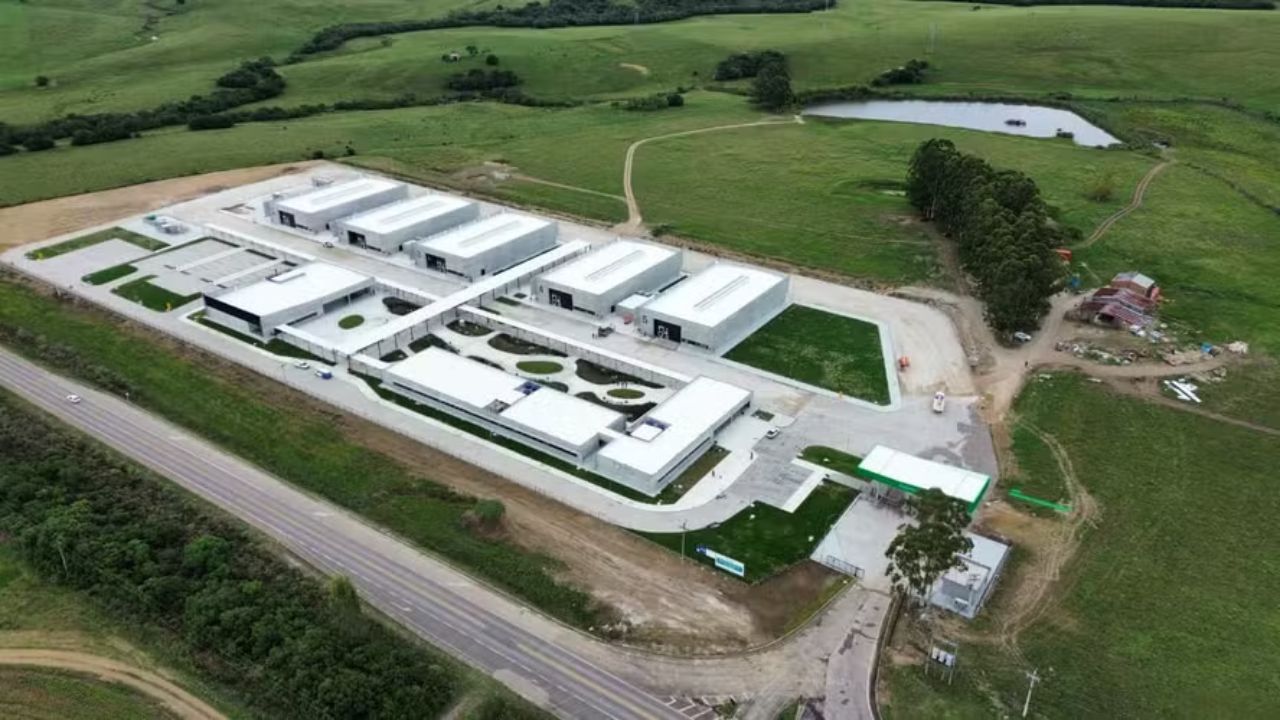
| Feature | Data |
| Location | Hulha Negra (RS) |
| Total area | 36 hectares |
| Built area | More than 5,600 m² |
| Pavilions | 5 |
| Classrooms | 11 |
| Laboratories | 4 |
| Simultaneous capacity | 400 people |
| Annual capacity | Up to 8,640 students |
In addition to spaces for practical activities, the location includes an auditorium, library, and cafeteria.
Rural Professional Training Center (CFPR) is considered pioneering
During the inauguration, leaders highlighted the unprecedented nature of the initiative. The superintendent of Senar-RS, Eduardo Condorelli, stated that the enterprise represents a milestone for professional training related to the operation of agricultural machinery.
In a statement during the event, he emphasized that the center is the first in the country dedicated exclusively to a cross-cutting theme related to high-performance agricultural machinery and highlighted the level of integration with companies in the sector.
In thanking partners and collaborators involved in the project, Condorelli defined the delivery of the structure as a great achievement for the institution.
Event brought together leaders and specialists in the sector
The inauguration was attended by approximately 400 guests. The program included a lecture on agricultural mechanization, robotization, artificial intelligence, and the expected changes for the rural labor market.
The seminar was conducted by Rodrigo Iafelice dos Santos, an administrator and master in International Business. After the presentation, participants were able to tour the complex’s facilities.
Also present were representatives of rural entities, public authorities, researchers, and members of the productive sector.
Senar records growth and expands investments in training
The opening of the new center comes at a time of expansion of Senar-RS’s activities. According to the institution, more than 170,000 services were provided throughout the state during 2025, surpassing the initially established target.
For the general director of Senar, Daniel Carrara, the need for professional qualification is not a reality exclusive to Rio Grande do Sul. According to him, the shortage of labor affects various Brazilian regions, while mechanization advances rapidly on rural properties.
Carrara also highlighted that the center can meet the demands of producers and workers from different parts of the country.
Machines and Equipment Will Be Used in the First Courses
The first stage of training includes practical activities involving equipment provided by partner manufacturers.
Among the already scheduled content are trainings related to:
- Agricultural tractors;
- Harvesters;
- Planters;
- Irrigation systems;
- Sprayers;
- Drone operation;
- Precision agriculture.
According to Senar-RS, ten companies are initially participating in the project. Additionally, nine other training programs are already in the planning phase for future implementation.
Senar and Rural Professional Training Center (CFPR) Project National Reference
The project’s creator and former president of Farsul, Gedeão Pereira, highlighted during the ceremony that the space was designed to host courses at different levels of training.
The leaders expect the structure to become a reference for training related to innovation and the use of advanced agricultural equipment.
With a capacity for thousands of students per year, a large physical area, and a focus on technologies applied to the field, the Rural Professional Training Center (CFPR) Campanha emerges as one of the largest specialized training initiatives aimed at the Brazilian agribusiness sector.
Source: Globo Rural