Portuguese
  Spanish


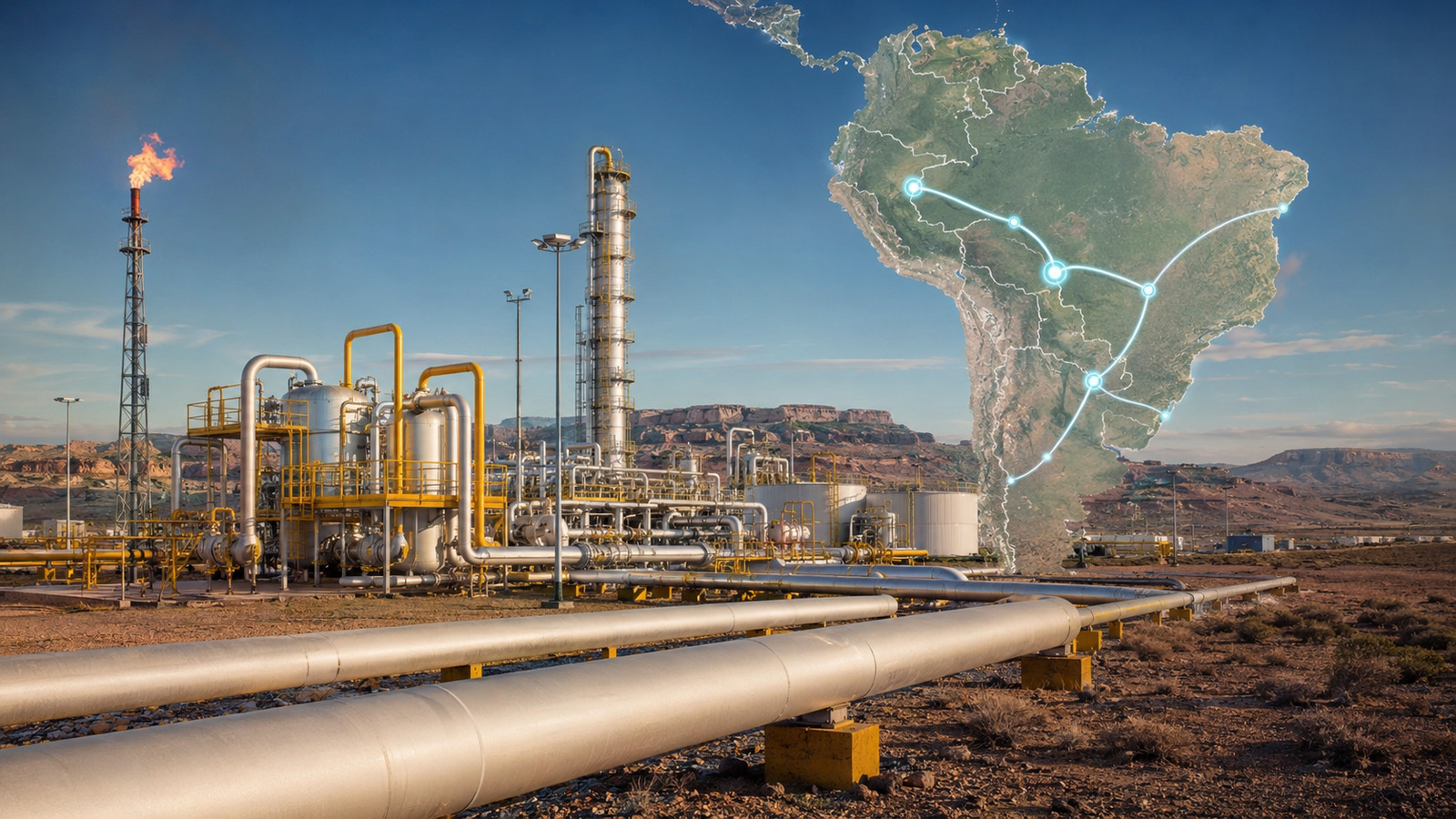

Report by IGU, Arpel, and Olade indicates that Vaca Muerta can supply Argentina, Brazil, Chile, Uruguay, and Bolivia for decades, but depends on billion-dollar projects in pipelines, processing, and storage
Vaca Muerta can become the axis of a new energy integration in South America, but progress depends on more than $10 billion in gas transportation, processing, and storage projects. A report by IGU, Arpel, and Olade points to the Argentine formation as a source capable of supplying Argentina, Brazil, Chile, Uruguay, and Bolivia in the coming decades.

Vaca Muerta holds enough gas to change regional trade
The formation located in Neuquén appears in the study as the main resource to sustain a new stage of natural gas circulation among South American countries.
The report estimates that Vaca Muerta’s recoverable resources are equivalent to between 45 and 124 years of the current combined consumption of Argentina, Brazil, Chile, Uruguay, and Bolivia.
-
São Paulo LNG Terminal Approved to Connect to Pipeline Network, Sparking Debate Over Larger Alternative Through Serra Route

-
Petrobras Explores Entry into Corn Ethanol Market, Aiming to Become a Biofuel Giant
-
Brazil’s $8.5 Billion Auction Secures New Power Plants to Prevent Peak Hour Energy Shortages
-
Why Gasoline Prices Remain Stable: How Petrobras’ Subsidies and Pricing Policies Control Fuel Costs in Brazil


This volume is the central point of the opportunity highlighted by the entities. The region already has a significant part of the interconnection infrastructure built, but many international pipelines remain underutilized.
In total, 16 international pipelines have been developed in South America in recent decades. According to the authors, the main obstacle has not been the absence of pipelines, but the lack of gas surpluses for export on a sufficient scale.
The expansion of production in Vaca Muerta could begin to change this scenario. Argentina would increase exports and reduce LNG imports, while neighboring countries could access an additional supply source.
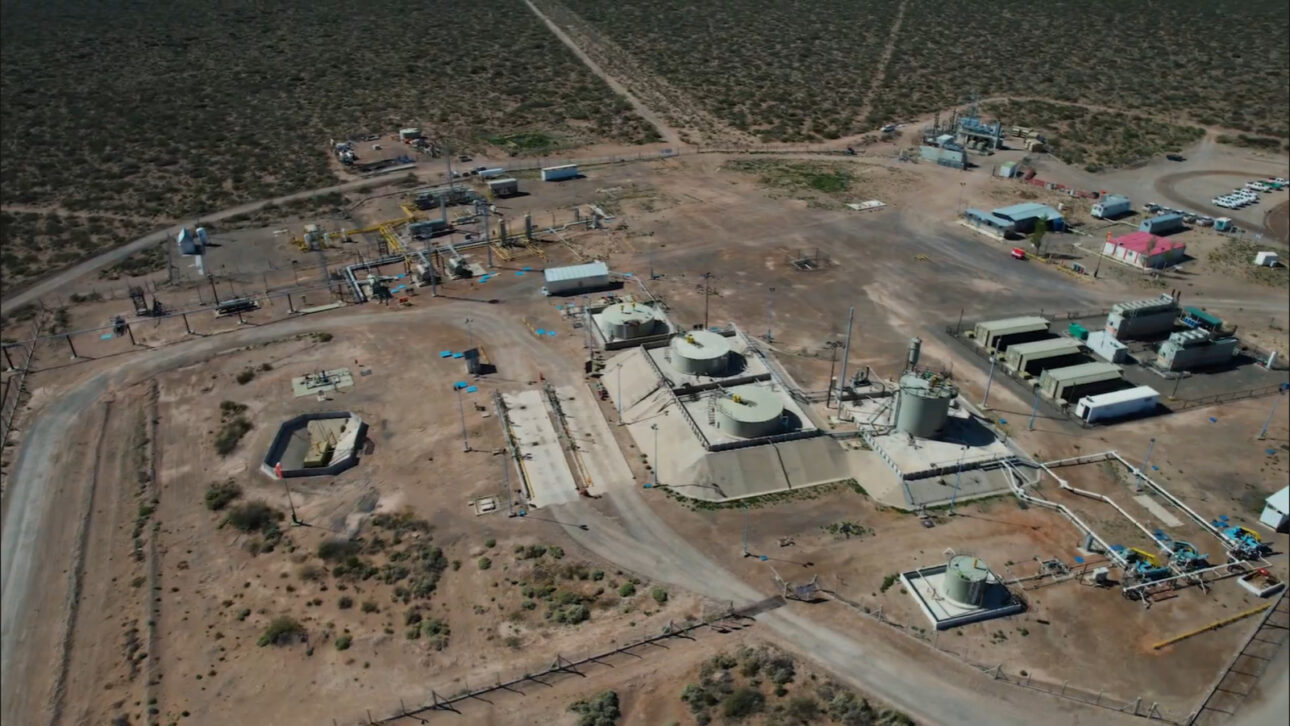
Billion-dollar projects are pointed out as a condition to export more gas
To transform this potential into a constant commercial flow, the report highlights the need for investments in transportation, processing, and storage.
The mentioned projects involve export corridors, expansion of existing systems, and facilities to keep up with production growth.
One of the priority fronts is the expansion of the Northern Gas Transporter system and the optimization of the Northern Pipeline reversal. The project is estimated at about US$ 2.3 billion.
According to the study, this initiative would allow generating up to 5.5 million cubic meters of guaranteed daily exports to Chile, Bolivia, and Brazil. The gain would be linked to better utilization of the already existing infrastructure.
Another strategic project is the expansion of the Central-West system and the GasAndes pipeline. The estimated cost is US$ 1.4 billion, with the capacity to increase guaranteed exports to Chile to up to 16 million cubic meters per day throughout the year.
Brazil appears as a key market for regional expansion
Integration with Brazil would require even greater investments. The report mentions the need to complete the corridor to Uruguaiana and build new infrastructure between Neuquén and La Carlota to ensure a constant supply of gas from Vaca Muerta.
The projects related to this alternative would total around US$ 4.5 billion. Brazil is treated by the authors as the most relevant market for future regional expansion.
The study points out that the country seeks to reduce the cost of gas to boost its reindustrialization. Even with the intention to expand its own production in the coming years, Brazil remains interested in accessing competitive supplies from Argentina.
In addition to transportation infrastructure, the report mentions investments in processing and liquid separation facilities.
These structures are considered indispensable to sustain the productive growth of Vaca Muerta and supply future LNG export projects.
Among the mentioned examples is the initiative announced by TGS to develop processing facilities at the source, with an estimated investment of US$ 3 billion.

Non-conventional production has already changed the Argentine scenario
The growth of Vaca Muerta has already had a direct impact on Argentina’s gas matrix. Non-conventional gas production increased from 17 million cubic meters per day in 2015 to 90 million in 2025.
With this advancement, unconventional gas has come to represent more than 60% of Argentina’s gas production.
The increase compensated for the sharp decline in conventional gas in the country and paved the way for the resumption of exports to neighboring countries.
Today, Chile is the main destination for Argentine gas, although the volumes exported are still below the available interconnection capacity.
The expansion of pipelines and systems could increase this supply reliably throughout the year.
Bolivia appears in another role within this redesign. The report points out that the country is facing a sharp decline in production and may no longer have surpluses for export at the beginning of the next decade.
In this scenario, the transportation of Argentine gas to Brazil emerges as an alternative to monetize the idle capacity of Bolivian pipelines through transit services. This would also help avoid the underutilization of already constructed infrastructure.
For the authors, the combination of abundant resources, existing pipelines, and demand for competitive energy opens up an unprecedented opportunity for energy integration.
The advancement, however, depends on investments, long-term agreements, and commercial viability.
This article was prepared based on information from the report by the International Gas Union, Arpel, and Olade, with data, numbers, and statements preserved as per the consulted material.