Portuguese
  Spanish


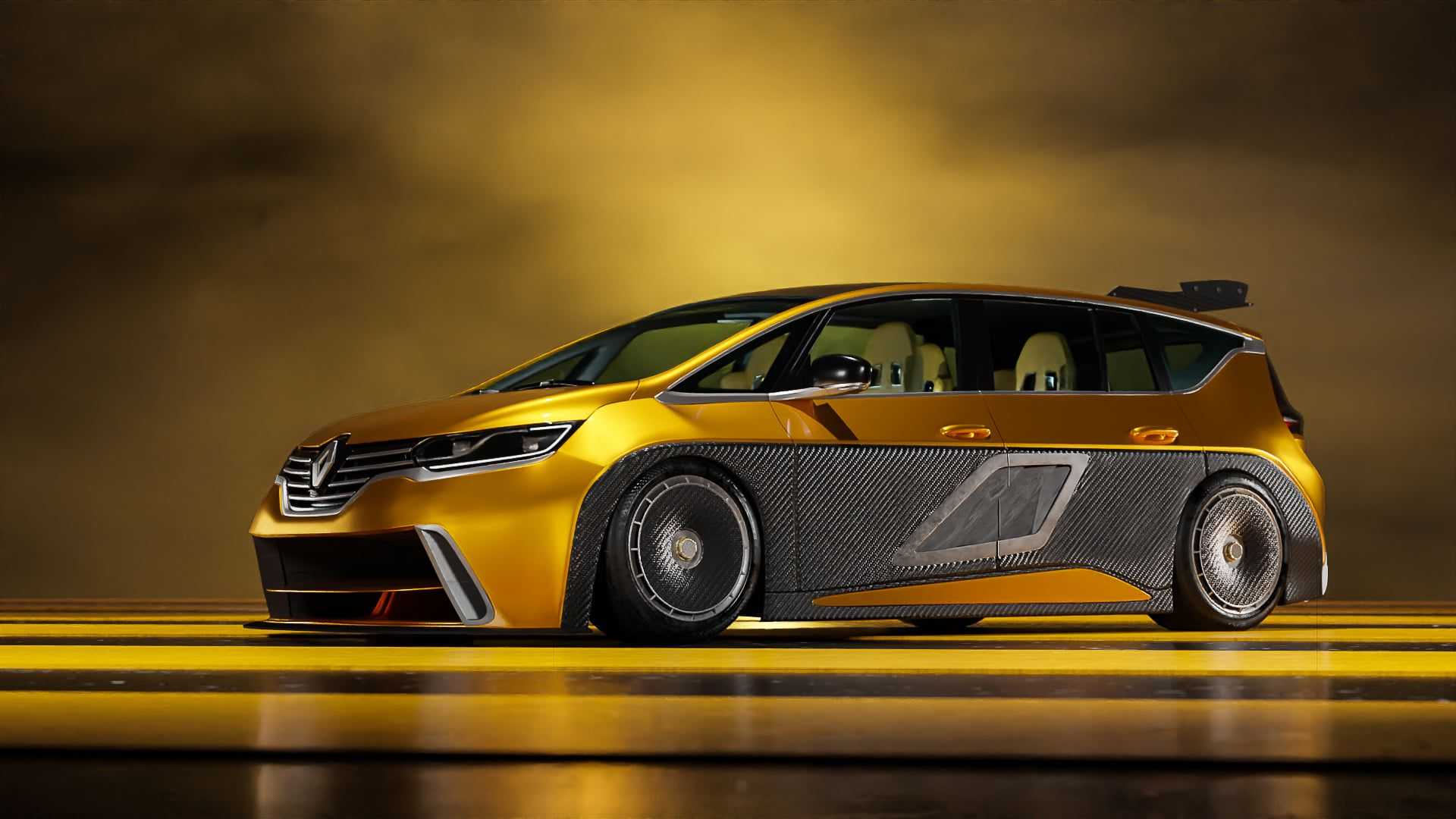

Renault Espace F1 combined a family minivan with an 820 hp Formula 1 V10 engine and created one of the most absurd concept cars ever made.
In 1994, Renault unveiled at the Paris Motor Show one of the most unlikely automotive concepts ever presented by a major manufacturer. Called the Renault Espace F1, the vehicle looked like just a modified sports minivan, but it hid a mechanical setup that defied any logic of the automotive industry at the time: a Formula 1 V10 engine installed behind the front seats, directly inherited from the championship-winning Williams FW15C Formula 1 car. The information was detailed by Renault itself on its official press platform.
The project was developed in partnership between Renault, Matra, and Williams Racing to celebrate the 10 years of the Espace line and also Renault’s dominance in Formula 1 in the 1990s. The result was a machine that mixed family car, racing prototype, and experimental engineering in a single functional vehicle. With about 820 hp, acceleration from 0 to 100 km/h in 2.8 seconds, and a top speed above 300 km/h, the Espace F1 quickly went down in history as one of the most radical creations ever produced by a traditional manufacturer.
Even three decades later, the Renault Espace F1 is still remembered as an experiment so absurd it seems like science fiction. Continue reading to understand how a French minivan ended up receiving Formula 1 technology and why this project still impresses engineers and motorsport fans.
-
Does a Flag on Your Car’s Hood Overheat the Engine? Expert Reveals the Overlooked Danger for Drivers

-
How to Identify and Remove Superficial Scratches Before Spending on Car Bodywork

-
Electric Car with Extended Range: Company Patents Hybrid Transmission System Using Gasoline Engine for Backup
-
GM Developed the Chevette to Rival the Beetle, Launched it in Brazil Before Europe, Sold 1.6 Million Units, and Left a Generation with Gas Station Trauma


Renault Espace F1 was born to celebrate the 10 years of the French minivan and Renault’s dominance in Formula 1
The original Renault Espace was launched in 1984 and helped popularize the modern concept of the minivan in Europe. Developed by Matra and marketed by Renault, the model became known for its interior space, modularity, and family focus.
Ten years later, Renault decided to transform this rational car into something completely opposite.


The idea of the project was to create a commemorative vehicle capable of uniting the racing world with the brand’s most famous family model. At that time, Renault was experiencing an extremely successful period in Formula 1. The Renault V10 engine equipped the Williams FW15C, the car driven by Alain Prost in winning the 1993 world championship.
Instead of just making a traditional sports version of the Espace, the engineers decided to build practically a race car disguised as a minivan. The project received a honeycomb carbon fiber and aluminum structure, while various components were directly inherited from Formula 1.
The final result had much more in common with a competition prototype than with a conventional family car. Despite the appearance inspired by the Renault Espace II, almost all of the vehicle’s engineering was unique.
Formula 1 V10 engine turned the French minivan into a rocket of over 300 km/h
The most impressive element of the Renault Espace F1 was hidden behind the front seats. The car used a Renault RS5 V10 naturally aspirated 3.5-liter 40-valve engine, practically the same setup used by the Williams FW15C in Formula 1.
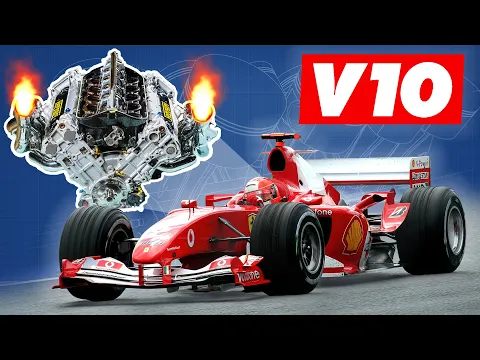
Estimates vary between 780 and 820 hp depending on the configuration used, but the historical documentation linked to the project points to power close to 800 hp. The engine revved at extremely high speeds for a street car, reaching close to the typical range of naturally aspirated Formula 1 engines from the 1990s.
The transmission also came from the racing world. The Espace F1 used a Williams TG3 semi-automatic six-speed gearbox with steering wheel controls, something extremely rare in street cars at that time.
With a weight close to 1,300 kg, the performance was brutal even by modern standards. According to Renault data and historical records of the project, the vehicle went from 0 to 100 km/h in just 2.8 seconds and reached over 300 km/h on the track.
For comparison, many modern supercars still take more than 3 seconds to reach 100 km/h. The Espace F1 achieved these numbers carrying four occupants in a minivan body.
Carbon fiber structure hid engineering close to Formula 1
Although the Renault Espace F1 maintained the visual shape of a minivan, the engineering beneath the body was extremely sophisticated. Much of the chassis was built in carbon fiber with an aluminum honeycomb structure, a common solution in high-performance competition cars.
The mid-rear engine position forced the engineers to redesign practically the entire interior. The V10 occupied the space between the rear seats, while large side air intakes helped cool the mechanical assembly.
The rear suspension came directly from the Williams FW14, another historic Formula 1 car, while front components used special parts developed specifically to withstand the vehicle’s extreme dynamics.
The brakes used ventilated carbon discs, a technology typical of race tracks. According to project-related data, the system allowed for extremely aggressive decelerations, including braking from 300 km/h to very low speeds in surprisingly short distances.
Even while maintaining four seats and an appearance relatively close to a conventional minivan, the Renault Espace F1 was essentially a racing car in disguise.
Renault Espace F1 had such extreme behavior that it risked tipping over in very aggressive turns
Despite its impressive performance, the Espace F1 also had curious limitations. The high body shape caused the center of gravity to remain relatively elevated, even with all the racing engineering installed in the car.
According to the project’s technical records, the vehicle could not exceed about 2G of lateral acceleration without significantly increasing the risk of tipping over. This created an unusual situation: a minivan with supercar acceleration and Formula 1 power, but still carrying some of the physical limitations associated with the shape of a tall family car.

The car’s behavior was described as extremely aggressive and difficult to control. The naturally aspirated V10 engine delivered power brutally at high revs, while the relatively short wheelbase and unusual weight distribution required significant skill from the driver.
This turned the Espace F1 into one of the most fascinating concepts ever built by Renault: an apparently absurd vehicle, but fully functional.
Only two examples of the Renault Espace F1 were produced and one of them still exists in France
According to the project’s historical records, only two units of the Renault Espace F1 were built. One of them was functional and intended for dynamic demonstrations, while the other served as a static exhibition model.
The functional example currently belongs to the Matra Museum, located in Romorantin-Lanthenay, France. This car has been used in exhibitions, promotional events, and track presentations over the years.
The machine gained cult status among motorsport fans precisely because it was not just a conceptual model. The Renault Espace F1 really accelerated, made Formula 1 noise, and delivered performance comparable to extremely expensive supercars of the time.
Decades later, the car continues to appear at special events and demonstration videos. The sound of the naturally aspirated V10 from Formula 1 echoing inside a minivan body remains one of the most unlikely combinations ever seen in the automotive industry.
Renault Espace F1 became one of the most absurd and legendary concept cars ever created
The Renault Espace F1 never had any real chance of going into production. The project was expensive, extreme, and completely incompatible with everyday use. Still, it went down in automotive history because it pushed to the limit an apparently impossible idea.
At a time when most minivans focused only on family comfort and practicality, Renault created a vehicle capable of rivaling supercars using an engine derived directly from Formula 1. Very few concepts managed to combine humor, technical exaggeration, and real performance in such a radical way.
The Espace F1 became a symbol of an era when manufacturers were still willing to build completely irrational projects just to demonstrate engineering, creativity, and boldness. To this day, many enthusiasts consider the model one of the most insane automotive experiences ever homologated to run.
If the modern automotive industry still created concepts as extreme as the Renault Espace F1, what other type of “impossible” car would you like to see getting a competition engine?