





 Portuguese
  English
  Spanish
  6 min of reading
  1 comment


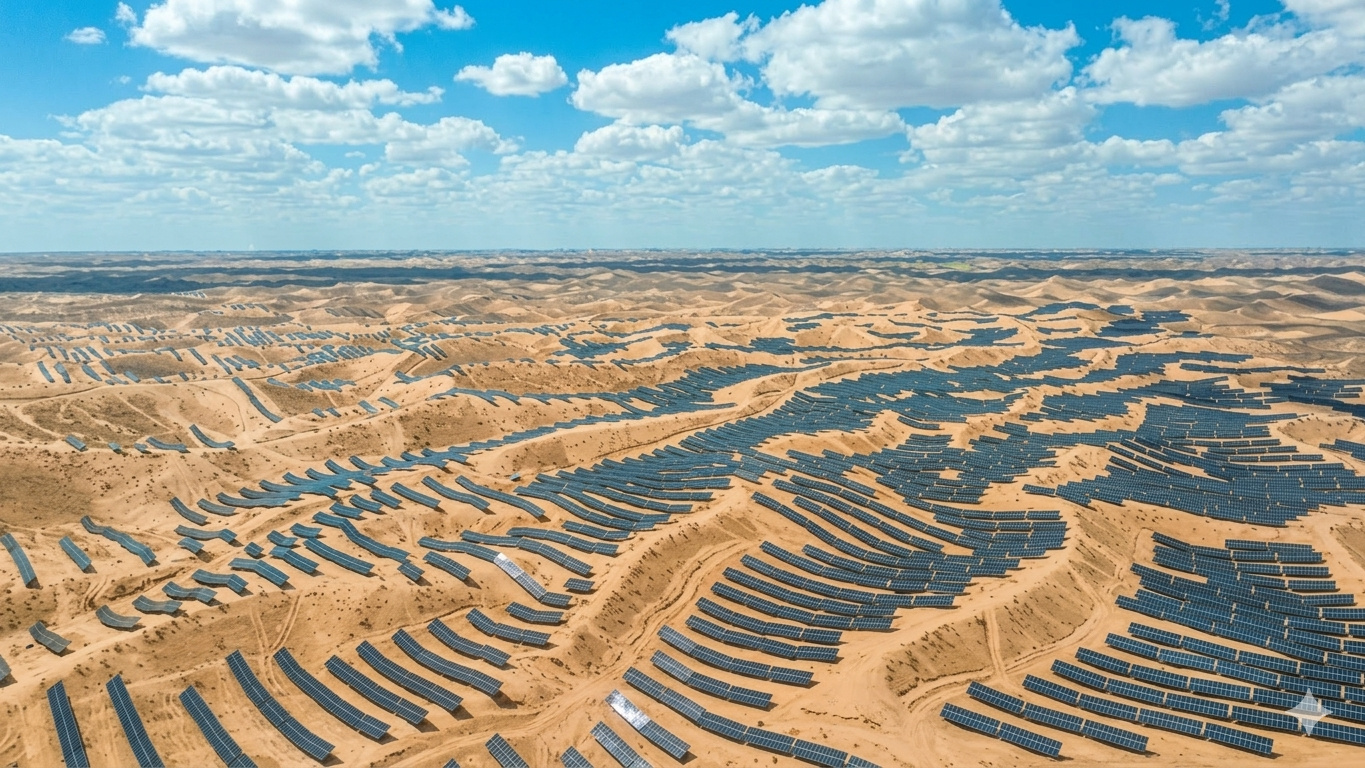


Suji Sandland solar project in Inner Mongolia will have 2 GW, 42,000 acres, and will use elevated panels to generate energy and help restore desertified areas.
According to JA Solar, the company began delivering 1 GW of DeepBlue 4.0 Pro photovoltaic modules in April 2025 for the Suji Sandland PV project, located in Urad Front Banner, in the Inner Mongolia autonomous region, northern China. The complex will have a total capacity of 2 GW and is part of the third phase of China’s large wind and solar power bases.
When operational, Suji Sandland will occupy over 42,000 acres, an area larger than the city of São Paulo, and is expected to generate 2.96 billion kWh of electricity per year. It is estimated to save approximately 900,000 tons of standard coal and reduce carbon dioxide emissions by 2.68 million tons annually.
But the project’s unique feature is not just its size or electricity generation. Suji Sandland adopts the PV + ecological restoration model, where elevated solar panels create shade, reduce evaporation, promote the growth of sand-fixing plants, and help restore areas undergoing desertification.
-
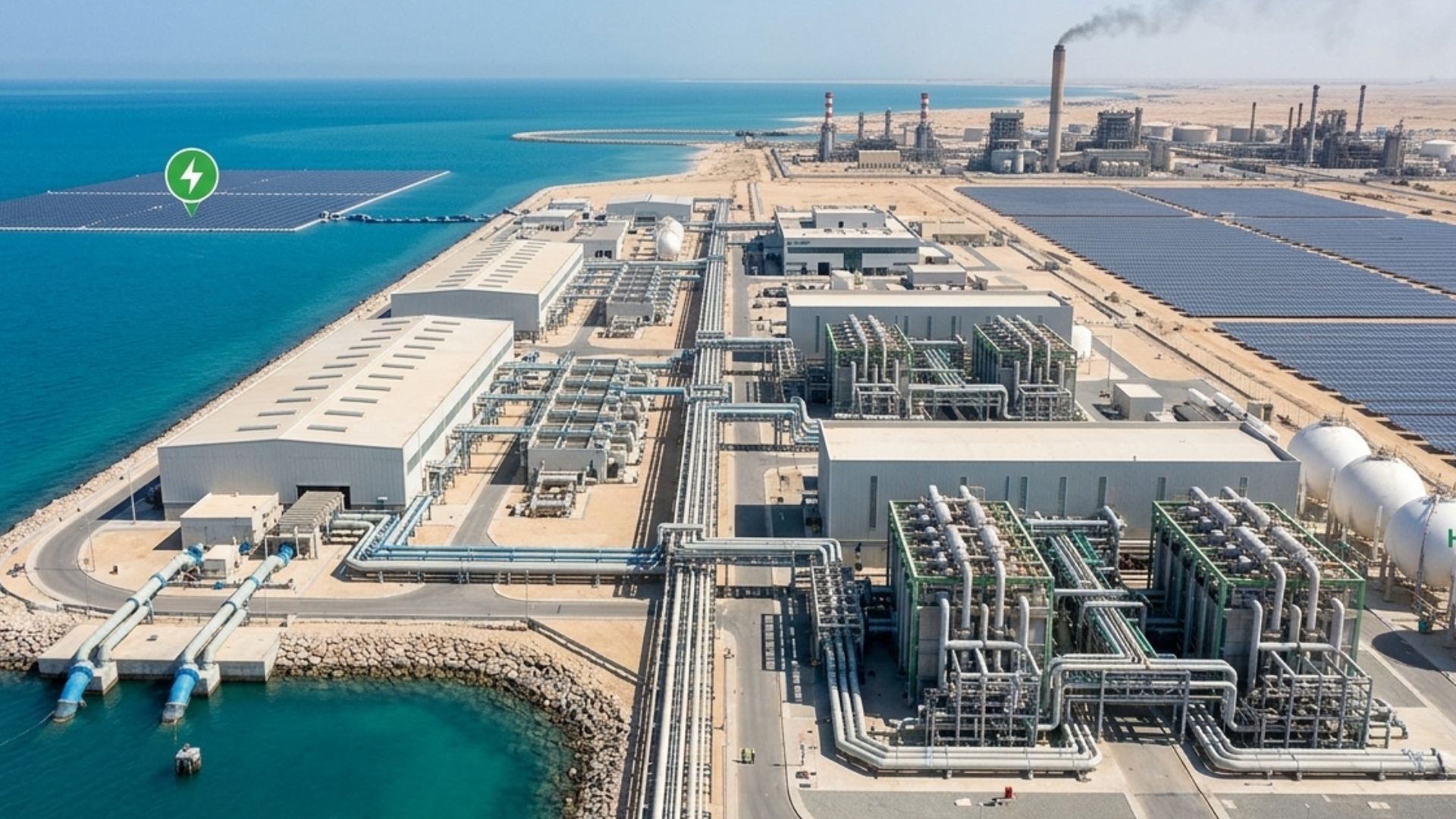
The world has bet on green hydrogen as the fuel of the future, but now faces the side effect: producing 1 kilogram requires about 9 liters of ultrapure water, and the largest projects on the planet are precisely in the driest regions of the Earth, where water is already scarce for people.

-
Africa has about 500,000 cell towers and most still burn diesel to operate, while companies rush to cover antennas with solar energy and avoid signal blackouts.

-
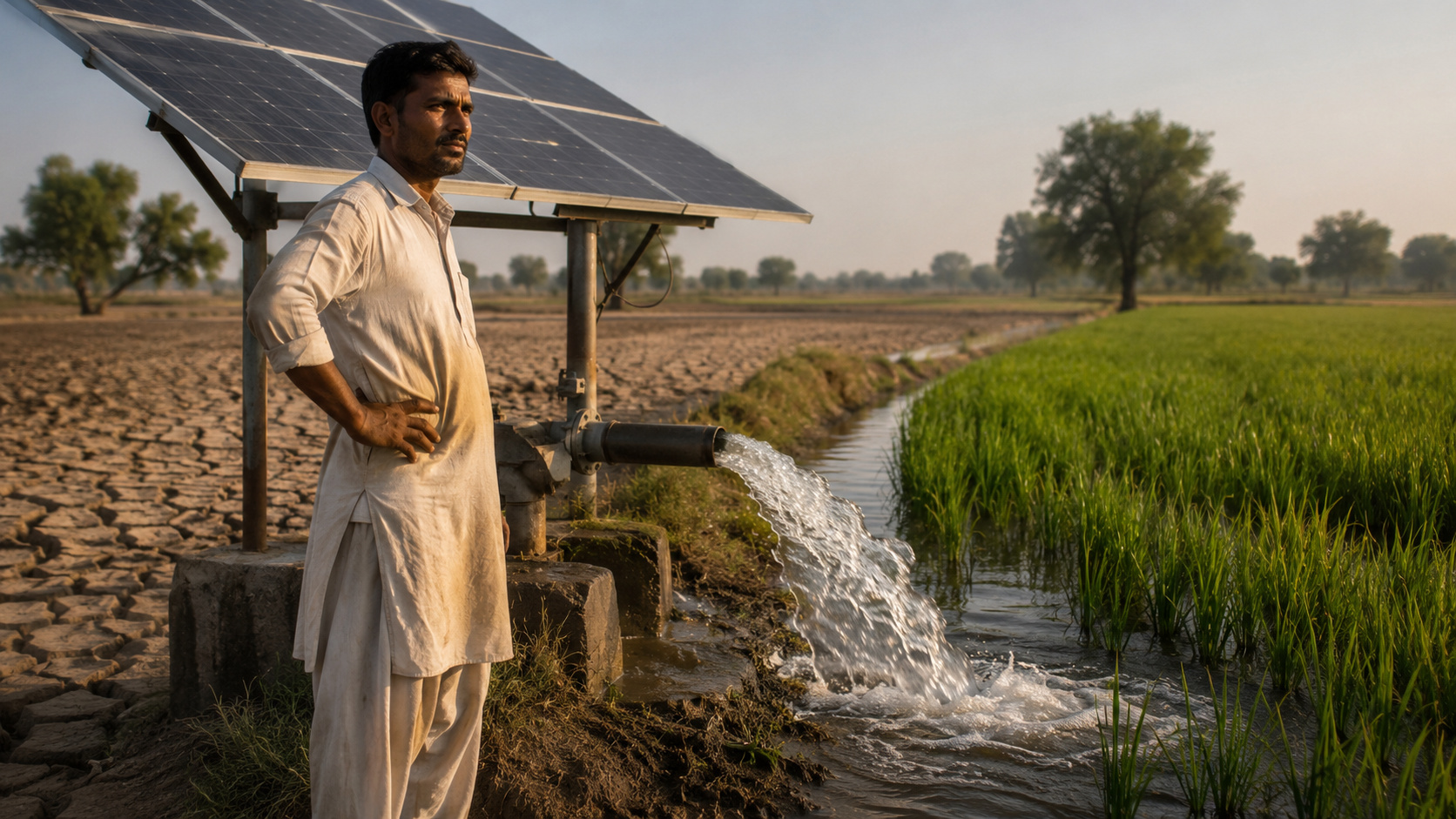
Farmers swapped diesel for solar panels in Pakistan, powered irrigation pumps almost cost-free, expanded rice fields, and now groundwater has become a red alert in the countryside.
-
Migrant workers left the world’s largest renewable energy park in India after extreme heat, 12-hour shifts, delayed wages, and poor accommodations at a site that still promises to supply 18 million homes.


Solar project in Inner Mongolia aims to combat desertification and generate clean energy simultaneously
Desertification in Inner Mongolia is one of the most severe environmental crises in northern China. The advance of the Gobi Desert threatens pastures, agricultural areas, rural communities, and the livelihoods of millions of people who depend on these lands.

The Chinese government has been trying to curb this advance for decades with the so-called Great Green Wall, a belt of trees planted along 4,500 km in the north of the country. The project began in the 1970s, but the results have been uneven, because trees alone do not always solve sandy soil degradation.
Suji Sandland proposes another logic: using the same solar infrastructure to generate energy and restore the environment. Elevated solar panels function as a physical barrier, a source of shade, and an ecological recovery tool in degraded areas.
Elevated solar panels create a more humid microclimate and reduce evaporation in the desert
The mechanism behind the PV + ecological restoration model is simple yet powerful. Solar panels absorb part of the radiation that would directly heat the soil and, at the same time, block extreme sun exposure for plants.

Under elevated panels, soil temperature can be 10°C to 15°C lower than in exposed areas during peak heat periods. This difference reduces evaporation, preserves moisture for longer, and improves conditions for the germination of drought-resistant species.
In deserts, available moisture usually disappears quickly under direct sunlight. When the panels reduce this thermal stress, the soil gains a larger window to sustain vegetation and begin sand fixation.
Solar energy and ecological restoration have already been observed in the Kubuqi Desert
NASA has already observed a similar effect in previous projects in the Kubuqi Desert, also in Inner Mongolia. In these locations, elevated solar panels created enough shade to slow down evaporation and allow the growth of pasture grasses.
The mechanism does not depend on a single plant species. Any plant adapted to arid environments can benefit from the combination of lower temperature, more available humidity, and protection against intense direct radiation.
The Suji Sandland takes this principle to a much larger scale. The project aims to use 42,000 acres with solar modules and systematic planting of species capable of fixing sand, reducing erosion and gradually rebuilding the local ecosystem.
China’s Great Solar Wall could reach 100 GW in the Kubuqi Desert
The Suji Sandland is part of an even larger strategy: the so-called Great Solar Wall of the Kubuqi Desert, documented by NASA since 2017 and expanded by China in subsequent years.
The total project described based on satellite data is 400 km long, 5 km wide, and has a planned maximum capacity of 100 GW. For comparison, this volume is equivalent to several times Brazil’s installed solar capacity in 2025.

The objective is twofold: to generate clean energy at scale and to create a physical and microclimatic barrier against the advance of the Gobi dunes. China is treating solar energy not just as electricity, but as an environmental engineering tool.
Suji Sandland to have 2 GW, 2.96 billion kWh per year, and cut 2.68 million tons of CO₂
The Suji Sandland figures show the scale of China’s bet on solar energy in the desert. The 42,000-acre area is equivalent to about 170 km², forming one of the largest solar installations integrated with ecological restoration in the world.
With 2 GW of capacity, the complex is expected to generate 2.96 billion kWh per year. This volume would be enough to supply approximately 1.3 million Brazilian homes with an average monthly consumption of 190 kWh.
The annual saving of 900,000 tons of standard coal is equivalent to removing a large fossil source from the electrical system. The estimated reduction of 2.68 million tons of CO₂ per year reinforces the project’s climatic significance.
DeepBlue 4.0 Pro Modules designed to generate energy in extreme desert environments
Generating solar energy in a sand desert requires modules prepared for severe conditions. Intense ultraviolet radiation, sandstorms, and abrupt thermal variations can degrade conventional equipment more quickly.
Storms carry abrasive particles that scratch surfaces and reduce light transmission through the glass. The temperature difference between day and night can exceed 40°C in a few hours, causing expansion and contraction cycles that affect electrical connections.
The DeepBlue 4.0 Pro modules were developed for this type of environment, with UV-resistant encapsulation, tempered glass with anti-sand treatment, and a structure prepared to withstand intense thermal cycling.
Solar panels in the desert help transform loose sand into more stable soil
The most important transformation of the Suji Sandland will occur in the soil, slowly and progressively. After the panels are installed, pioneer species, such as grasses and shrubs adapted to arid regions, are planted in the shaded strips.

These plants have two central physical functions. Their roots consolidate loose sand, reducing wind erosion, while the biomass above ground captures particles carried by air currents.
Over time, the vegetation adds organic matter to the substrate and promotes the formation of microbiota. The soil under the panels tends to retain more moisture and gain conditions that did not exist in the exposed desert.
PV + ecological restoration can recover degraded areas in 5 to 10 year cycles
Ecological recovery does not happen immediately. In models of this type, dune stabilization and the advancement of vegetation cover usually require five to ten years of maintenance, shade, and progressive soil stabilization.
The difference is that, without the panels, many of these areas would remain exposed to direct sun, intense evaporation, and constant wind. Under these conditions, conventional reforestation or grass planting tends to have a low survival rate.
With the panels, the environment changes. The solar farm ceases to be merely a power plant and begins to function as an ecological protection structure, creating conditions for vegetation to reoccupy degraded soil.
China uses desert solar energy to unite electricity, climate, and environmental recovery
Suji Sandland shows an important shift in the use of large solar power plants. Instead of merely occupying unproductive areas with panels, the project aims to transform these areas into environmental recovery zones.
China is not just covering sand with photovoltaic modules. It is using the panels to reduce soil heat, preserve moisture, contain wind, stabilize sand, and create a base for vegetation in a region affected by desertification.
When the modules are replaced at the end of their lifespan, estimated at 25 to 30 years, the goal is for the soil beneath them to be more stable and fertile than at the beginning. If this result is confirmed at scale, Suji Sandland could become a global benchmark for solar energy in degraded areas.




Very interesting ! Makes sence !
If used for grazing it should only be used in cicles not constantly to enable recovery. The constant use for life stock is the main reason for deserification in many regions on our plannet. Good monetoring is important.