






 Portuguese
  Spanish
  5 min of reading
  0 comments



The Advancement of Highway Concessions in Brazil Faces an Unprecedented Challenge: The Lack of Engineers. The Deficit of Professionals Threatens Schedules, Pressures Salaries, and Forces Companies to Seek Technology and Training Programs to Keep Projects Underway.
The new round of highway concessions in the country encounters the scarcity of engineers and technicians.
While the auctions multiply, companies report difficulties in forming teams and meeting construction schedules.
Estimates cited by the industry point to a deficit of 75,000 engineers, a number that, according to experts, is already pressuring salaries, accelerating promotions, and increasing the risk of execution failures in large contracts.
-
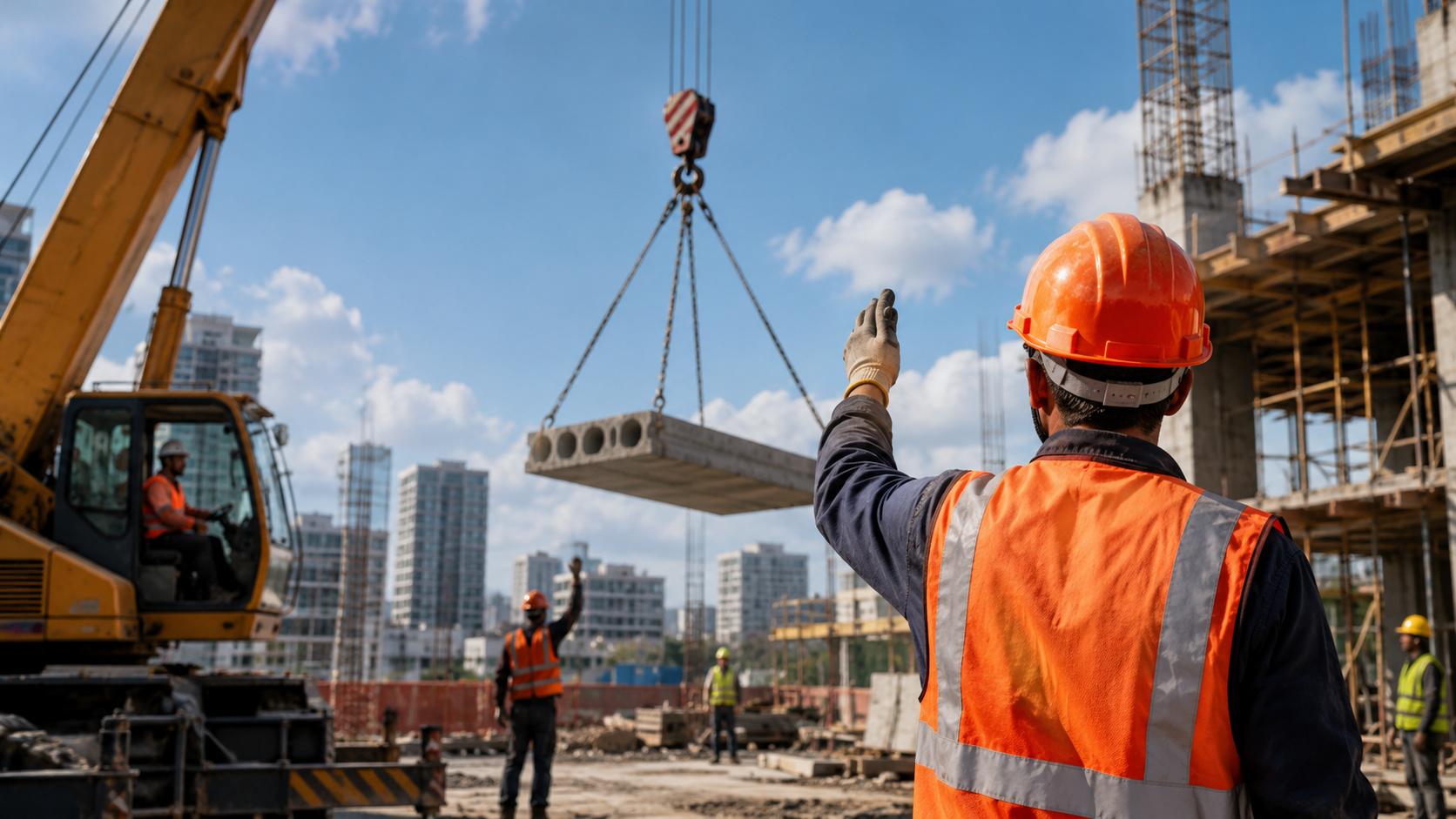
Why can the crane operator only obey the correct signalman on the construction site: among dozens of workers, a hand raised by the wrong person can confuse the maneuver and turn a load of tons into an immediate risk.

-
What changes with the new public transportation rules that can reduce pressure on fares and pave the way for zero fare in Brazil?
-
Argentina confirms Belgian giant to lead strategic Paraná River waterway and promises to reduce logistical costs on one of South America’s most important routes
-
MBRF surprises the logistics sector by demonstrating how Artificial Intelligence can directly influence deliveries throughout Brazil by reorganizing distribution routes in seconds, optimizing fleet usage, reducing logistics costs, and speeding up product arrivals even in the face of unforeseen road incidents.

Highway Auctions Pressure Infrastructure Sector
In recent years, the auctions have regained momentum after a period of paralysis.
Between 2015 and 2018, the peak of Operation Car Wash and the fiscal crisis, only two federal auctions took place.
From 2019 to 2022, there were seven.
The current cycle has accelerated: in 2024, the Ministry of Transport held seven auctions, the highest mark in 17 years, and the 2025 agenda maintains the market’s appetite.
The government’s declared goal is to reach 35 concessions by the end of the term.
According to Ronei Glanzmann, CEO of MoveInfra — an association that brings together six major groups in the sector — the advancement reflects the regulatory and economic maturity of the projects.
However, he points out a “mismatch” between the volume of work and the availability of qualified professionals.
“We have financing available, good contracts, and competitive auctions, one after the other, but it’s time to execute the projects, and there is a labor bottleneck,” he says.
The organization lists EcoRodovias, Motiva (ex-CCR), Rumo, Hidrovias do Brasil, Santos Brasil, and Ultracargo as members.
Lack of Engineers and Competition with Other Sectors
The National Industry Confederation estimates that there is a shortage of 75,000 engineers in the country.
Brazil graduates about 40,000 professionals per year, a pace lower than that of Brics countries, such as Russia and China, widening the gap between supply and demand.
Meanwhile, the appeal of areas such as information technology and services has attracted part of the recent graduates, reducing entry into “field” engineering.
According to Roberto Paolini, executive director of People and Organization at Arteris, factors such as the complexity of the career and less competitive starting salaries contribute to migration.
He highlights an immediate side effect: faster promotions of still junior staff to critical positions, something that “can compromise execution quality.”
The concessionaire, which manages stretches such as Fernão Dias (BR-381) and Régis Bittencourt (BR-116), has expanded technical and leadership development programs to retain talent.
Concessionaires Invest in Training and Retention
Unable to fill vacancies at the necessary pace, companies have been combining training programs with initiatives for retention and regional recruitment.
EcoRodovias aims to hire and train professionals in the locations where the projects will be executed, which, according to engineering director Filippo Chiariello, increases the sense of belonging and reduces turnover.
Within its management area, there are stretches of the Raposo Tavares (SP-270) and Castello Branco (SP-280) highways, as well as SP-029, in the São Paulo Metropolitan Region.
Motiva — the new corporate brand of the CCR group — has also strengthened internal qualification.
According to the director of People, Danila Cardoso, the company has intensified partnerships with universities for mentorship and “upskilling,” with discussions to create a proprietary engineering school in partnership with PUC-Rio.
The executive also reports the hiring of hundreds of engineers since the beginning of 2024 and the maintenance of open positions for the second half, given the peak of works expected from recent contracts.
The brand change, announced in 2025, accompanies a strategy for intermodal expansion of the group.
At Arteris, the guideline is to synchronize investment cycles with personnel cycles.
Paolini mentions training paths designed with institutions such as Fundação Dom Cabral and FGV, along with proprietary programs, to reduce the competition for talent among direct competitors.
The premise is to absorb professionals after relevant deliveries, avoiding the “back and forth” of teams between contracts and preserving accumulated knowledge from complex works.
Technology and Digital Engineering Gain Space
In addition to training, technology has become an ally to optimize construction sites and reduce dependence on highly specialized labor in certain areas.
Chiariello cites more self-sufficient equipment and digital engineering as tools to increase the number of professionals able to work on projects, by standardizing processes, centralizing data, and facilitating technical supervision.
At Motiva, innovation includes monitoring solutions and construction methodologies that reduce exposure to risks and improve ergonomics in the field.
Experts consulted by the sector argue that upskilling needs to be accompanied by curricular updates at universities, with an emphasis on project and management technologies.
The consensus is that the combination of accelerated demand and insufficient training translates into bottlenecks with direct impacts on construction schedules, especially at the beginning of concessions when structural interventions are more intense.
Risks of Delays and Impact on Quality
The acceleration of the pipeline brings with it a critical execution window.
As several lots enter the construction phase simultaneously, competition for the same profiles increases — designers, pavement engineers, geotechnical specialists, road safety, and executive planning.
When the absorption of professionals does not keep pace with contracts, companies report pressure on personnel costs and higher turnover, which tends to affect productivity and quality.
Thiago Araújo, a partner at Bocater Advogados, assesses that reversing this situation depends on updated courses and better career prospects.
For him, the attractiveness of engineering needs to advance compared to sectors that currently offer higher starting compensation.
The diagnosis coincides with recent data on the demand for engineering courses, which have not yet fully recovered to the levels of previous years, despite improvements in the infrastructure market.


-

1 person reacted to this.