Portuguese
  Spanish


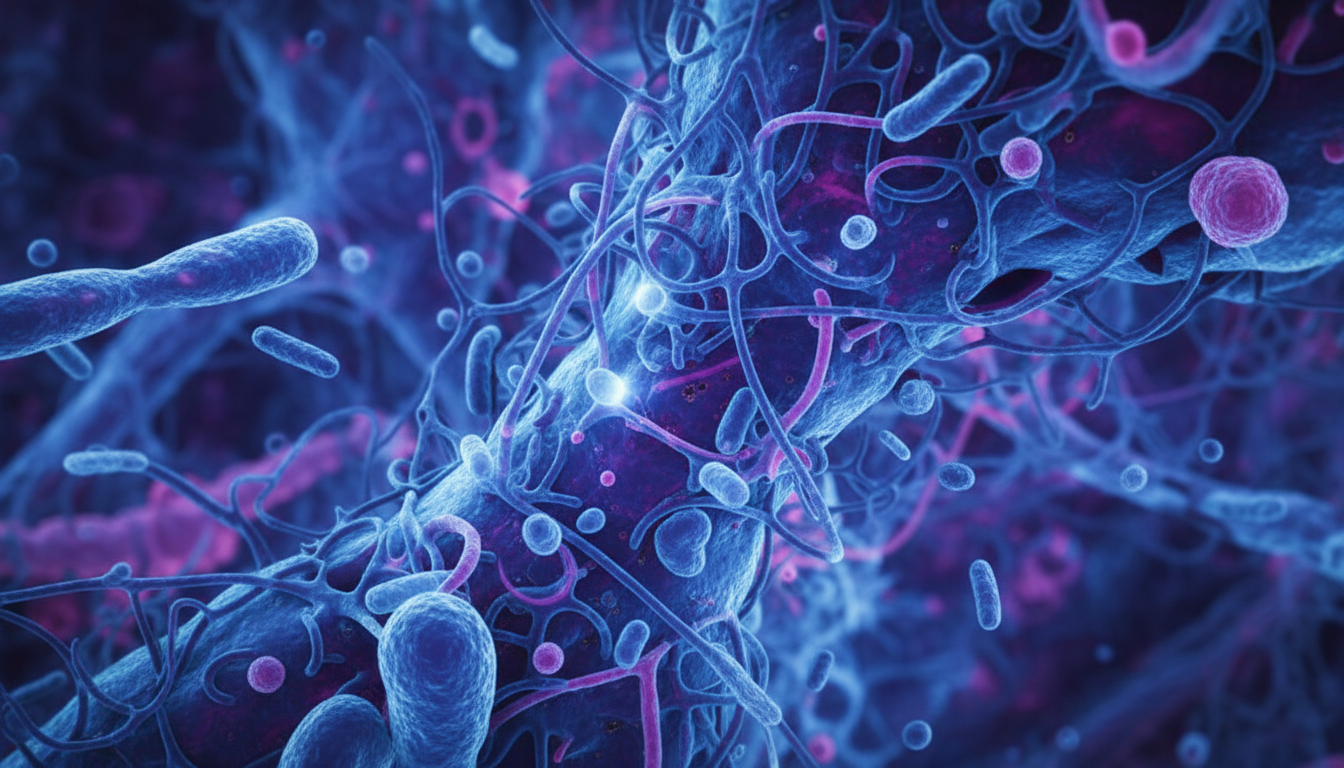

Researchers identified an unknown virus hidden inside a common human gut bacterium — and colorectal cancer patients were twice as likely to carry it
A gut virus that no one knew about may be the missing piece to explain why certain gut bacteria are linked to colorectal cancer.
Researchers from the University of Southern Denmark and Odense University Hospital discovered a bacteriophage — a gut virus that infects bacteria — present much more frequently in colorectal cancer patients.
Furthermore, the virus was hidden inside Bacteroides fragilis, a bacterium that is part of the gut flora of virtually all healthy people.
-
YouTuber Discovers Surreal Collection in 400-Year-Old Italian Fortress Near Florence: 419 Anvils, Giant Walruses, Ancient Church, and WWII Tunnels

-
Kazakhstan’s Torysh Valley Holds Thousands of Giant Stone Spheres, Intriguing Scientists with Ancient Oceanic “Cannonballs”

-
Egypt Discovers 18 Ancient Tombs with Gold Tongues, Unveiling Unusual Funeral Rituals and Amulets Believed to Give Voice to the Dead

-
Nigeria Dumps 120 Million Tons of Sand into Atlantic to Build Massive City with 8.4 km Sea Wall for Protection Against Ocean Waves and Erosion




In practice, this means that the problem may not be the bacterium itself — but the virus it carries without anyone knowing.
How the gut virus was discovered by accident
The discovery began when doctors noticed an intriguing pattern in Danish patients.
Indeed, several people who had a severe blood infection caused by Bacteroides fragilis were diagnosed with colorectal cancer shortly thereafter.
In other words, the bacterium seemed to be connected to cancer — but no one understood the mechanism.
So, the researchers decided to analyze what was inside the bacterium. Consequently, they found something that had never been described by science: a completely new virus, living silently inside the microorganism.
“We discovered a virus that had not been described before and that appears to be closely linked to bacteria found in colorectal cancer patients,” explained one of the research team members.

877 people analyzed — and the gut virus appeared twice as often in those with cancer
To confirm the discovery, the team analyzed stool samples from 877 people from Europe, the United States, and Asia.
The result surprised even the scientists themselves.
Colorectal cancer patients were approximately twice as likely to carry the gut virus, compared to people without the disease.
Moreover, in specific analyses, some viral sequences were able to identify about 40% of the cancer cases evaluated in the study.
To get an idea of the importance of this number: colorectal cancer is the third most common type of cancer in the world and the second deadliest. Any tool that helps detect it early can save millions of lives.
- Study sample: 877 people (Europe, USA, and Asia)
- Virus found: bacteriophage inside Bacteroides fragilis
- Increased risk: 2x higher chance of having the virus in cancer patients
- Detection: viral sequences identified ~40% of cancer cases
- Institution: University of Southern Denmark + Odense Hospital
It’s not the bacterium — it’s what it carries inside it
This discovery changes how scientists think about the relationship between the gut microbiome and cancer.
Until now, researchers focused on bacteria. For example, Fusobacterium nucleatum — another gut bacterium — had already been found in 20% of colorectal tumor tissue, compared to only 10% of healthy tissue in the same patients, according to data from the University of Washington.
However, the new discovery suggests that the true agent may not be the bacterium, but the virus it carries.
Researcher Damgaard summarized: “Perhaps it’s not just the bacterium that matters, but the interaction between it and the virus it carries.”
Thus, future treatments could target the virus — instead of eliminating bacteria that also perform important functions in the gut.
This logic resembles other recent discoveries about the human body, such as that doctors cut a tissue for centuries without knowing it was an organ — the mesentery.

The other suspect: the bacterium that survives stomach acid
In parallel with the bacteriophage discovery, another line of research is advancing on Fusobacterium nucleatum.
A study published in the journal Nature in March 2024, funded by the US National Cancer Institute, identified a specific subtype called Fna C2.
This subtype can survive for prolonged periods in the acidic conditions of the stomach — something other subtypes cannot.
Furthermore, in tests with mice, the presence of Fna C2 increased the number of precancerous growths in the large intestine and produced compounds that create a favorable environment for tumor growth.
Consequently, research indicates that Fusobacterium nucleatum is associated with reduced survival times, relapse, and the development of chemotherapy resistance.
What changes for those undergoing routine exams
If the gut virus is confirmed as a reliable biomarker, the impact on preventive medicine would be enormous.
In practice, a simple stool test — something millions of people already do in routine check-ups — could include the detection of this virus as a risk indicator.
Compared to invasive exams like colonoscopy, detecting the virus in stool would be cheaper, more accessible, and less uncomfortable.
For those with a family history of colorectal cancer, this possibility is especially relevant. Despite this, scientists warn that we are still far from a commercial test.
What science still doesn’t know — and why it’s too early for conclusions
The discovery is promising, but the researchers themselves are keen to highlight the limitations.
The study demonstrates a statistical association, not a proven causal relationship. In other words, the virus appears more often in those with cancer, but it is not known whether it contributes to causing the disease or is merely a sign that something has changed in the gut.
Damgaard reinforced: “We still don’t know if the gut virus contributes to the development of cancer or if it is just a sign that something has changed in the intestinal environment.”
Next steps include investigating whether the virus is present directly in tumors, how it alters the behavior of the host bacterium, and whether there is an impact on cancer development in experimental models.
Even so, the discovery already redefines a question science has been asking for decades: the villain of colorectal cancer may not be the bacterium we know — but the invisible virus it hides.
Just as the Greenland shark went 400 years without developing cancer thanks to a gene science is trying to understand, this virus may reveal paths no one was looking for.