






 Portuguese
  Spanish


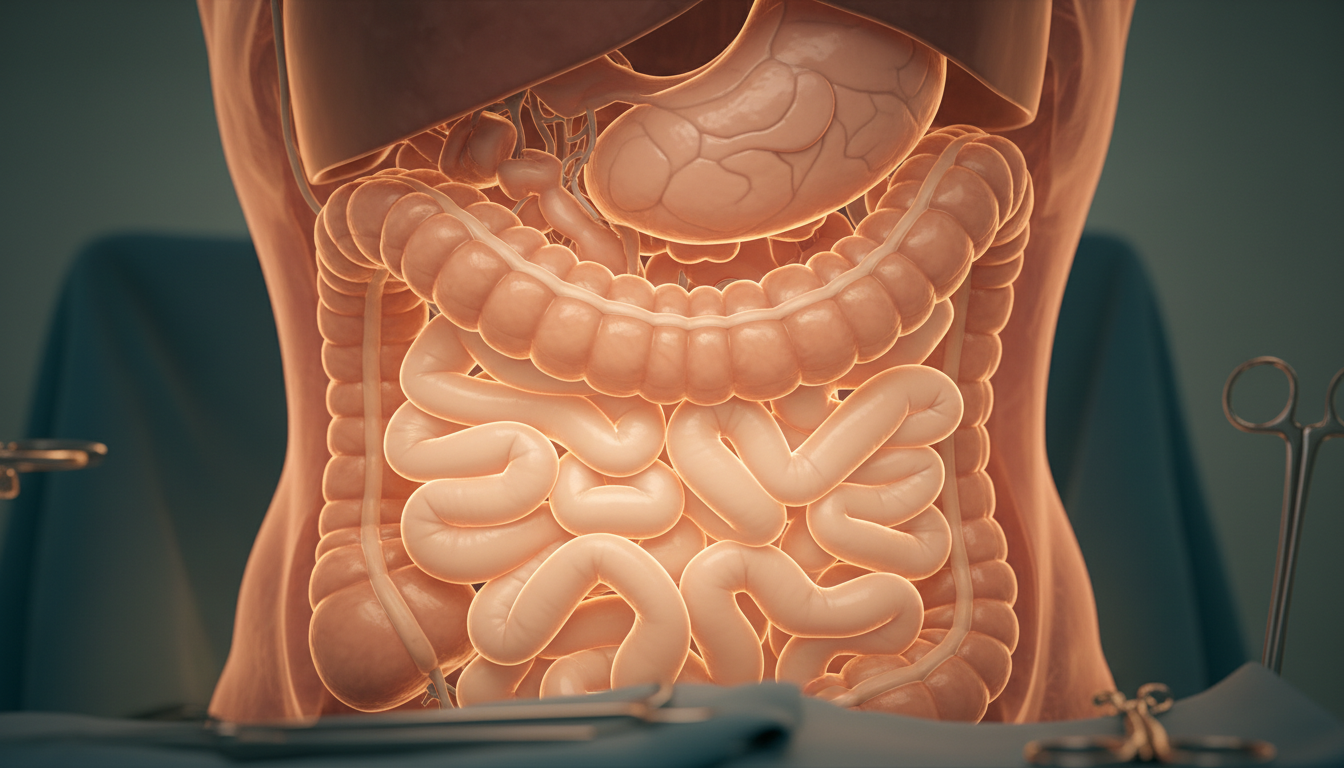

Reclassified after more than 100 years of anatomical error, the mesentery has transitioned from fragmented tissue to a continuous organ following a study published in The Lancet by an Irish team — and science still does not know for sure what it is for besides holding the intestine
For centuries, surgeons opened abdominal cavities, cut, and manipulated a membrane that connects the intestine to the abdominal wall. None suspected they were dealing with a whole organ. The mesentery, now recognized as the newest organ of the human body, was misclassified by classical anatomy for over 100 years.
The official reclassification came in a study published in late 2016 in the journal The Lancet Gastroenterology & Hepatology. The research, led by Irish surgeon J. Calvin Coffey, a professor at the University of Limerick and University Hospital Limerick, showed that the mesentery is not fragmented. On the contrary: it is a continuous and unique structure.
“The anatomical description made over 100 years ago is incorrect. This organ is far from being fragmented. It is a simple and continuous structure”, stated Coffey, according to a report from G1. The discovery placed the mesentery as the 80th organ of the human body officially recognized.
-
US Navy Sinks USS Oriskany with 230 kg of C-4, Creating World’s Largest Artificial Reef in 37 Minutes

-
U.S. Dumped Tanks, Jeeps, and Coca-Cola into the Pacific in 1945 After British and French Lowball Offer, Creating “Million Dollar Point”
-
Scientists Develop Needle-Free Insulin That Penetrates Skin, Reduces Glucose in Animals Within an Hour, Paving the Way for Diabetes Patches and Creams for Humans

-
After 40 Years of Research, Powdered Coconut Water to Be Produced in Brazilian Biorefinery, Aiming to Revolutionize Health for Children, Elderly, and Hospital Patients



What is the mesentery and why is it now an organ
The mesentery is a double fold of the peritoneum, the membrane that lines the abdominal cavity internally. This fold anchors the intestine to the abdominal wall, keeps the digestive organs in place, and allows for blood supply.
Before the reclassification, anatomists treated the mesentery as a set of separate structures, loose fragments of the peritoneum with no connection to each other. Thus, the classical description excluded the possibility that it was an independent organ.
Microscopic examinations conducted by Coffey’s team between 2012 and 2016 proved otherwise. The membrane is continuous from the beginning to the end of the intestine, like an open fan.
- Known function: to anchor the intestine to the abdominal wall and allow blood supply
- Actual function: still unknown to science — “we have no idea,” says Superinteressante
- Location: inside the abdominal cavity, connected to the small and large intestine
- Shape: double fold of the peritoneum, continuous like a fan
- Previous status: fragmented tissue, unclassified as an organ for over 100 years

Leonardo da Vinci already described it — but no one noticed
The mesentery is not an anatomical novelty in the literal sense. Leonardo da Vinci already described it in his drawings of human anatomy centuries ago as a structure that connected the intestine to the abdominal wall.
However, da Vinci did not classify it as an organ. Subsequent generations of doctors and anatomists followed the same line. Thus, for more than four centuries, the mesentery remained invisible as an organ — despite being visible in every abdominal surgery performed in the world.
Researchers studying the history of the human body point out that other tissues also took decades to be recognized. For example, scientists recently discovered that microplastics have already invaded the human brain, a region previously considered protected.

How Coffey proved that the mesentery is an organ
The surgeon J. Calvin Coffey and co-author Peter O’Leary spent more than 4 years collecting microscopic evidence. The first result appeared in 2012. The final confirmation came in 2016.
The publication in The Lancet Gastroenterology & Hepatology was a watershed moment. From then on, medical books and curricula around the world updated the list of human organs to include the mesentery.
“We have now established the anatomy and structure of the organ. The next step is to understand its function,” says Coffey. He adds: “We can categorize digestive diseases related to this organ.”
This perspective excites the medical community. Understanding the mesentery could open doors to diagnosing abdominal anomalies that currently have no explanation and developing less invasive surgical techniques. Similar medical advances, such as the new antibody that blocks a virus that infects a large part of the population, show how scientific revisions can transform clinical practice.

What science still does not know about the mesentery organ
The main caveat is that the actual biological function of the mesentery remains largely unknown. Besides holding the intestine in place, no one knows for sure which physiological processes it coordinates.
“Due to historical disregard, we still have no idea what the mesentery is for, aside from holding the intestine in place”, notes Superinteressante.
Coffey argues that the next step is to map the function of the organ: “If we understand its function, we can identify anomalies and establish when there is a disease, that is, when the organ starts to function abnormally.”
It is also worth noting that the reclassification does not mean the discovery of something physically new. The mesentery has always been there, visible in every abdominal surgery. What has changed is the scientific understanding of its structure: from loose fragments to a continuous organ.
So far, there are no published follow-up studies after 2016 that detail confirmed specific functions. Therefore, the scientific community is awaiting new data from Coffey’s group at the University of Limerick to move forward. For detailed information, it is worth consulting the report from Correio Braziliense and the educational material from Mundo Educação.




