Portuguese
  Spanish


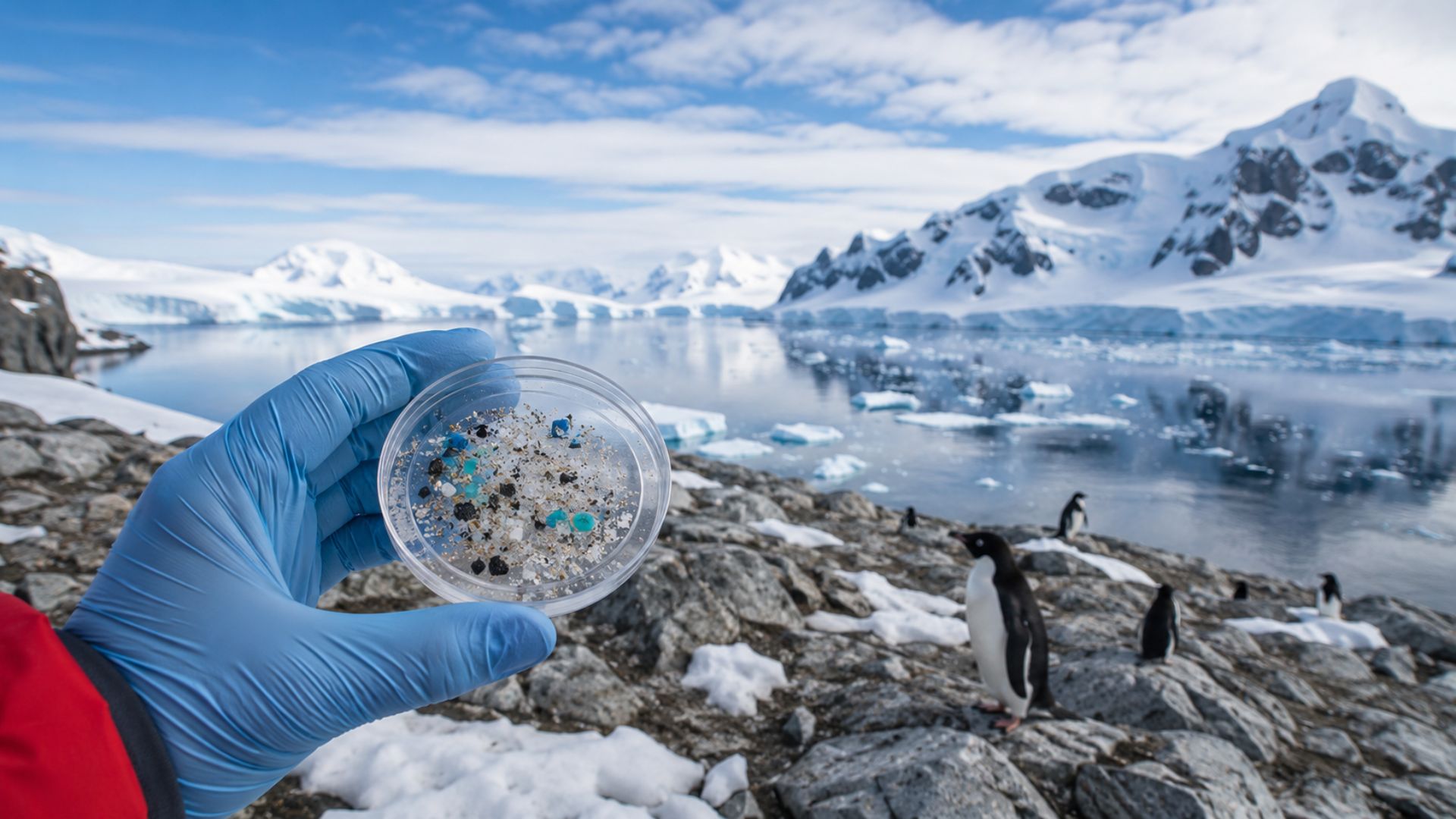


Researchers from the University of Cádiz have detected microplastics for the first time on beaches of Deception Island in Antarctica, with 2 to 31 particles per kilogram of sand at ten points sampled in 2023, with degraded polyethylene and PVC predominating, in an ecosystem that receives more than 15,000 visitors per season.
Researchers from the University of Cádiz have found microplastics in beach sediments on Deception Island, off the Antarctic Peninsula, in the first scientific detection of this type of pollution in the island’s intertidal zone. Sampling carried out in 2023 on ten beaches distributed across Deception Island revealed microplastic concentrations between 2 and 31 particles per kilogram of sand, values that researcher María Bellada Alcauza Montero classifies as “low or moderate compared to urban areas around the world, but significant in such an isolated environment.” The particles found are less than 5 millimeters, are predominantly fragments and films resulting from the degradation of larger plastic objects, and analysis by infrared spectroscopy (FTIR) confirmed the presence of polyethylene (PE) and polyvinyl chloride (PVC) as the most common polymers, materials found in bags, containers, pipes, cables, and fishing gear.
The study serves as an initial snapshot that will allow monitoring whether microplastic pollution in Antarctica is increasing over time. The University of Cádiz team plans to continue collecting samples and compare the results with new collections carried out in 2024 to verify if the concentration of microplastics grows or changes in composition, and advocates for the adoption of comparable monitoring protocols in all polar studies so that data from different expeditions can be cross-referenced. Deception Island is not just any place in Antarctica: it is an active volcano with a large horseshoe-shaped bay that during the austral summer hosts scientific research at the Spanish Gabriel de Castilla base, logistical operations, and tourism that can bring more than 15,000 visitors per season, a movement that multiplies the contact of equipment, technical clothing, and packaging with an ecosystem that has not evolved to process synthetic waste.
What researchers found on Antarctic beaches and how they detected microplastics

The methodology used by the University of Cádiz team followed a protocol that allows for replication in future monitoring campaigns. On each of the ten beaches sampled on Deception Island, three replicated samples of surface sediment were collected at the high tide line of the intertidal zone (beach strip exposed at low tide), an area that serves as an indicator because it is where particles brought by the sea mix with debris trapped between sand grains. The samples underwent density separation using hypersaline water, a process where sand is poured into very salty water and lighter particles (like plastic) float to the surface, then collected and subjected to Fourier-transform infrared spectroscopy (FTIR) to confirm that the material is indeed plastic and not a natural remnant of similar appearance.
-
She spent 73 years breathing inside an iron lung, survived the aftereffects of polio, and became the last woman in the United States dependent on the equipment before dying at 78 years old.

-
Brazilian students created a $1 filter using pine bark, cotton, and 3D-printed parts to clean cassava wastewater, reduce the toxicity of a hazardous waste, and transform contaminated water into biofertilizer.

-
Astronaut from Artemis II steps down after mission to the Moon and decision surprises after a record of 406,771 km, a historic 10-day journey, and an unprecedented achievement for Canada.

-
A fossil kept for years in a small museum in Montreal concealed 450-million-year-old soft tissue, a discovery that has only happened once before in history.


Analysis of the microplastics found revealed a pattern that tells the story of the particles’ origin and age. Amber and green tones predominated, colors that the study associates with advanced aging processes caused by ultraviolet radiation and the extreme conditions of Antarctica, indicating that the particles did not arrive on the island recently but underwent prolonged degradation during oceanic transport or already within the Antarctic environment itself. The absence of industrial granules (pellets) in the samples is relevant data because these granules are associated with direct losses during the production or transport of plastic raw material, and their absence suggests that the microplastics found on Deception Island are secondary, meaning they result from the progressive fragmentation of larger plastic objects that have degraded over time.
Where do the microplastics that reached Antarctica come from


The exact origin of microplastics found on the beaches of Deception Island cannot be determined with certainty from a single study. “It is very difficult to determine the exact origin of microplastics, but these data indicate that they have been in the environment for some time,” explained researcher Bellada Alcauza Montero, and the team adds that the particles appear to have undergone prolonged degradation processes either during transport by ocean currents connecting more northern seas with Antarctic waters, or due to exposure to the extreme conditions of temperature, wind, and UV radiation on the island itself. The two hypotheses are not mutually exclusive: some of the microplastics may have traveled by ocean currents from more populated regions, and some may have a local origin from activities taking place on Deception Island itself.
The human scale on the island is a factor that cannot be ignored when discussing the presence of microplastics in Antarctica. Deception Island is a frequent stop on Antarctic tourist routes and can receive more than 15,000 visitors per year during peak season, a volume that multiplies the movement of vessels, research equipment, technical clothing with synthetic fibers, and plastic packaging in an environment that lacks waste treatment infrastructure comparable to that of cities. The Spanish base Gabriel de Castilla operates during the austral summer with researchers and support staff, and the combination of scientific activity, military logistics, and tourism creates a continuous flow of materials that, even with rigorous waste management protocols, can leave a trace in the form of microplastics that detach from clothes during washing, from vessel mooring ropes, or from packaging exposed to the Antarctic wind.
Why microplastics in Antarctica are more concerning than on urban beaches
The concentration of 2 to 31 microplastic particles per kilogram of sand does not seem alarming when compared to coastal city beaches where numbers reach hundreds or thousands. The difference lies in the ecosystem: Antarctica harbors organisms adapted to extreme conditions of cold, salinity, and nutrient scarcity, and any additional pressure such as the ingestion of microplastics by benthic invertebrates (animals that live in association with sediment) can have effects that take time to appear but accumulate in a short and sensitive food chain. Microplastics can cause physical damage to the digestive system of these organisms and also act as vectors for chemical substances that travel adhered to the plastic, additives, and persistent pollutants that concentrate on the surface of the particles during oceanic transport.
The value of the University of Cádiz study lies less in the absolute number of microplastics found and more in the creation of a baseline that will allow measuring trends over the years. If future sampling campaigns on the same ten beaches of Deception Island record an increase in microplastic concentration, the scientific community will have quantified evidence that plastic pollution is intensifying in one of the planet’s most remote ecosystems, a fact that would strengthen arguments for more rigorous regulations on the use of disposable plastics in Antarctic operations and polar tourist routes. The team advocates for comparable monitoring protocols to be adopted in all polar studies, a standardization that currently does not exist and which makes comparison difficult between data collected by different expeditions at different points in Antarctica.
What can be done to reduce microplastics in Antarctica

The practical measures suggested by the study to curb the arrival of microplastics in Antarctica are difficult but necessary to implement. Improving waste management at scientific bases and on ships operating in the region, reducing the use of disposable plastics in expeditions and tourist operations, and monitoring materials related to fishing and tourism are actions that depend on international coordination in a continent governed by the Antarctic Treaty System, where decisions involve dozens of countries with different interests and capabilities. The reduction of microplastics in Antarctica begins, paradoxically, far from it: in factories that produce packaging, in cities that do not adequately treat sewage, and in consumers who discard plastic that eventually reaches the ocean and travels by currents to the planet’s most remote beaches.
For those living thousands of kilometers from Antarctica, the detection of microplastics on Deception Island serves as a measure of the global extent of the problem. If polyethylene and PVC particles reach the beaches of an active volcano at the extreme south of the planet, the conclusion is that there is no place on Earth beyond the reach of plastic pollution, and every package improperly discarded in any city in the world is a candidate to become microplastic that decades later may appear in a sediment sample collected by researchers in one of the most isolated and fragile ecosystems that Earth still preserves.
And you, do you think the presence of microplastics in Antarctica should change the way we use plastic in our daily lives? Leave your opinion in the comments.