





 Portuguese
  English
  Spanish
  6 min of reading
  0 comments


Chemical analyses linked artifacts to nearby rocks now buried, revealing planning, territorial knowledge, and a long-lasting technological tradition in northern Israel
Archaic human groups that occupied northern Israel approximately 780,000 years ago did not pick up just any stone found along the way. They identified different basalt sources, assessed the material’s characteristics, and chose the most suitable rock for each stage of tool-making.
The conclusion appears in a study released in June 2026 and accepted for publication on April 30 in the scientific journal Scientific Reports. The research analyzed artifacts from the Gesher Benot Ya‘aqov site, located in the Upper Jordan Valley, in an area that in the past was near the shores of the ancient Lake Hula.
The results indicate that hominins, as humans and their extinct evolutionary relatives are called, had a deep understanding of the landscape. The choice of basalt followed an organized pattern, repeated in different periods of occupation of the site, rather than relying solely on the easiest stone to reach.
-
End of checkout counters: Surprising change in supermarkets advances across Brazil as Atacadão and Assaí expand self-service technology for consumers, reducing lines, speeding up purchases, and transforming the payment experience without relying on traditional checkout counters.

-
Brazilian referee steals the show at the opening of the 2026 World Cup, sends off three players, speaks in English at the stadium, and even becomes a meme on social media.
-
Labubu dolls appear at the opening of the 2026 World Cup, steal the show in Mexico, and make many people wonder what serrated-tooth plush toys have to do with FIFA.
-
Family builds a house inside a giant greenhouse in Norway, grows fruits in winter, and creates an almost self-sufficient home with solar energy, biomass, and micro-hydroelectric power.





This discovery does not mean that these groups controlled mines or territories in the same way as later societies. What the researchers identified was a technical mastery over raw material sources, accompanied by the ability to plan production and transmit knowledge across generations.
Chemical signature revealed where the stones came from
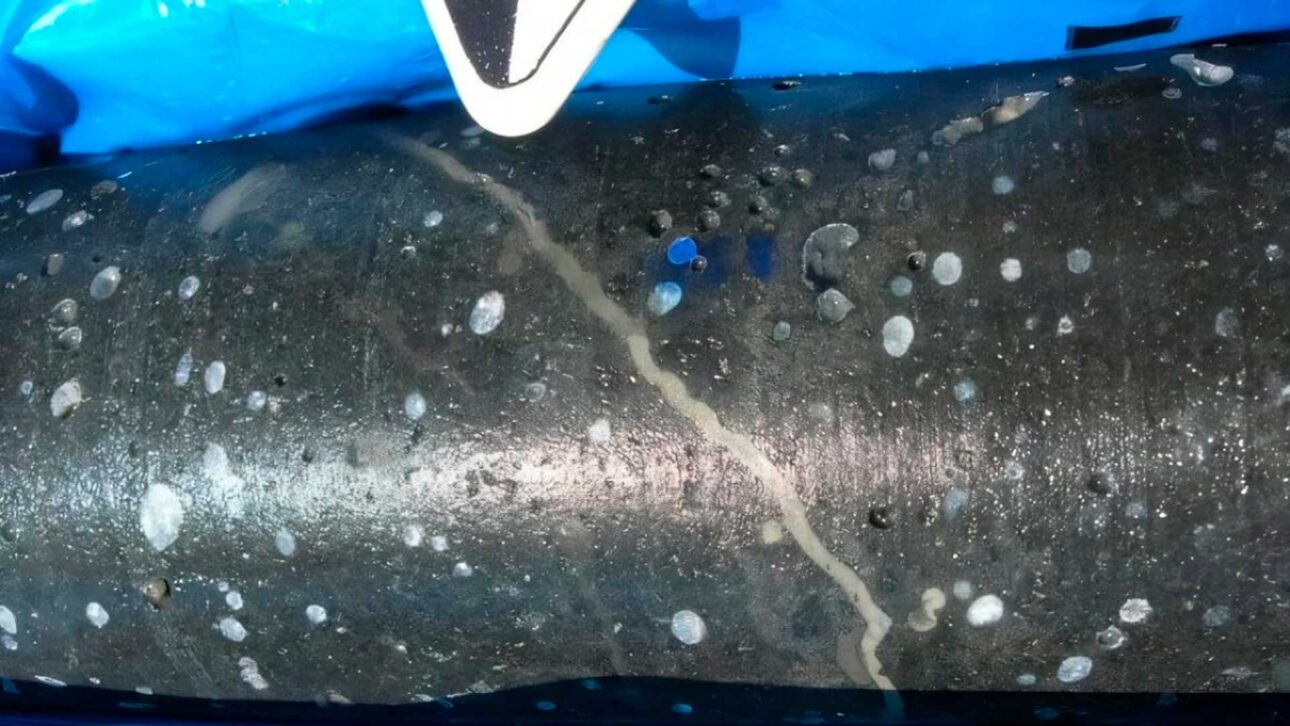
Basalt is a hard volcanic rock formed by the cooling of lava and can present subtle differences in composition depending on the volcanic flow of origin. These variations function as a kind of chemical signature, allowing comparison of an archaeological tool with possible natural sources.
According to the study published in Scientific Reports, the researchers measured major elements, trace elements, and rare earths present in both the artifacts and geological samples. The results were processed by statistical methods capable of grouping rocks with similar chemical characteristics.
The investigation was conducted by Tzahi Golan and Yoav Ben Dor, from the Geological Survey of Israel, and archaeologist Naama Goren-Inbar, from the Hebrew University of Jerusalem. Stone cores, flakes, hand axes, and cleavers from different archaeological layers were examined.
Scientists compared tools with nearby sources and buried rocks
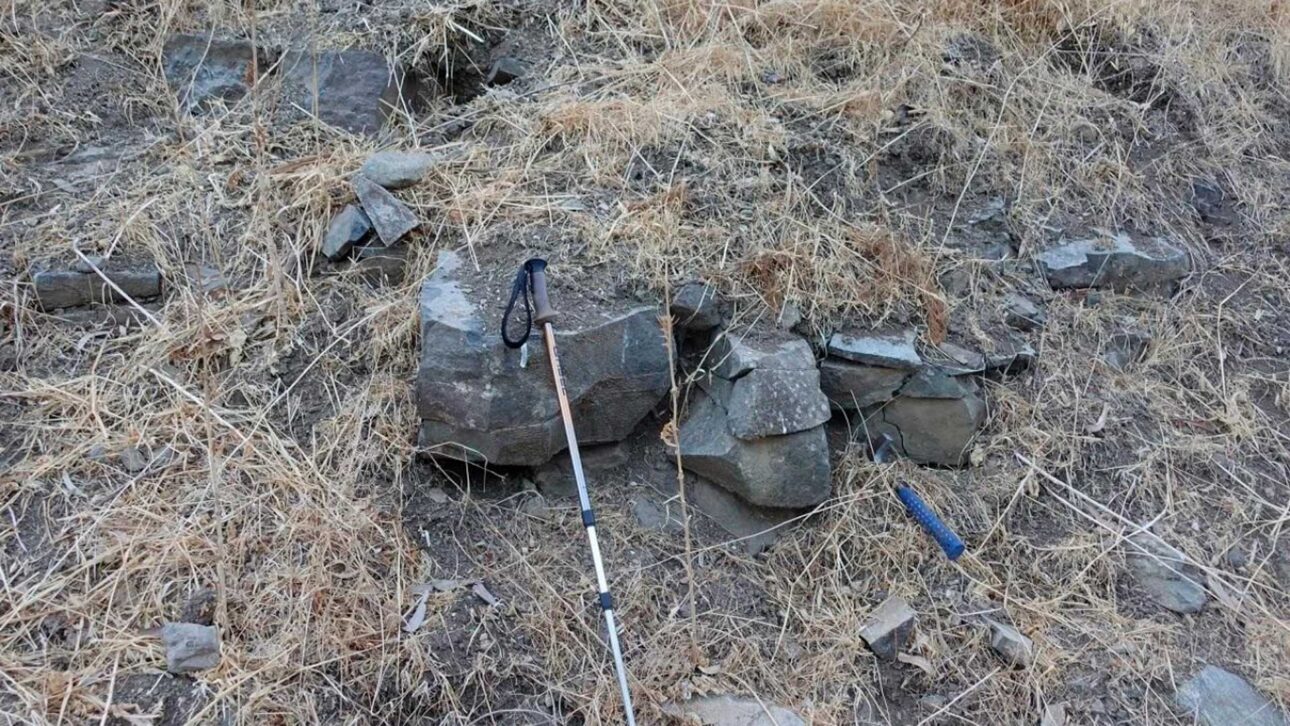
The team collected samples from eight basalt flows located within a radius of approximately 10 kilometers from the site. Some outcrops were just a few hundred meters from where the artifacts were found.
The scientists also resorted to a drilling conducted in Gesher Benot Ya‘aqov. Six samples taken from depths between 32 and 117 meters allowed them to know volcanic layers that are currently hidden under sediments.
According to information from the Hebrew University of Jerusalem, this combination of archaeology, geology, and geochemistry helped reconstruct a landscape that no longer exists on the surface. Tectonic movements, erosion, and sediment deposition profoundly altered the Jordan Valley over hundreds of thousands of years.
The results showed that a large part of the artifacts had a composition compatible with basalts found less than a kilometer from the camp. Some tools also matched volcanic units now buried, indicating that these rocks were probably exposed and accessible during the period when hominins lived there.
Cores over 20 kilos required strength and planning
The manufacture of large tools began with the selection of thick basalt slabs. From these, prehistoric craftsmen produced the so-called giant cores, some weighing more than 20 kilos, from which large flakes were detached.
These flakes served as a base for making bifaces, tools worked on both sides. Among them were hand axes and cleavers, instruments probably used in different cutting tasks, processing animals, wood, and vegetables.
The process was not simple. It was necessary to identify the densest and most resistant part of the basalt flow, choose a slab with an appropriate shape, calculate the impact point, and remove a sufficiently large flake without breaking it in an undesirable way.
Much of these steps probably took place outside the main occupation area. Previous studies had already observed that the amount of debris found at the site was insufficient to explain all the tools recovered, suggesting that some pieces were partially prepared at other points and then transported.
Each type of tool might require a different basalt
The giant cores showed a strong correspondence with local sources and with layers identified by drilling. This makes sense because the start of production required very heavy blocks, difficult to transport over long distances.
The cleavers, however, exhibited a more varied composition. Some did not directly correspond to the analyzed outcrops, which may indicate the search for different sources, currently buried, destroyed by erosion, or simply not included in the sampling.
Researchers consider that certain properties, such as plate size, shape, density, orientation of layers, and ease of fracture, could make a basalt more appropriate for a specific instrument. It was not enough to find stone, it was necessary to find the right stone.
The difference between the materials used in the cores, hand axes, and cleavers reinforces the hypothesis of conscious choices. The behavior contrasts with purely opportunistic collection, in which any available rock would be used indiscriminately.
The patterns also appeared in tools retrieved from different archaeological horizons. For the authors, this repetition reveals a continuous Acheulean tradition, preserved during successive occupations and possibly taught among individuals and generations.
Gesher Benot Ya‘aqov preserves signs of a complex life
The site was discovered in the 1930s, near the Jordan River. More extensive excavations took place between 1989 and 1997 and revealed various layers with basalt, flint, and limestone tools, as well as plant and animal remains.
A study published by the journal Science in 2004 found concentrations of small burnt flint fragments, interpreted as evidence of controlled use of fire about 790,000 years ago. The distribution of materials indicated that the fires did not occur in a completely random manner.
In 2022, a study published in Nature Ecology & Evolution presented evidence that large fish were cooked and consumed in Gesher Benot Ya‘aqov approximately 780,000 years ago. Fish teeth found near areas associated with fire showed alterations compatible with exposure to controlled temperatures.
Another study, published in 2025 in the journal Proceedings of the National Academy of Sciences, identified starch grains on percussion tools. The traces were associated with the processing of plant foods, such as acorns, grass seeds, water chestnuts, and aquatic plant rhizomes.
Discovery does not allow for certainty in identifying who made the pieces
Despite the technological sophistication, the new study does not determine which human species produced the tools. Researchers use expressions like Acheulean hominins, avoiding directly attributing the artifacts to Homo erectus or another species without sufficient fossil evidence.
It is also important to consider the research limitations. The geochemical analysis used only a portion of the vast archaeological set, which includes hundreds of bifaces and flakes found in certain layers.
In one of the studied levels, for example, excavations had already recorded 161 hand axes, 60 cleavers, and more than 680 flakes related to production. The authors themselves acknowledge that new sampling could identify other basalt sources and make the displacement map more detailed.
Even with these limitations, the body of evidence shows that the inhabitants of Gesher Benot Ya‘aqov were capable of observing differences between rocks, remembering where to find them, and organizing a multi-step production sequence. The technology relied on memory, social learning, and accumulated knowledge of the landscape.
The study transforms pieces of basalt into records of decisions made almost 800,000 years ago. For the researchers, these tools demonstrate that capabilities such as planning and cultural transmission have much older roots than the history of modern societies might suggest.


Be the first to react!