Portuguese
  Spanish


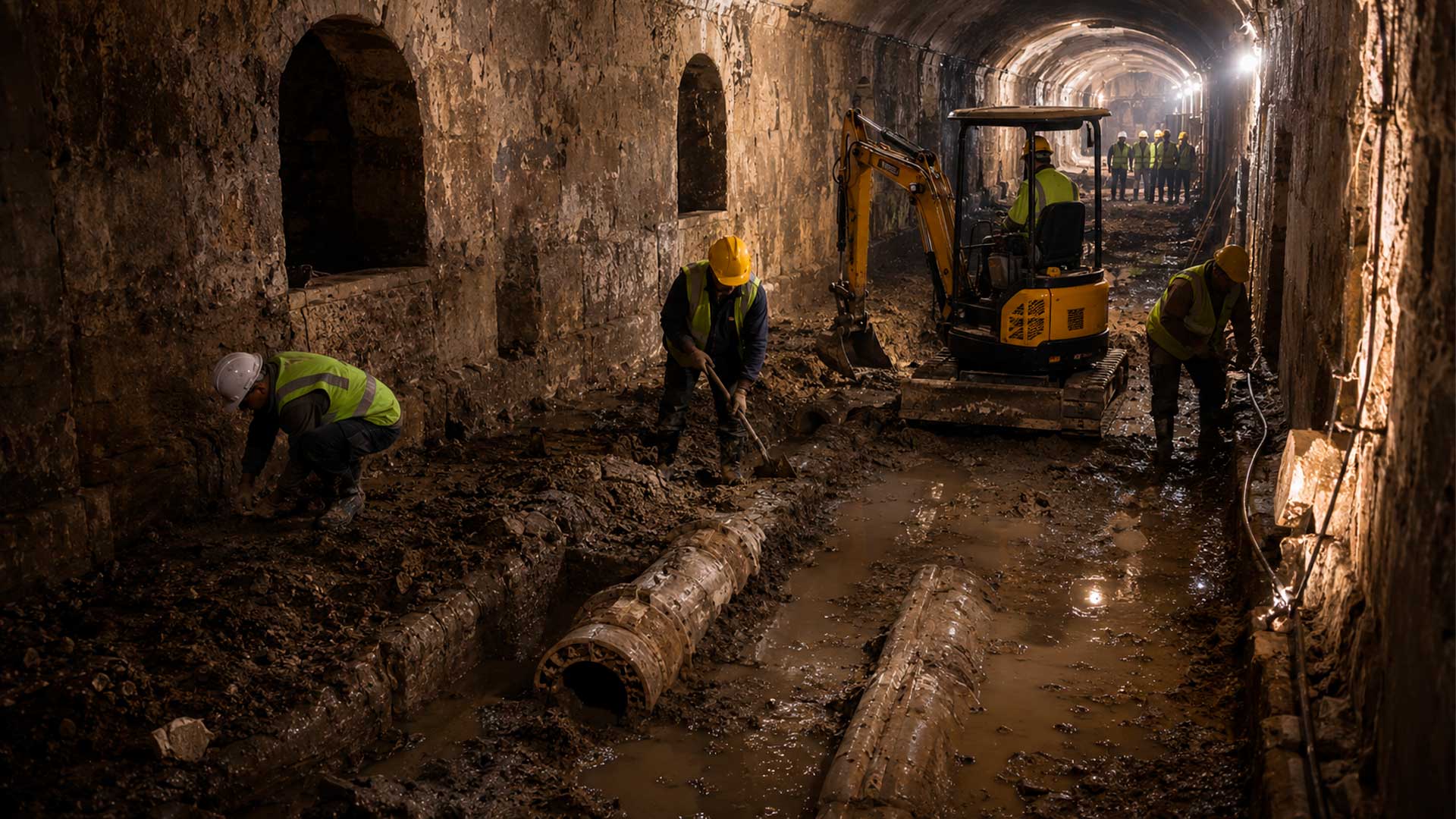


Cleaning started in 2025 exposed passages, cisterns, and hydraulic channels under the Istanbul monument, revealing an infrastructure modified over centuries
A cleaning operation in the underground of the Hagia Sophia, also known as Santa Sofia, revealed underground structures that were blocked by soil, mud, and debris. Among the findings are a tunnel already cleared along approximately 160 meters and an area crossed by seven water conduits built at different times.
The work began in early February 2025, under the ancient atrium of the monument, a monumental courtyard most of which disappeared over the centuries. As the accumulated materials were removed, the teams managed to reach passages, vaults, and connections that did not appear completely in previous surveys.
The results were detailed by architect Hasan Fırat Diker, a member of the Hagia Sophia’s scientific committee, in a study published online on March 16, 2026 in the scientific journal Open Archaeology. The research gathers data from the excavations and cleaning, as well as measurements made with laser scanning equipment.
-
Brazil Faces Norway in World Cup at Stadium Linked to Jimmy Hoffa’s Mysterious Disappearance

-
Retired Woman Leaves French Public Housing Due to Fear, Lives in Van for Weeks, Prompting Response from Local Authorities and a Priest
-
9-Year-Old Fabio Isaac Wins Gold at Copernicus Math Olympiad in Singapore, Representing Peru Against Global Young Talents
-
Brazilian Physics Student Builds Realistic Cardboard Replica of Honda Africa Twin Using Mathematical Calculations





The set should not be interpreted simply as a network of “secret passages”. The evidence indicates that part of the structures had functions related to drainage, water distribution, construction support, and terrain adaptation, offering new clues about the urban organization of ancient Constantinople.
160-meter tunnel was filled with a thick layer of mud
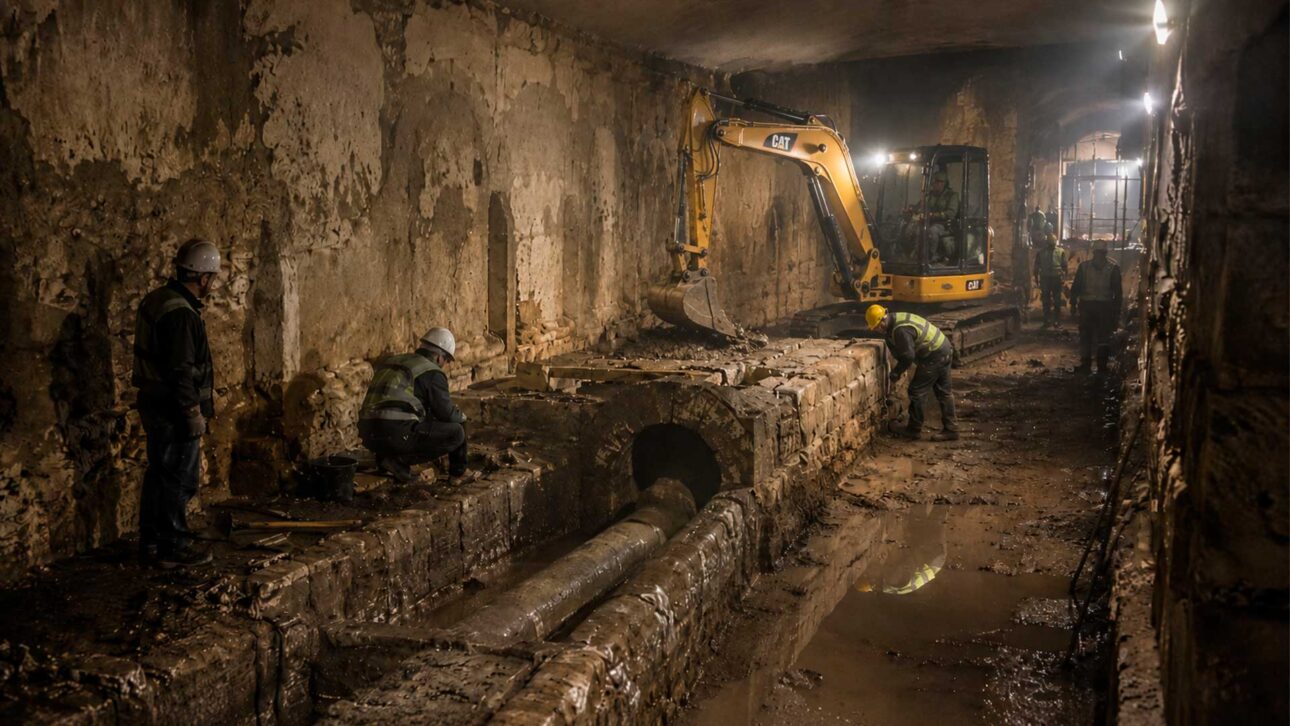
One of the main discoveries was named by researchers as Structure 4. The tunnel is about 1.5 meters wide and 2 meters high, with the floor set on natural rock and an approximate incline of two degrees in the northeast-southwest direction.
Before the cleaning, the space was filled with a layer of mud that reached approximately 1.5 meters. In September 2025, about 160 meters of the structure had already been cleared, but the work had to be halted at both ends due to collapses that prevented safe progress.
The scientific article reports that Structure 4 is at a lower level than the constructions associated with the atrium of the current Hagia Sophia. This position led experts to consider that it may be earlier than the building inaugurated in the 6th century during the reign of Emperor Justinian I.
The passage also presents a slope compatible with the drainage of rainwater. Therefore, the most cautious interpretation is that it was a large underground infrastructure work, and not necessarily a corridor intended for the daily circulation of people.
Structure may have supported an ancient street of Constantinople
The position of the tunnel coincides with traces of an ancient road found during excavations carried out in the 20th century. This strengthened a hypothesis according to which Structure 4 functioned as a base and drainage system for an important street that crossed that part of the city.
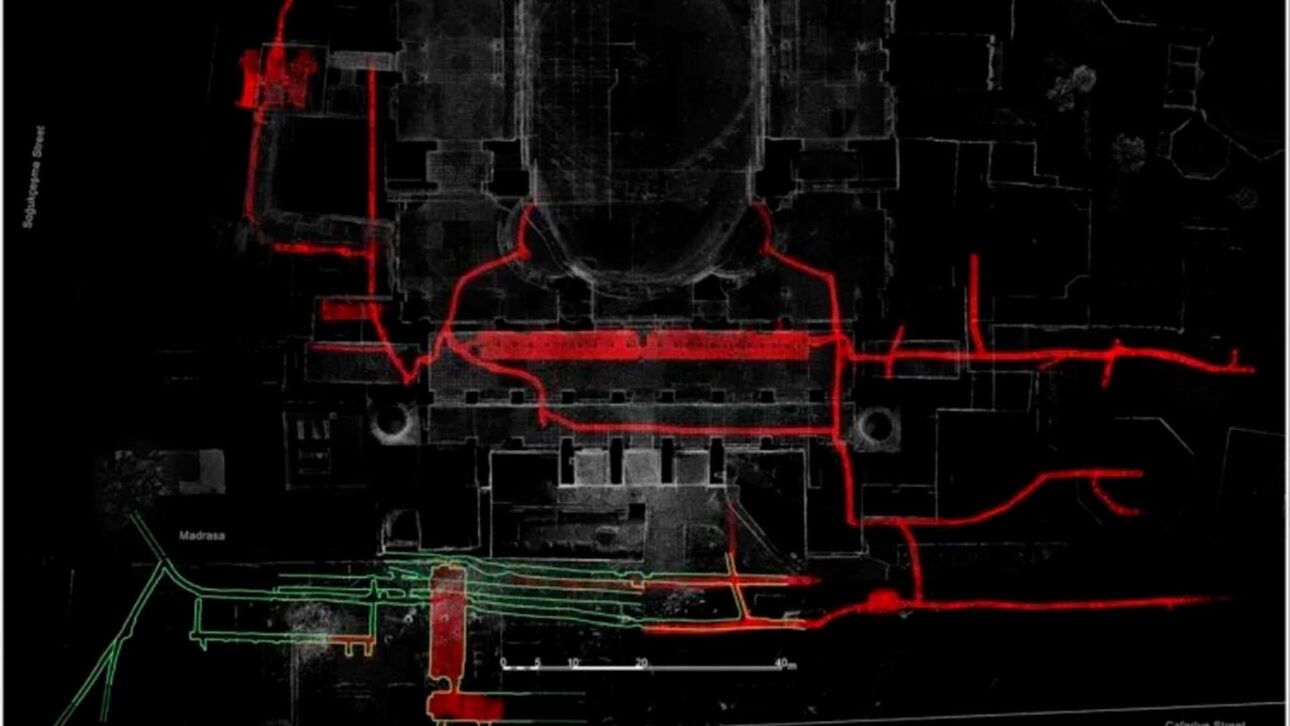
This possible road, called Street E in archaeological studies, would have passed in front of the Hagia Sophia and Hagia Irene, heading towards the region of the ancient acropolis and Sarayburnu, at the entrance to the Bosphorus Strait. The route could also have continued towards the current Little Hagia Sophia Mosque.
The correspondence between the orientation of the street and that of the tunnel is considered relevant, but the complete connection has not yet been demonstrated by excavations. The blockages at the ends prevent knowing how far the structure continues and if there are other preserved sections outside the perimeter of the Hagia Sophia.
Therefore, it is not yet possible to affirm that the 160-meter tunnel crossed all of Constantinople. The study indicates that an urban-scale archaeological investigation could reveal extensions, but presents this possibility as a hypothesis that needs to be confirmed.
Seven conduits show how the water network was expanded over centuries
Another important discovery occurred in the so-called Structure 1, where seven distinct water conduits were identified. They follow in different directions, including northeast, southwest, and northwest, and do not seem to have been built all at the same time.
Some terracotta pipes were integrated into the original construction. Other lines were added later, crossing walls and using different routes, probably because the older systems could no longer meet the increased demand.
The differences in diameters, materials, and installation techniques indicate successive renovations. For researchers, the underground preserved stages of transformation that may range from the Byzantine period to the Ottoman and Republican periods, possibly reaching the 19th and 20th centuries.
The concentration of hydraulic lines suggests that the atrium of Hagia Sophia did not have only a religious or ceremonial function. Being in a protected and central area, its infrastructure may have helped to distribute water to nearby buildings.
This does not mean that the seven conduits traversed all of Constantinople. The possibility of a longer urban axis is mainly related to the ancient street located over Structure 4, while the documented conduits formed a complex hydraulic network in the immediate vicinity of the monument.
Seven lines of tunnels form a larger set under the monument
On February 27, 2026, Turkey’s Minister of Culture and Tourism, Mehmet Nuri Ersoy, presented updated information on the restoration. According to the announcement released after the technical visit, the teams documented seven lines of tunnels with hundreds of meters in length in the area of the west garden and the north facade.
This data is different from the seven conduits found in Structure 1. The tunnels represent the passages and underground spaces of the set, while the conduits correspond to the lines used to transport or distribute water within part of this infrastructure.
The authorities reported that 1,068 tons of earth and filling materials were removed from the tunnels during the works. In another underground complex, identified as a hypogeum or funerary structure, an additional 102 tons were removed.
The hypogeum has a central corridor and side chambers organized symmetrically. Previous studies place it in the 4th century, which means it may be older than the current Hagia Sophia, built between the years 532 and 537.
Discoveries show constructions from different periods
The analysis of the walls, bricks, mortar joints, and types of vaults revealed that the underground structures do not belong to a single phase. Some appear contemporary to the reconstruction promoted by Justinian, while others were added or modified later.
Structures 1, 2, and part of Structure 6 may have been planned along with the 6th-century Hagia Sophia. Meanwhile, Structures 3 and 5 present irregular plans and forcibly opened connections in older walls, signs that they probably emerged in later renovations.
The material removed from the underground mainly contains fragments of bricks and ceramics, as well as a smaller amount of metal, stone, and bone objects. So far, the greatest scientific value of the work lies in the architecture itself revealed, which allows understanding how the site was expanded and adapted over approximately 1,500 years.
Restoration seeks to protect Hagia Sophia against earthquakes
The discovery occurs during one of the most extensive conservation campaigns carried out on the monument. Besides the underground cleaning, the project includes material analysis, radar surveys, digital modeling, and reinforcement of vulnerable areas of the dome, facades, and minarets.
The need for protection is especially important because Istanbul is located in a region of high seismic activity. In April 2025, a 6.2 magnitude earthquake hit the Marmara Sea region and reinforced concerns about the resilience of the city’s major historical monuments.
Hagia Sophia is part of the Historic Areas of Istanbul, a group included in the UNESCO World Heritage List in 1985. The site has been a Christian cathedral, Ottoman mosque, museum, and returned to functioning as a mosque in 2020, accumulating architectural and religious elements from different periods.
Understanding the galleries, channels, and foundations is essential before any structural intervention. A blocked tunnel, a damaged vault, or inadequate water circulation can contribute to infiltration, humidity, and loss of stability.
Opening of the passages to the public still depends on safety
In early 2025, members of the scientific committee told the Hürriyet Daily News that part of the structures could be prepared to receive visitors. At that time, the cleaning project was estimated to take about a year and included tunnels, vaults, and the underground funerary complex.
However, there is still no official date for the opening of these areas. Collapses, poor ventilation, narrow spaces, and the need to reinforce the vaults make any visitation dependent on technical studies, emergency routes, and conservation measures.