Portuguese
  Spanish


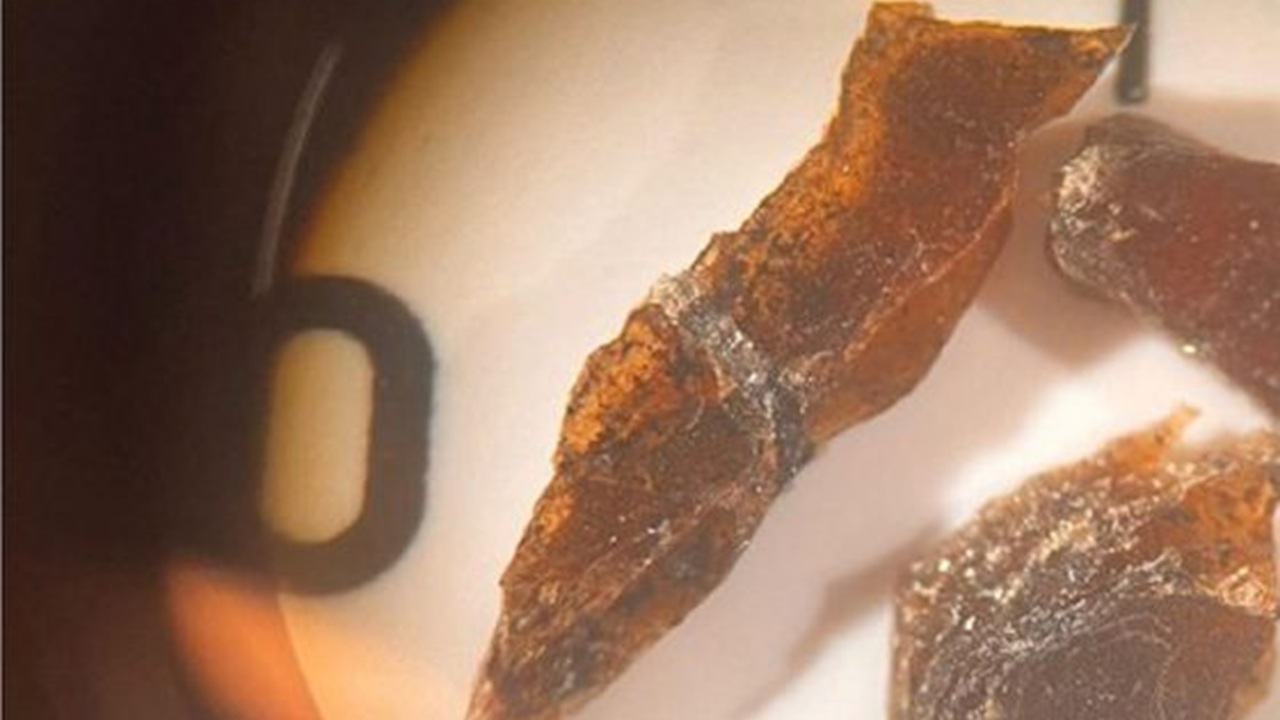

Present in electric cars, offshore wind turbines, smartphones, defense systems, and advanced manufacturing, rare earth magnets rely on a concentrated and environmentally sensitive supply chain. In Sweden, researchers are seeking a cleaner alternative by mapping local deposits and designing magnets based on the elements actually available
Rare earth magnets are at the heart of technologies linked to the energy transition, but the production of these materials poses a challenge that goes beyond innovation. Present in electric cars, offshore wind turbines, smartphones, defense systems, and advanced manufacturing, they rely on a concentrated and environmentally sensitive supply chain.
According to scitechdaily, in Sweden, researchers from Uppsala University are working on an alternative that attempts to reduce this problem from the source.
The proposal not only involves searching for new deposits but also a change in the way elements found underground are utilized.
-
5.5 tons pulled from the seabed: a ‘living carpet’ of invasive coral was suffocating the Baía de Todos-os-Santos until the Brazilian Navy descended with divers, steel brushes, and acid salt to carry out the largest eradication operation of the species ever conducted in the country.

-
A Brazilian project dumped 5,500 concrete blocks and 2 barges into the ocean to block trawling in Paraná, and 25 years later what seemed like a risky intervention turned into an underwater nursery, a diving spot, and a refuge for endangered species.

-
Micron invested $9.3 billion in a factory in Hiroshima to produce the memory that powers the brain of global artificial intelligence.
-
Few people know, but China photographed for the first time Earth’s “quasi-moon,” a small asteroid that accompanies our planet around the Sun and may be a fragment torn from the Moon millions of years ago.



Professor Martin Sahlberg, from the Materials Chemistry area, summarizes the impasse as a geopolitical issue.
China dominates the processing of rare earths and the production of magnets, a position that gives it influence over essential inputs for clean energy, electronics, defense, and advanced industry.
Recent export controls have shown how this dependency can become a supply risk. For sectors that rely on continuous supply, the concentration of production has become a critical point.
Why rare earth magnets have become a strategic problem
Despite the name, rare earth elements are not always rare. The obstacle lies in finding them in rich deposits to justify extraction and separating them efficiently.
This process may require harsh chemicals. Additionally, radioactive elements can appear in the same deposits, making production more environmentally challenging.
Sahlberg describes current mining as a dirty business. The irony is that materials essential for clean technologies still depend on a supply chain that can generate impacts before reaching factories.
It is at this point that Sweden seeks its own space. The country has identified deposits in Kiruna, Bergslagen, and Norra Kärr, around Gränna.
LKAB described Kiruna as home to Europe’s largest known rare earth deposit. In Per Geijer, more than 1.3 million tons of rare earth oxides have been reported.
For Sahlberg, Sweden’s possibilities for extracting rare earth elements are relatively good, even in international comparison. The advantage, however, is not only in the existence of the reserves.
Rare earth magnets can be made from what each deposit offers
The research conducted in Uppsala proposes a different logic. Instead of extracting a specific metal and treating the rest as waste, the team wants to map the entire chemical composition of the Swedish deposits.
From this inventory, the researchers intend to design magnets according to the available elements. Sahlberg compares the idea to the program “What’s in your fridge?”, where a recipe is created with what is on hand.
Historically, mining targeted specific metals, such as iron, copper, or gold. Now, the approach is broader: discovering which elements exist in the deposits, in what proportions, and how to utilize them as efficiently as possible.
This strategy paves the way for new “magnet recipes.” Instead of forcing the production chain to follow a single purification standard, the final material could be designed based on local mineral chemistry.
The goal is to reduce costs and impacts right at the start of production. If the magnets are designed based on the elements present in the deposit itself, there may be less need for intensive purification steps.
This change can reduce impacts in refining and manufacturing. The idea is to better transform what already exists in the ore, rather than discarding part of the elements for not fitting the traditional model.
From rock to final magnet, Sweden tries to build a cleaner chain
The project brings together theoretical physicists, geologists, and materials engineers. The goal is to chart a cleaner path between the raw rock and the finished magnet.
Sahlberg calls the work basic research inspired by applications. Although the investigation is still in the scientific field, it targets an area of technological importance.
Sweden also has structural factors cited by the researcher. In addition to the reserves, it has good access to water, relatively cheap energy, and interest in leading the green transition.
This set helps explain why rare earth magnets have started to occupy space in the industrial debate. They are not just invisible components, but pieces linked to supply security, clean energy, and less dependent chains.