






 Portuguese
  Spanish


Brazilian Offal Exports Gain Strength in Asia and Challenge the United States, While Japan Considers Enabling Slaughterhouses and Indonesia Expands Its Demand for Brazilian Beef.
Abiec states that the main fear of the United States, amid the tariff storm against Brazilian products, is seeing Brazil gain ground in Asia with the export of bovine offal.
According to the entity, items like tongue have a much higher value in the region and can yield up to six times more than in the U.S., in addition to opening doors for a stable flow of demand.
The association’s president, Roberto Perosa, believes there is a “diplomatic moment” for Japan to enable Brazilian slaughterhouses as early as 2025.
-
Brazilian Startup Turns Coffee Grounds into Plant-Based Leather, Cutting Water Use by Over 50 Times for High-Impact Sustainable Fashion

-
Eco Invest Auction Aims to Unlock $10 Billion in Investments, Focusing on Green Fertilizers, Critical Minerals, Batteries, and AI for Clean Industry in Brazil

-
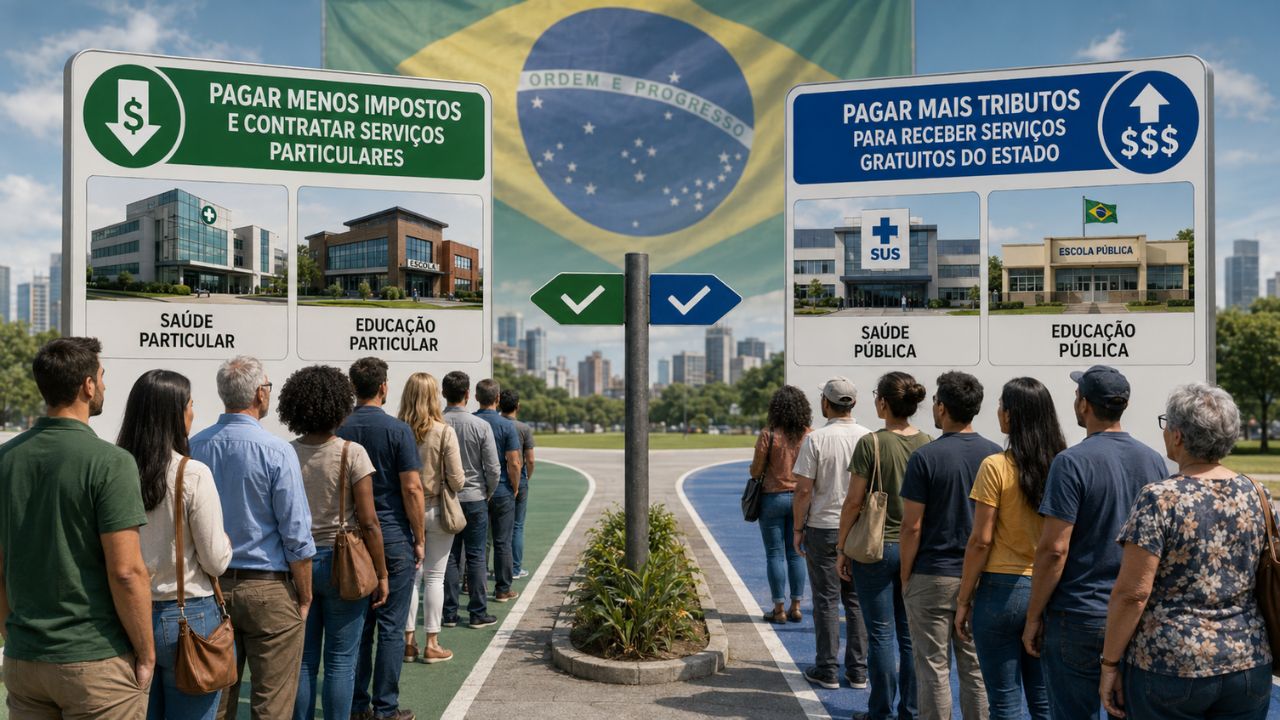
Half of Brazilians Prefer Lower Taxes with Private Health and Education, While 44% Opt for Higher Taxes for State-Provided Services, Datafolha Survey Reveals

-
Brazil’s Most Expensive Toll Rises to R$ 40.60 on Route from São Paulo to the Coast, Nearly Matching Bus Fare to Santos



Offal on the Rise in the Asian Market
With population growth and rising income, Asia has become the priority for the Brazilian beef sector.
Not only for traditional cuts but also for the sale of offal, which has strong cultural and religious acceptance and adds value to the industry.
In Perosa’s words, the Japanese market pays between US$ 10 and US$ 12 per kilo of beef tongue, while Brazil exports the same item for about US$ 2.
This discrepancy, he argues, highlights the margin potential for exporters. The leader used a daily example to explain the local appeal.
“Anyone who has been to Japan knows: in a barbecue restaurant, instead of serving sliced picanha as here, they serve sliced tongue, and it is considered gourmet barbecue.”
Consumption established by tradition, he said, guides the Brazilian sector’s strategy to expand its presence in the higher value niches of the Asian market.
U.S. Fears About Brazil’s Advance
Perosa states that “the United States is afraid of losing ground in Asia” in the face of Brazil’s competitive scale.
In his assessment, the U.S. and Australian production capacities face stricter limits, while Brazil combines volume and consistency to supply a growing demand.
According to Abiec’s reasoning, opening doors in Asia is a one-way street, both because of the size of consumption and the preference for cuts and offal that the country can offer in large quantities.
Japan Considers Enabling Slaughterhouses
Interlocution with Tokyo gained momentum since March 2025, when President Luiz Inácio Lula da Silva made a state visit to Japan — the first organized by the country since 2019.
The agenda included signing cooperation acts in various areas, including agriculture.
Subsequently, Japanese technicians came to Brazil to inspect slaughterhouses, in one of the markets with the strictest sanitary criteria in the world for beef.
For Abiec, the discussions have evolved, but decisions are in the hands of the Ministry of Agriculture, responsible for negotiating the opening with Japanese authorities.
“There is a diplomatic moment for this announcement,” Perosa stated, indicating the COP30, which will take place from November 10 to 21 in Belém (PA), as a possible showcase to formalize approvals — a scenario that, he stresses, depends on the agenda and validation of the Japanese government.
Indonesia Expands Purchases and Allows New Products
While Japan considers new approvals, Indonesia authorized, on Monday (8), another 17 Brazilian plants, raising the total to 38 slaughterhouses eligible to export to the country.
The Indonesian government also approved the entry of bone-in meat, offal, and prepared products, expanding the range of items Brazil can offer.
In the aggregate for 2025, sales to the Indonesian market totaled 15,400 tons and US$ 71.6 million, an increase of 258.9% in value and 253% in volume compared to the same period in 2024.
Exports Exceed Projections in 2025
In the period from January to August, Brazil shipped 2 million tons of beef, a growth of 20% compared to 2024.
The revenue reached US$ 10.7 billion, an increase of 33% in the same comparison.
China remains the main destination, with 1 million tons and US$ 5.4 billion, consolidating its Asian leadership in the consumption of Brazilian protein.
These figures exceed the projections presented by Abiec last December, when the entity estimated a 12% increase in volume and 14% in revenue in 2025.
“To my surprise, this has been maintained, and it is going above,” said Perosa.
According to him, the partial result indicates 12% increase in volume and 16% in revenue, a pace boosted by the greater Asian appetite and gains in specific markets, such as Indonesia itself.
U.S. Tariff Storm and Geographical Diversification
The entity acknowledges the effects of the tariff storm imposed by the United States, but argues that geographical diversification has mitigated impacts.
Some countries increased purchases, others reduced, Perosa notes, but the overall balance of shipments remains stable.
In this context, opening and consolidating Asian markets — especially for offal — is a priority to increase the value per ton and reduce dependence on destinations sensitive to tariff measures.
Perspectives for China and Asian Markets
For the coming months, Abiec forecasts new rounds of talks in China in search of regulatory adjustments and greater predictability of flow.
The strategy combines volume in traditional cuts with profitability through offal, now recognized as a commercial asset by the Brazilian industry.
The sector’s view is that in Asia, there is consumption growth and the best opportunities to capture value, especially where there is a culinary tradition associated with these products.
Investment in the region does not eliminate the need for sanitary rigor, traceability, and environmental compliance, conditions that Japan and other Asian countries tend to require with greater severity.
In this sense, the effort to enable plants, standardize protocols, and adjust documentation is seen as crucial to converting the diplomatic moment into effective access and, subsequently, into long-term contracts.

Production Scale and Global Competition
Abiec’s view is straightforward: production scale and product mix give Brazil a structural advantage to supply a continent that pays more for offal and maintains steady demand.
If the country increases access in Japan and deepens partnerships in Southeast Asia and China, the tariff “war” loses its power to pressure Brazilian exporters’ prices and margins.
The sector emphasizes that the key is to convert the political window of 2025 into new approvals and trade routes that can be sustained in the medium term.
With COP30 on the horizon and an active agenda in Tokyo and Beijing, Brazil must prioritize approvals in Japan to capture value immediately or accelerate agreements with other Asian markets to gain scale, what is the most effective path in your assessment?


Isso mesmo, não adianta chorar, rumo a novos negócios. Mas nunca devemos parar de tentar negociar com o país que mais tem patentes no mundo.