






 Portuguese
  Spanish



USP Research Detects Traces of Cesium-137 in the Ribeira de Iguape River and Shows How Nuclear Tests in the 1960s Left Invisible Marks That Help Define the Beginning of the Anthropocene
A master’s research in Physical Geography at the University of São Paulo (USP) identified traces of radioactivity in areas little altered by human action in the interior of São Paulo. The study found signs of materials related to old nuclear tests conducted in the early 1960s and demonstrated that these substances can serve as reliable markers of human presence on a global scale.
These indications fit into the concept of the Anthropocene, the period in which human activity became the main factor in transforming natural environments.
Amid construction, resource extraction, and dissemination of artificial materials, radiation has become one of the most enduring marks of this new geological era.
-
China Develops Custom 140-Ton Electric Mining Truck with 770 kWh Swappable Battery, Deploys 290 Units in Xinjiang’s Largest Zinc Mine

-
Meta to Launch Arena, a New Prediction App Targeting 3.56 Billion Users, Competing with Polymarket and Kalshi

-
Scientist Challenges Famous Human Evolution Theory, Argues Homo Sapiens Evolved Gradually Over Thousands of Years
-
15-Year-Old American Builds Ocean Generator with PVC Pipe and 3D-Printed Propeller for $12, Wins National Prize, Presents at White House, and Makes Forbes 30 Under 30 List




The Legacy of Nuclear Tests
Between 1953 and 1962, the United States, Soviet Union, United Kingdom, and France conducted about 2,000 nuclear tests.
The peak occurred in 1962, with over 120 detonations in a single year. In 1961, the Soviets tested the Tsar Bomb, considered over 3,000 times more powerful than the Hiroshima bomb.
These explosions generated not only heat and shock waves but also a massive dispersion of radioactive particles known as Fallout.
This material, when falling onto the Earth’s surface, contaminated areas near the test sites.
However, wind and other atmospheric phenomena carried part of this radioactive rain to distant regions, including Brazil.
Nuclear Tests: Invisible Marks on Brazilian Territory
Although the concentration detected in the country is very low and poses no health risk, the records tell a valuable story.
The year 1963 saw the highest volume of radioactive particles, a direct consequence of the tests conducted in 1962.
Public pressure and the fear of a nuclear conflict, especially after the Cuban Missile Crisis, resulted in an agreement among the major atomic powers.
In August 1963, the United States, United Kingdom, and Soviet Union signed the Partial Nuclear Test Ban Treaty (PTBT), which limited detonations in the air, in space, and underwater.
The Study in the Ribeira de Iguape River
In Brazil, groups of geophysicists from USP have been investigating since the last decade the presence of three markers: Carbon-14, Plutonium, and Cesium-137.
These elements are sought in preserved natural environments, away from human contamination sources.
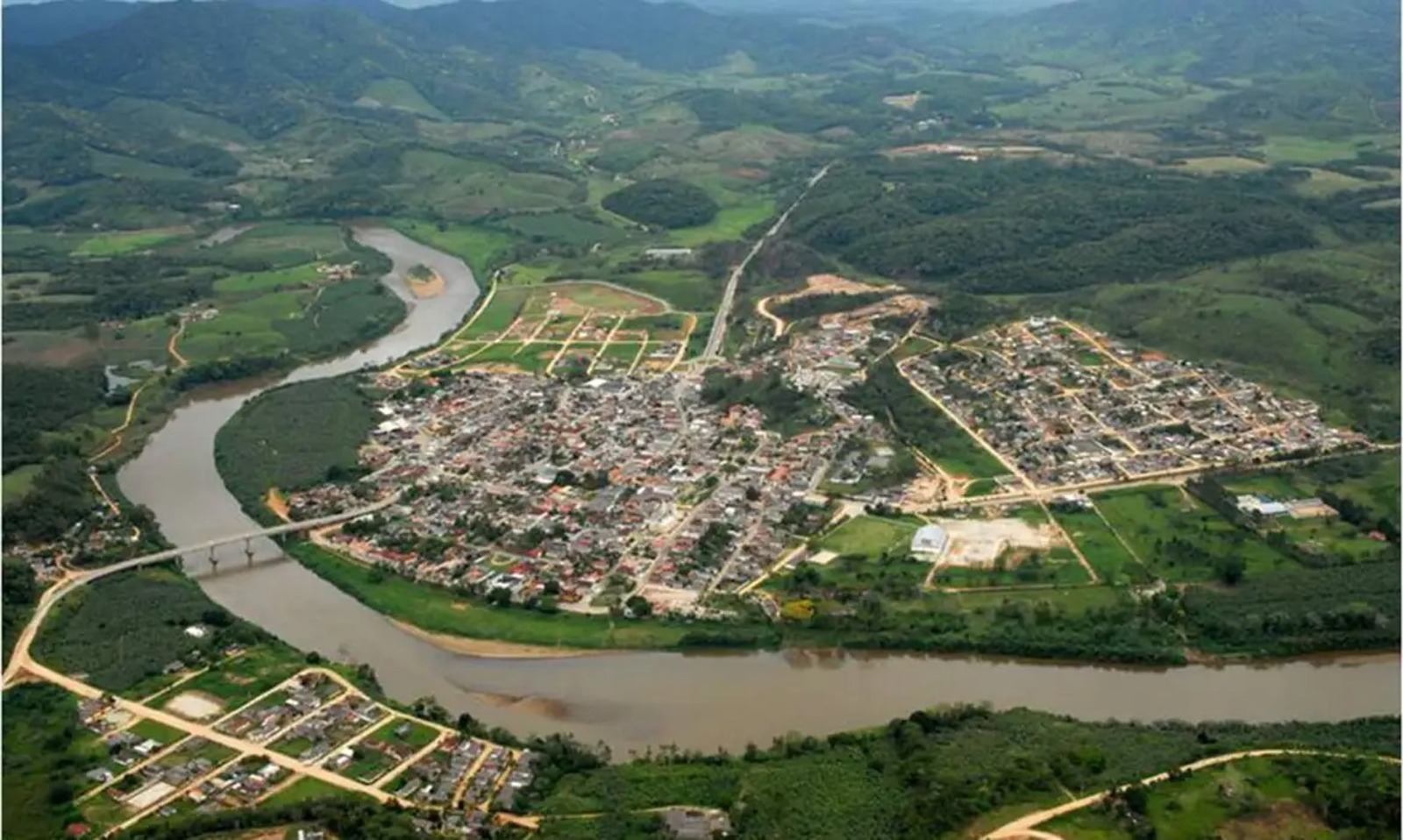
Breno Rodrigues’ research focused on the Ribeira de Iguape River, between Eldorado and Sete Barras, an area known for its preservation zones, quilombola communities, and abundance of caves.
The site experiences low urban and agricultural intervention, making it ideal for studies on global environmental phenomena.
According to the group led by Professor Cleide Rodrigues, the Ribeira is a meandering river with many bends.
This characteristic influences how Cesium-137 deposits and preserves in the environment. Thus, understanding its dynamics helps assess the impact of radioactive rain from 1963 on river sediments.
How Cesium-137 Reveals the Past
Cesium-137 is a direct product of nuclear fission — a process in which a uranium atom splits and releases energy.
It has a half-life of 30 years, meaning in three decades half of the material loses its radioactivity and transforms into Barium, a stable element.
Even with the passage of time, about a quarter of the original Cesium-137 still remains in nature. Therefore, detecting it is possible and useful for dating sediment layers.
This capacity allows determining when and how the radioactive material was deposited, serving as a precise historical marker.
Results and Implications of the Study
Researchers at USP confirmed the residual presence of Cesium-137 in the sediments of the Ribeira River, associated with the atmospheric fallout of the Cold War. However, they observed that the distribution of the material is not uniform.
The variation among the collection points occurs due to the river’s natural dynamics and soil movement processes in the plains.
Thus, the markers are constantly reshaped by currents, floods, and deposits, assuming different positions over time.
These results reinforce the idea that the impact of human activities — even those conducted thousands of kilometers away — can be recorded and identified in preserved natural environments.
Continuity of the Research
The work, which began in the master’s program, continues to develop. Breno Rodrigues is now pursuing a PhD in Geography at USP and continues investigating how fluvial processes interact with elements left by global radioactivity.
His dissertation is expected to be available by the end of this semester, complementing data already presented at scientific congresses and specialized articles.
The research helps to understand not only the behavior of rivers like the Ribeira but also how the planet bears the scars of human-scale events.
The Anthropocene in Evidence
By identifying Cesium-137 as a reliable marker, the study reinforces the role of radioactivity as an unmistakable signature of the Anthropocene.
This concept, widely debated in the scientific community, highlights the point at which human action began to profoundly modify the Earth’s natural systems.
The atomic traces scattered across the planet tell a story that transcends borders and generations. Even in remote regions, where nature seems untouched, there are subtle signs of human presence.
The case of the Ribeira River shows that recent geological history cannot be separated from human history.
The radioactivity left by the bombs of the last century continues to echo, silently, in sediments and waters, reminding us that our actions have global reach — and last much longer than we imagine.
With information from Agência Brasil.





