Portuguese
  Spanish


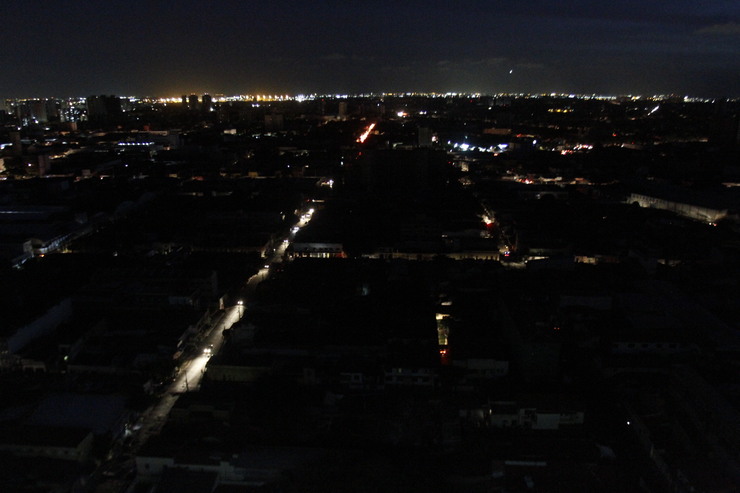

National Electric System Operator (ONS) Report Reveals That 11 Brazilian States Are at Risk of Energy Overload by 2029. The Growth of Distributed Generation, Especially Solar Energy, May Compromise Grid Stability and Cause Blackouts.
The National Electric System Operator (ONS) has released a report that warns of the growing risk of blackouts due to the overload on the Brazilian electrical grid. Additionally, the study, titled Medium-Term Electric Operation Plan of the National Interconnected System, outlines the challenges for the sector between 2025 and 2029.
The main concern involves the rapid growth of distributed generation, especially through solar panels in homes and businesses. As a result, this increase creates technical challenges for the transmission system, leading to overload in 11 Brazilian states.
The most affected regions include Rio Grande do Sul, Minas Gerais, São Paulo, Goiás, Mato Grosso, Rondônia, Bahia, Pernambuco, Paraíba, Rio Grande do Norte, and Piauí.
-
Brazil Aims to Become a Global Exporter of Green Hydrogen, the Clean Fuel Set to Generate Billions

-
Brazil to Hold First Offshore Wind Energy Auction, Aiming to Become the Country’s New Hydropower
-
Brazil to Hold First Auction for Batteries to Store Solar and Wind Energy from the Northeast
-
Brazilian scientists are simultaneously advancing two research projects on clean hydrogen and driving solutions that could transform the energy matrix, enhance industrial competitiveness, and accelerate large-scale emission reduction targets.



The Impact of Distributed Generation on the Electric System
Currently, solar energy and other intermittent renewable sources are rapidly expanding in Brazil. However, the infrastructure of the national electric system is still not adequately equipped to handle the reverse flow of energy.
When consumers generate excess electricity and return it to the transmission grid, this phenomenon can overload substations and jeopardize the stability of the supply.
Furthermore, the ONS report identified nearly 140 substations that will face this issue in the coming years. Depending on the level of overload, these substations may operate within their technical limits (normal overload). In some cases, the equipment may function above expectations but within an acceptable margin (permissible overload).
However, there are situations where critical levels may cause failures and shutdowns (unacceptable overload).
According to the website Valor Econômico, in August 2023, a blackout affected nearly all of Brazil, leaving states without electricity for hours. At the time, the federal government and the ONS stated that the problem occurred due to a transmission failure. This scenario was exacerbated by the imbalance in energy distribution among different regions of the country.
Electrical Planning and Challenges to Avoid Blackouts
On the other hand, experts point to an imbalanced energy planning in Brazil. Currently, bidding for new transmission lines considers economic criteria rather than technical ones. As a result, this approach leads to delays in implementing the necessary infrastructure to meet the growing energy demand.
Additionally, most of the renewable energy generation is concentrated in the Northeast, while the highest consumption occurs in the Southeast and South. This discrepancy necessitates significant investments in transmission expansion to avoid bottlenecks in electricity distribution.
According to the website Canal Energia, between 2020 and 2023, the installed capacity of distributed generation in Brazil grew from 5 GW to over 30 GW, an increase of 500%. This rapid growth, while positive for the diversification of the energy matrix, has intensified the challenges of balancing electricity transmission.
For this reason, Carlos Sena, a member of the Capixaba Forum of Clean Energies (FCEL), suggests decentralizing energy planning. According to him, the adoption of a model of regional self-sufficiency, as seen in the United States and Europe, would reduce dependence on the National Interconnected System (SIN) and minimize the risk of blackouts.
Is Espírito Santo at Risk?
Although the ONS report indicates that states such as Acre, Amazonas, Amapá, Rio de Janeiro, and Espírito Santo do not face imminent risk of electrical overload by 2029, the situation requires attention. After all, since the Brazilian electric system is interconnected, Espírito Santo may suffer the impacts of blackouts occurring in other regions, as happened in August 2023.
Additionally, according to the website G1, in January 2024, the Ministry of Mines and Energy announced an emergency plan to strengthen electrical security in more vulnerable states. The project includes investments in modernizing transmission networks and incentives for energy storage.
In light of this scenario, the growth of renewable energies strengthens the sustainability of the electric sector. However, to ensure the safety and stability of the grid, the country needs to make strategic investments.
Thus, the significant challenge involves the search for effective solutions to balance energy generation and consumption, avoiding overloads and blackouts in the future.