






 Portuguese
  Spanish
  3 min of reading


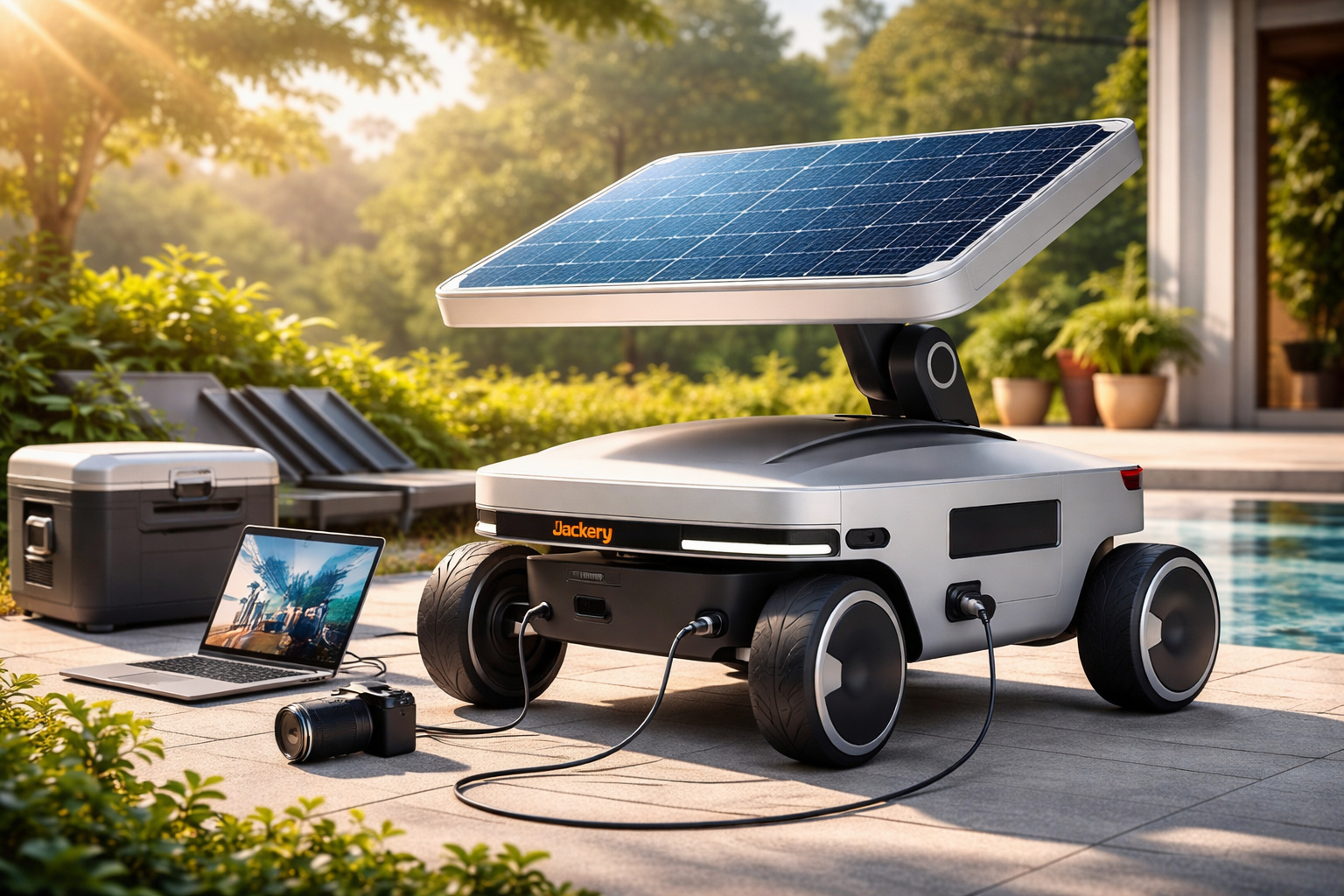
The solar energy has just gained an unusual application. A robot presented at CES 2026 combined autonomy, mobility, and clean energy generation in a single device. Named the Solar Mars Bot, it acts as a technological butler capable of charging various devices without relying on outlets or electrical grids.
The launch came from the company Jackery, internationally known for portable energy solutions. In this case, it combines artificial intelligence, solar capture, and battery storage. Thus, the robot finds light, absorbs energy, and delivers electricity to equipment that needs to operate on the move.
How The Robot Uses Solar Energy To Operate
The Solar Mars Bot navigates autonomously and searches for the best points of solar light throughout the day.
It is guided by sensors and maps the environment to decide where to park or move. Therefore, it does not depend on constant human supervision.
-
Solar energy can increase property value by up to 10% and become a selling point.

-
Solar and wind energy surpass natural gas for the first time in the world and accelerate energy revolution

-
Africa has about 500,000 cell towers and most still burn diesel to operate, while companies rush to cover antennas with solar energy and avoid signal blackouts.
-
Farmers swapped diesel for solar panels in Pakistan, powered irrigation pumps almost cost-free, expanded rice fields, and now groundwater has become a red alert in the countryside.




Additionally, the robot carries its own solar modules and accumulates electricity in internal batteries. In this way, it acts as a mobile solar energy station, capable of powering cell phones, laptops, cameras, and other external devices.
This type of autonomy turns the robot into an ally for camping, construction sites, outdoor events, and remote areas without electrical infrastructure.
The Concept Of An Energy Butler
Jackery describes the robot as a partner for situations where energy becomes critical.
The Solar Mars Bot follows the user, responds to simple commands, and offers energy exactly when needed.
Moreover, it can remain near plugged-in equipment or position itself beside those who need to keep a battery charged for hours. The company claims that the robot thinks before moving, as it calculates the battery level and decides whether to continue charging devices or seek more light.
Thus, it represents a natural evolution of traditional portable power stations, but with continuous mobility.
Sustainability And Innovation Connected
The launch highlights the speed at which solar energy-based solutions are advancing.
Jackery demonstrated that clean electricity can already power robots and not just homes and businesses.
By seeking light and generating energy without fossil fuels, the Solar Mars Bot reduces emissions, avoids noisy generators, and expands the reach of renewable technology.
Consequently, it shows that solar energy has a place in unexpected areas of everyday life.
This model also opens possibilities for agricultural robots, public services, and emergency support, where reliable energy can save lives and keep essential systems running.
CES As A Showcase For New Trends
The presentation took place during the CES 2026, a fair that gathers the largest companies in the technology sector.
According to Jackery, the robot is still undergoing final testing and will be launched in selected markets before a global distribution.
The company anticipates that demand will increase as individuals and businesses seek clean energy in areas where the electrical grid does not reach.
Moreover, the interest in autonomous equipment strengthens with the expansion of artificial intelligence and smart sensors.







Be the first to react!