






 Portuguese
  Spanish


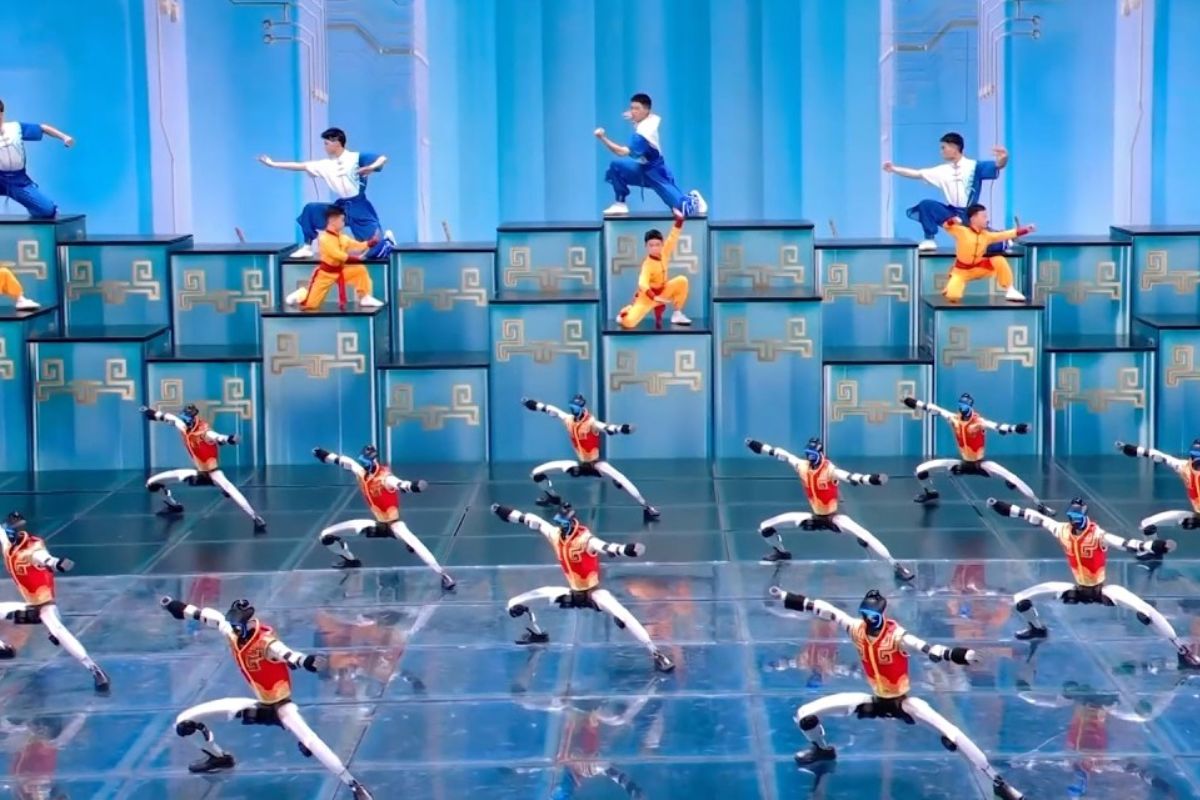


Robots Transition From Laboratory Curiosity to the CCTV Gala With Dance, Fight, and Comedy, As ByteDance, Unitree, Magiclab, Noetix, Tencent, and Alibaba Turn the New Year Into a Showcase of Technology, Distributing Billion-Dollar Prizes and Testing Who Leads the Next Phase of Chinese Artificial Intelligence on Open National Networks.
Humanoid robots occupied the opening of the Spring Festival Gala, broadcast by CCTV, bringing Chinese robotics to the center of a mass audience. Technology moved out of the technical environment and into prime time with sketches, choreographies, martial arts, and musical numbers presented as part of the country’s main seasonal show.
In the same movement, major digital platforms used the visibility of the event to accelerate a competition for cloud computing and consumer AI applications. Entertainment, marketing, and industrial strategy appeared fused into a single night, creating a direct portrait of how China has been connecting mass culture, technological competition, and development policy.
The CCTV Showcase and the New Public Role of Robots

The opening of the Spring Festival Gala serves as a rare national reach platform, often compared, in exposure impact, to the most contested advertising space on TV in other markets.
-
NOAA Scientists Discover Mysterious, Perfectly Aligned Holes on the Mid-Atlantic Ridge Seafloor, Origin Still Unknown

-
California Startup Develops Giant “Space Sling” to Launch Vehicles at Mach 6, Reducing Fuel Use and Enabling Thousands of Satellite Deployments

-
ChatGPT Alerts FBI to Prevent Planned Murder of 8-Year-Old in Brazil’s Espírito Santo
-
Scientists Discover 125-Million-Year-Old “Pregnant Fossil” with Preserved Embryos and Microscopic Larvae Inside Mollusk in England





In this scenario, robots have moved beyond being mere laboratory demonstrations to fulfill a narrative role in front of millions of viewers, in an arena where visibility is worth as much as technical capability. This was not a lateral appearance; it was a positioning of prominence.
This leap in scale helps explain why humanoid manufacturers targeted the event so intensely.
After a Yangge folk dance performed by Unitree Robots gained significant attention the previous year, the sector found a shortcut to expand popular recognition. The central message became clear: before fully reaching the factory floor, robots must first gain social familiarity, and prime-time television accelerates this process.
Who Took the Stage, Where They Are, and How Much the Offensive Cost
Four humanoid robotics companies formed partnerships for the event in agreements valued at around 100 million yuan (US$ 14 million): Unitree from Hangzhou; Magiclab from Wuxi; Galbot from Beijing; and Noetix.
The geographic distribution of these companies shows an ecosystem spread across relevant urban hubs, with companies from different cities converging to the same national showcase. The stage served as a meeting point between regional brands and a national audience.
In the order of presentations, the first to appear were the Bumi Robots from Noetix, in a comedy sketch featuring a grandmother and grandson.
Next, Unitree Robots performed martial arts with child artists, including jumps and acrobatics on trampolines; then, humanoids from Magiclab participated in a musical presentation. The sequence was not random: comedy for approach, movement for impact, and music for broader acceptance.
From Applause to Industrial Use: Why Entertainment Still Leads
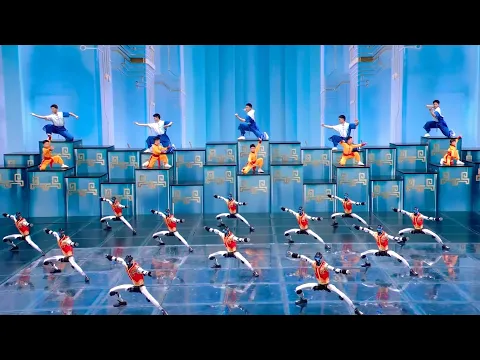

The showcases demonstrated significant technical advancements in motor coordination, synchronization, and stage presence, but also highlighted the current stage of adoption: entertainment remains the most visible form of expression for humanoid robots, while the long-term potential as industrial workers is still being consolidated.
The technology impresses in performance, but the transition to continuous productivity requires another level of maturity.
This difference between public performance and industrial application helps explain the current moment of the sector. In the show, the goal is to prove capability in minutes; in industry, the requirements shift to repeatability, safety, operational cost, and integration with production lines.
In other words, the stage measures immediate attention; the factory measures consistency over time. The exhibition does not conclude the discussion; it initiates a phase of more technical requirements.
The Billion-Dollar AI War Behind the Brilliance of Robots
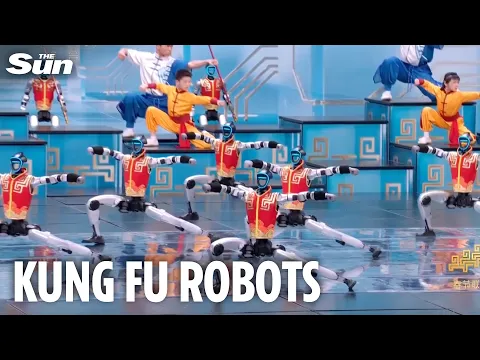
While the robots occupied the visual center of the gala, the competition among technology giants ran in parallel in the digital infrastructure. Volcano Engine, ByteDance’s cloud arm, took over the exclusive cloud AI partnership for the event, replacing last year’s sponsorship from Alibaba Cloud.
This move occurs in an environment of rising demand for computing power and intense competition among Chinese cloud providers. Whoever controls the computing base tends to influence the entire AI cycle.
ByteDance seized the opportunity to showcase end-to-end solutions: it presented Seedance 2.0 for video generation and launched updates for the Doubao-Seed 2.0 series.
In a promotional activation for the Doubao app, it planned to distribute over 100,000 tech products including drones, electric vehicles, robots, and 3D printers, as well as digital envelopes of up to 8,888 yuan.
On the other side, Yuanbao (Tencent) and Qwen (Alibaba) had already distributed, before the holiday, 1 billion and 3 billion yuan, respectively, in cash and vouchers. The tradition of “lucky money” has become a direct battleground for consumer AI.
Public Reception and the Balance Between Fascination and Human Preference
The reaction from viewers reinforces a crucial point: there is genuine enchantment with the choreography of the robots, but that does not mean an automatic replacement of interest in human artists.
A viewer from Zhejiang described the performance as impressive, although emphasizing a greater interest in well-known music names.
This contrast is key to understanding audience behavior: technological curiosity and cultural preference coexist.
At the same time, the very discourse about “seeing the robotic elements grow year after year” indicates that the presence of robots in the show may gain regularity and complexity. This creates a cycle of public expectation: each edition becomes observed not only for the artistic cast but also for the technical level displayed by the machines.
When the audience starts to compare annual evolutions, technology becomes a continuous narrative, not an isolated event.
The combination of a mass gala, million-dollar partnerships, and the promotional war of AI suggests a broad strategy: to transform robots into popular language, strengthen national tech brands, and test, at scale, which digital ecosystems can convert attention into adoption.
This is not just about “being on TV,” but about competing for infrastructure, applications, and user loyalty in the same coordinated movement. The battle is not just for innovation; it’s for centrality in daily life.
It also becomes evident that the debate about robots in China no longer fits solely in technical circles. It involves industrial policy, competition among platforms, consumer behavior, and social imagination about future work.
When technology becomes prime-time entertainment, it ceases to be niche and becomes a permanent public theme, with impacts that go beyond the show and reach education, the market, and digital culture.
If you had to point to the strongest signal of the night—robots on stage, the shift of prominence in the cloud, or the billion-dollar race for AI prizes—which one influences your way of seeing the future of technology in everyday life the most, and why?


O futuro do convívio homem/robô está começando. São muito espertos, criando narrativas e apresentações de impacto para um futuro nem tão distante para os robôs o ocuparem espaços de trabalho.