Portuguese
  Spanish


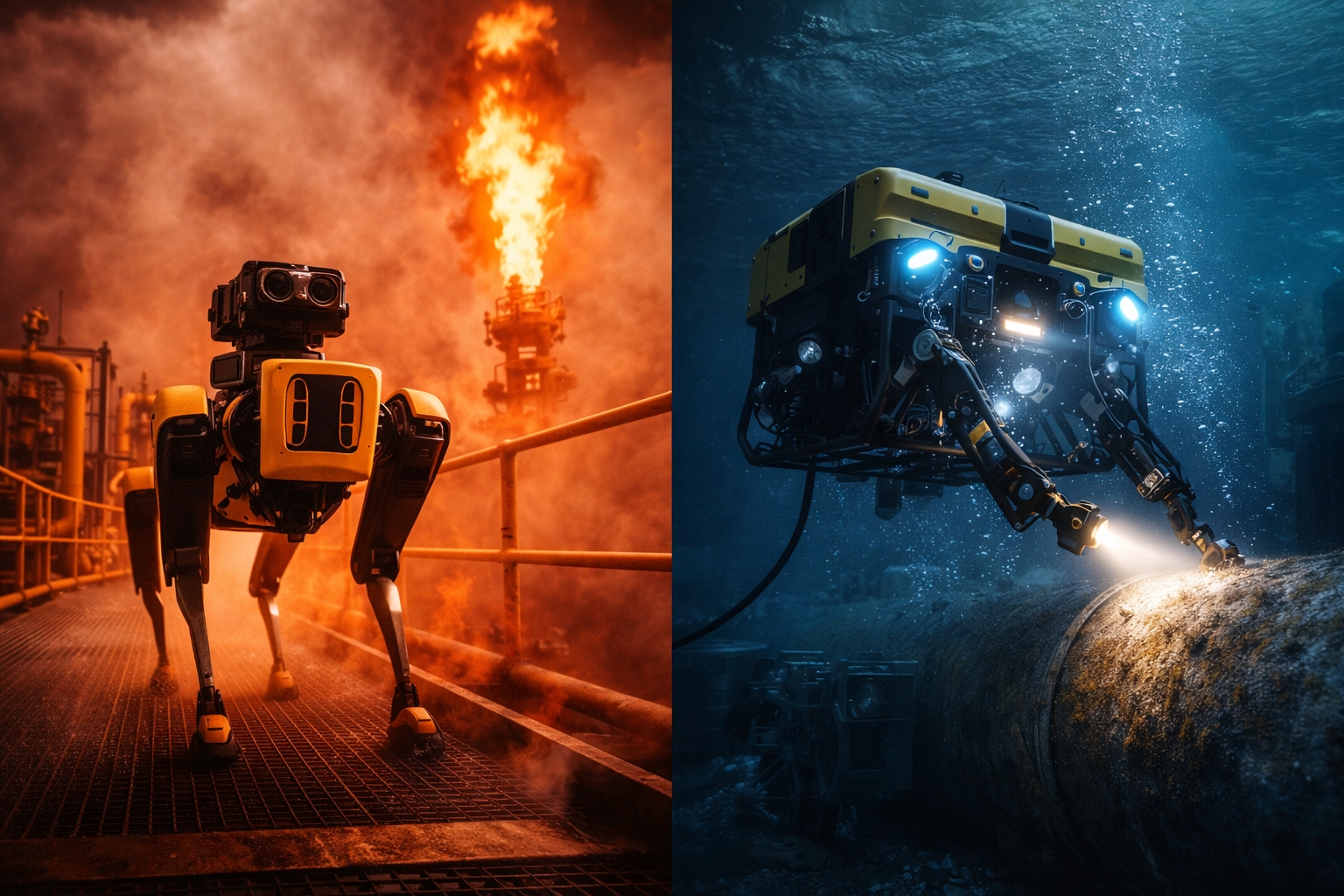

Oil And Gas Industry Giants Such As Equinor, Shell, BP, Chevron, TotalEnergies, Repsol, And ADNOC Are Using Robots With AI, Cloud, And Sensors To Inspect Assets, Predict Failures, And Reduce Human Risk In Onshore, Offshore, And Subsea Operations.
Robots have stopped being a distant promise in oil and gas operations. They are already in the field, at sea, and in structures where human entry is costly and can go wrong in seconds.
The reason is straightforward. With artificial intelligence, better sensors, and access to cloud data, these machines can navigate complex locations, work autonomously, and support decision-making with almost real-time information.
The result appears where it hurts the most for the sector: inspection, maintenance, and monitoring. This spans from exploration to transportation and refining, focusing on reducing risk, improving efficiency, and keeping aging assets operating with more control.
-
Major Appliance Manufacturer Closes Factory in Argentina, Shifts Production to Brazil, and Restructures in Latin America with Mexico Closure, Investing Up to $165 Million

-
China to Revive $3.6 Billion Mega-Dam Project in Myanmar, Stalled Since 2011, Promising 6 GW Capacity and Completion in Eight Years

-
Foreign Company Wins Auction for Brazil’s First Immersed Tunnel, a $1.3 Billion Project with $14 Million Contract Under Federal Investigation

-
China’s Century Megaproject Wows the World: Massive Water Transfer Network Moves Water from Wet South to Arid North, with Ambitious Plans in the Tibetan Plateau Involving Giant Tunnels at Altitudes up to 4,000 Meters



From Pipeline Inspection To Platforms And Tanks, Robots Have Become “Eyes And Hands” In Critical Areas
Robotics has made a strong entry into tasks that previously required human exposure to danger and discomfort. Among the mentioned uses are inspections in pipelines, flare stacks, storage tanks, offshore platforms, and subsea infrastructure.
For this, several types of robots appear, each with a practical function.
Autonomous underwater vehicles conduct scans and inspections on the seabed. Track robots advance in difficult areas. Quadrupedal robots walk through industrial structures. Certified inspection platforms for classified areas enter where there may be a risk of explosion from gases.
The logic isn’t just to see; it’s to act early. Identifying a problem before it becomes unplanned downtime changes costs and safety at the same time.
AI, Cloud, And Sensors Collect Real-Time Data And Are Determinative In Decision-Making
The turnaround hasn’t happened just by placing a robot on-site. The leap comes from the combination of robotics with artificial intelligence, cloud computing, and advanced sensors.
This opens the door for real-time analysis, predictive maintenance, and condition-based asset management, which is the idea of caring for equipment based on real signs of wear and not merely by calendar.
Emission detection also comes into play, which becomes a priority in operations that need to demonstrate environmental, social, and governance control, which the market often summarizes with the acronym ESG but which in practice is a push for safer, cleaner, and more traceable operations.
According to Offshore Technology, this automation package is reshaping how operators handle inspection and maintenance throughout the oil and gas value chain, from field to refining.
The Market That Is Already Worth US$ 90.2 Billion And The Projection Driving The Sector Forward
The numbers elevate the topic to another level.
Predictions from GlobalData indicate that the global robotics market was valued at US$ 90.2 billion in 2024 and could reach US$ 205.5 billion by 2030, with a compound annual growth rate of 15%.
Within this, service robots account for the largest share, as this is where there is strong demand for inspection, monitoring, and maintenance in complex industrial environments.
The oil and gas industry appears as a driver of this growth for three practical reasons: aging infrastructure, labor restrictions, and greater demands for safety and environmental control.
At Sea And On The Ocean Floor, Robots Do What Is Expensive And Risky For People
Offshore and subsea operations have a factor that cannot be ignored: the environment is hostile.
Adverse conditions, extreme pressure, and limited access make human intervention more costly and riskier. This is where robotics finds easier entry, as robots don’t need air, don’t tire, and can be designed to withstand conditions that would be impractical for a human team.
And the presence of robotics isn’t limited to the sea. On land, the benefits are seen when robots enter confined spaces, high-temperature areas, and zones with toxic or explosive gases, allowing for rapid assessment and early intervention without putting people in harm’s way.
What Is Still Holding Back Adoption And Why The Sector Insists On It Anyway
Even with clear advantages, adoption is not automatic. There are cited obstacles, such as capital investment, system integration, and reliability in extreme environments.
However, the sector is driving technology forward with another layer: digital twins, edge intelligence, and predictive analytics. The idea is to create smarter operations, with fewer surprises and more control.
As these capabilities mature, the expectation is that robotics will become a pillar of more automated, resilient, and sustainable oil and gas operations.
If robots can already inspect pipelines, tanks, and hazardous structures without putting people at risk, what is the next likely step—complete maintenance without a team on-site or just more frequent and cheaper inspections?
Do You Work In Or Enjoy The Oil And Gas Sector? Leave a comment with your thoughts and share with anyone following everything about energy and industry.