





 Portuguese
  English
  Spanish
 4 min of reading
  1 comment


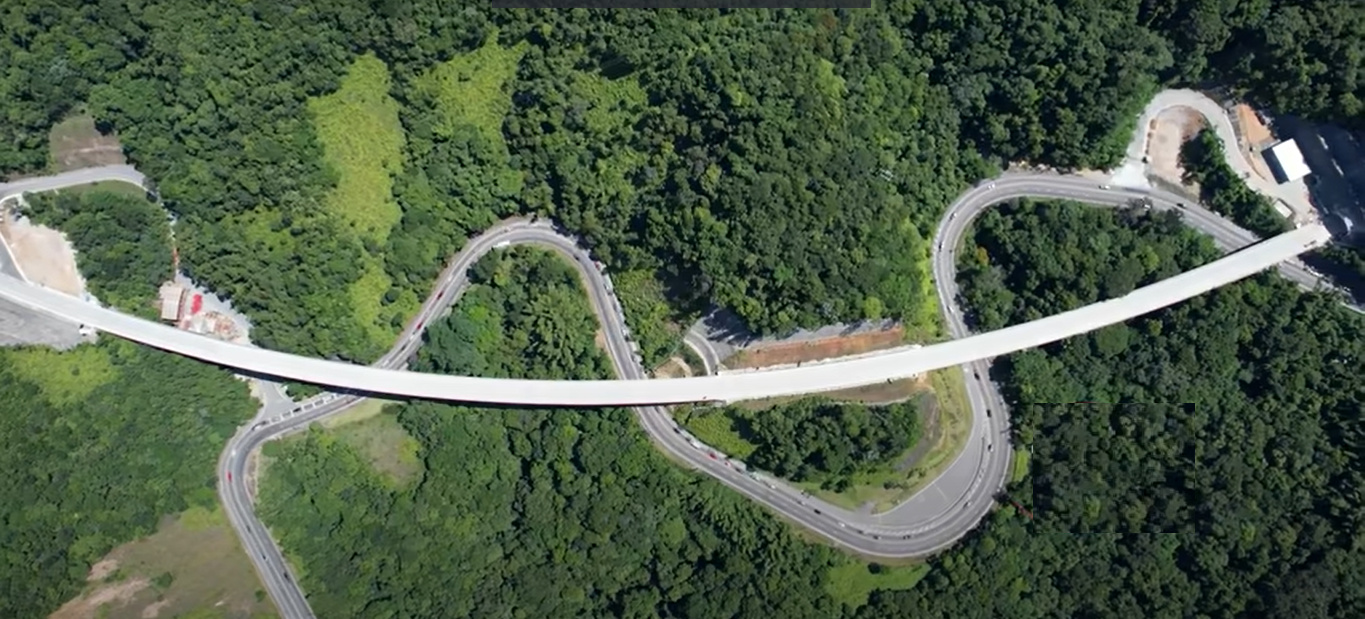


Road Project in Serra do Mar Adopted Interconnected Tunnels and Modern Geometry to Overcome Extreme Terrain, Improve Visibility, and Drastically Reduce Accidents
The Tamoios Highway, on the northern coast of São Paulo, has become one of the most successful examples of road engineering in extreme terrain in Brazil. Connecting the Paraíba Valley to the coast, the road faces a elevation of over 1,000 meters in Serra do Mar, one of the country’s most complex geological formations, marked by steep slopes, unstable soil, heavy rains, and frequent fog.
For decades, the mountain stretch was synonymous with risk, congestion, and serious accidents. Sharp curves, steep descents, and low visibility made the descent dangerous, especially for heavy vehicles. The solution came with a large-scale engineering project that completely redesigned the layout and transformed the highway into a national reference in safety and fluidity.
Engineering Overcame Serra do Mar with Tunnels and Modern Layout
The centerpiece of the modernization was the construction of the new Bypasses and the Mountain Stretch, which introduced a concept uncommon in old Brazilian highways: gentle curves, ramps with controlled slopes, and long tunnels excavated in rock.
-
A man takes a simple farm cattle trough and transforms it into a fully motorized boat by lining the tank with plywood, sealing everything with epoxy, and installing an outboard motor.

-
In just 24 days, China erected 7,733 foldable houses alongside nearly 10,000 tents and sheltered over 47,000 residents in one of the highest and most inhospitable regions on the planet, in what is considered the fastest housing deployment in history.
-
With an eye on consumers from Santa Catarina, Paraná, Rio Grande do Sul, and Argentina, Havan is launching a mega store worth R$ 90 million on the side of a busy highway, in an investment that Luciano Hang classifies as one of the most important in the expansion.
-
Thousands of houses in Brazil have slabs and pillars concreted with construction site mixers, and most owners are unaware that, without strict control of the dosage, this can compromise the structure’s strength and create risks that only appear years later, according to engineers and technical standards.


Instead of going around the mountain with tight curves, as in the original layout, engineers chose to cut through the mountain, drastically reducing the winding nature. The result was a sequence of interconnected tunnels linked by viaducts, allowing the driver to descend at a constant speed, with greater visibility and less mechanical effort.
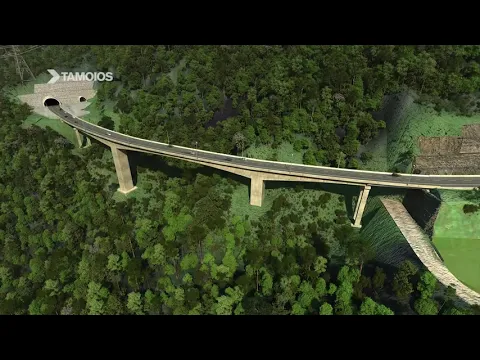

The system includes dual tunnels, separated by direction, which eliminates head-on conflicts and improves operational safety. In several places, the tunnels replace stretches that were previously exposed to landslides and dense fog.
Gentle Curves Reduced Accidents and Made the Descent Safer
One of the biggest gains from the new layout was the significant reduction in accidents. The gentle curves allow for better reading of the road, decrease sudden braking, and reduce the risk of losing control, especially on rainy or foggy days, conditions common in Serra do Mar.
Before the modernization, the stretch concentrated incidents involving trucks, brake overheating, and collisions on tight curves. With the new geometry of the road, the descent demands less effort from the braking system and fewer interventions from the driver, which directly reflects on safety.
Operational data indicate a significant drop in the number of serious accidents after the delivery of the new stretches, consolidating the highway as a model of adaptation to Brazil’s mountainous terrain.
Long Tunnels and Viaducts Integrated into the Terrain
The project required complex excavations in rocky masses, with modern containment and geotechnical monitoring techniques. Serra do Mar presents heterogeneous soils, with areas of hard rock interspersed with unstable layers, which required meticulous planning.
In addition to the tunnels, the construction includes elevated viaducts that connect the underground stretches, maintaining the continuity of the layout without aggressive cuts on the slope. Instead of large deforestation, the solution prioritized suspended structures, reducing the direct impact on the terrain.

This balance between tunnels and viaducts allowed the sharp elevation to be overcome without resorting to extreme curves, something that few Brazilian highways have managed to accomplish in preserved Atlantic Forest areas.
Fog, Rain, and Stability: Project Focused on Real Safety
Serra do Mar is known for its constant fog, which on certain days drastically reduces visibility. The new layout of Tamoios was designed precisely for this scenario.
Critical stretches were moved to tunnels, where visibility is artificially controlled. In open-air segments, the road gained reinforced drainage, high-performance pavement, and horizontal and vertical signage designed for adverse conditions.
In addition, monitoring systems track the slope behavior, traffic, and weather conditions in real-time, allowing for quick interventions when necessary.
Logistical and Tourist Impact on the Northern Coast
The modernization of the Tamoios Highway has not only brought benefits for engineering. The logistical impact was immediate. The safer and smoother connection reduced travel time between the interior and the coast, facilitating the transport of goods, supplies, and the movement of tourists.
Cities such as Caraguatatuba, São Sebastião, and Ilhabela began to receive a more constant flow, without the historical bottlenecks caused by accidents or closures in the mountains. For São Sebastião Port, the highway also became a strategic axis, improving road access to the region.
One of the Major Road References in Mountain Areas in Brazil
Today, Tamoios Highway is often cited as a example of how to adapt infrastructure to Brazilian terrain, rather than simply imposing old layouts on extreme landscapes. The intensive use of tunnels, gentle curves, and lane separation places the road on par with major international highway works in mountainous regions.
More than just a duplication, Tamoios represents a paradigm shift: engineering designed for safety, predictability, and coexistence with the natural environment.
Final Reflection to the Reader
The transformation of Tamoios Highway shows that, even in a country with complex terrain and challenging climate, it is possible to build safer, more efficient, and durable roads when engineering respects the land and invests in long-term technical solutions.
In light of this example, the question remains: how many other Brazilian highways could still reduce accidents and save lives if they received projects of the same technical level applied in Serra do Mar?







Estive hoje 12/12/25 nesta estrada, é simplesmente perfeita! Parabéns aos idealizadores e trabalhadores que executaram este projeto.
Muitos acidentes serão evitados, vidas preservadas e muitas famílias irão aproveitar merecidamente o que temos de melhor no litoral.
Precisamos de mais obras assim pelo país, o uso da inteligência a serviço da população.