Portuguese
  Spanish


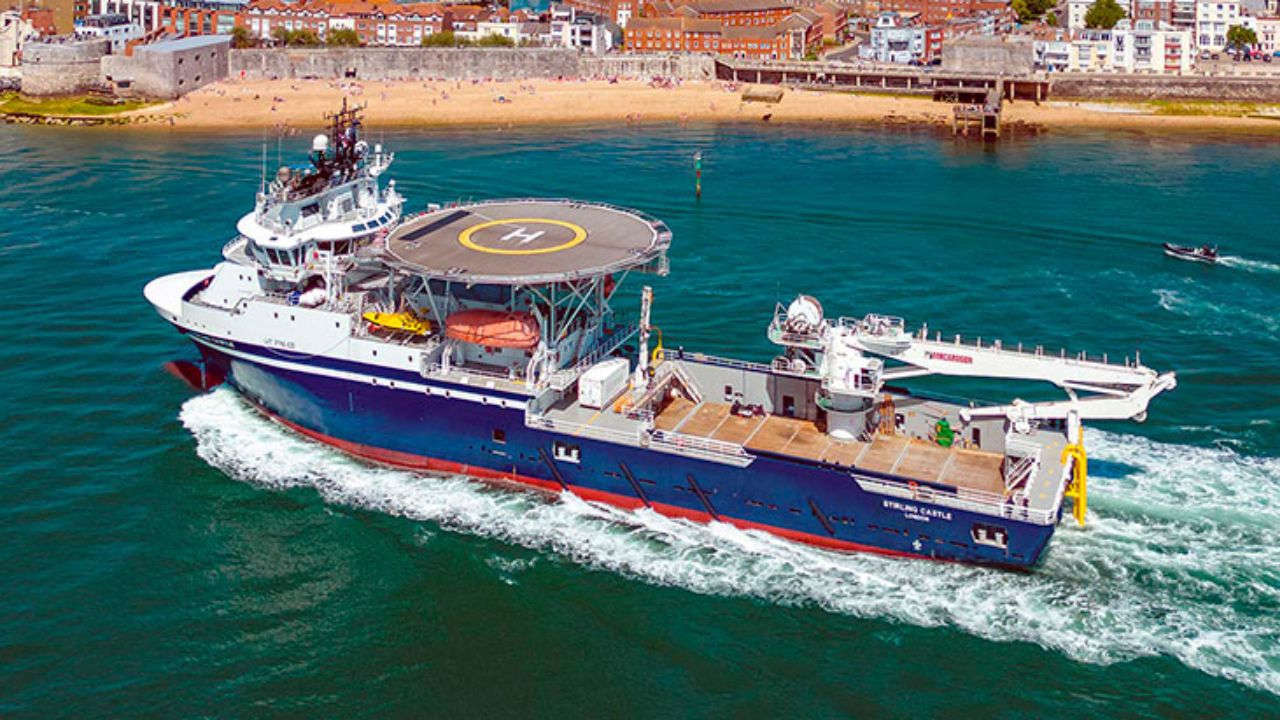

The Royal Navy Commissioned HMS Stirling Castle in Birkenhead to Intensify Mine Countermeasures Operations and Advance the MHC Block 1 Program.
The Royal Navy officially incorporated HMS Stirling Castle into its front line fleet on July 21 in Birkenhead. The vessel, formerly operated by the Royal Fleet Auxiliary (RFA) as RFA Stirling Castle, was transferred to enhance the development and integration of the Mine Hunting Capability (MHC) Block 1 program for mine countermeasure operations in the United Kingdom. The commissioning ceremony marked the raising of the White Ensign and the entry into service of a crew of 45 personnel onboard.
The move is considered unusual, as the transfer of ships from the RFA to the Royal Navy occurs infrequently. However, according to the Royal Navy itself, the measure was necessary to ensure that HMS Stirling Castle dedicates “100% of its time to front line operations,” freeing up human and logistical resources from the RFA.
HMS Stirling Castle Will Be Key to the Mine Hunting Capability Block 1 Program
The acquisition of HMS Stirling Castle cost £39.8 million and aimed to provide a platform for autonomous payloads of the MHC Block 1.
-
North Korean Fiasco: Launch of the Largest Warship Ends in Sinking

-
While giant ships still burn heavy fuel and the maritime sector races against climate targets, Maersk and Vale are starting to bet on ethanol as a new route to reduce emissions at sea.

-
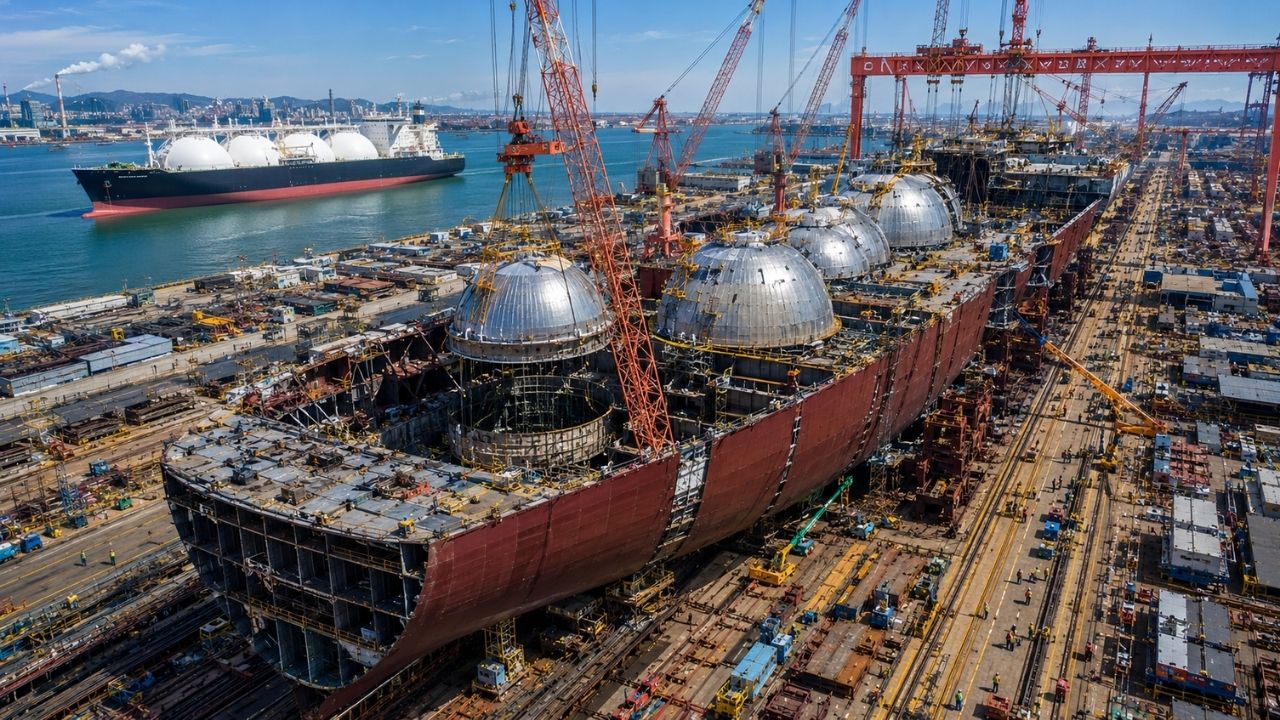
China begins construction of the world’s largest LNG ship, a 344-meter giant capable of supplying 4.7 million homes for a month, carrying 271,000 m³ of gas, and placing QatarEnergy in the largest naval order ever recorded in world history.
-
China is designing a container ship with a thorium nuclear reactor that will operate for 40 years without refueling, and the 25,000-container giant from Jiangnan Shipyard will cross oceans without emitting carbon in an industry that burns 300 million tons of fuel per year.



Originally built by Vard Brevik shipyard in 2013, the UT 776 CD type vessel was purchased from the commercial market in early 2023, when it was still known as MV Island Crown.
After the purchase, HMS Stirling Castle underwent modifications in Devonport and began sea trials in May 2023.
Although it carried out limited operations while under the RFA flag, the ship was out of service for long periods in 2024 due to labor difficulties.
Mine Countermeasure Operations with Autonomous Vehicles Begin in 2026
HMS Stirling Castle was designed to carry surface autonomous vehicles and submarines, essential for specialized mine countermeasure missions.
Operations with the MHC Block 1 mine countermeasure systems, coordinated by the Mine and Threat Exploitation Group (MXTG), are expected to begin in early 2026.
According to the Royal Navy, “Stirling Castle will now assume its roles on the front line, carrying high-tech equipment, including surface autonomous vehicles and submarines, for specialized mine countermeasure operations, primarily in UK waters.”
The vessel will be based at Portsmouth Naval Base. Initially, it will retain its blue and white paint, but there are plans for it to soon receive the Royal Navy’s traditional grey.
Strategic Investment for the Future of the Royal Navy
The experience gained with HMS Stirling Castle will be pivotal for advancing the MHC Block 2 program, expected in the next decade.
In this new phase, three additional OSVs, known as “mother ships,” will be acquired to support mine countermeasure operations.
A source close to the program revealed that the strategy is to invest more in mission systems than in highly complex vessels.