






 Portuguese
  Spanish


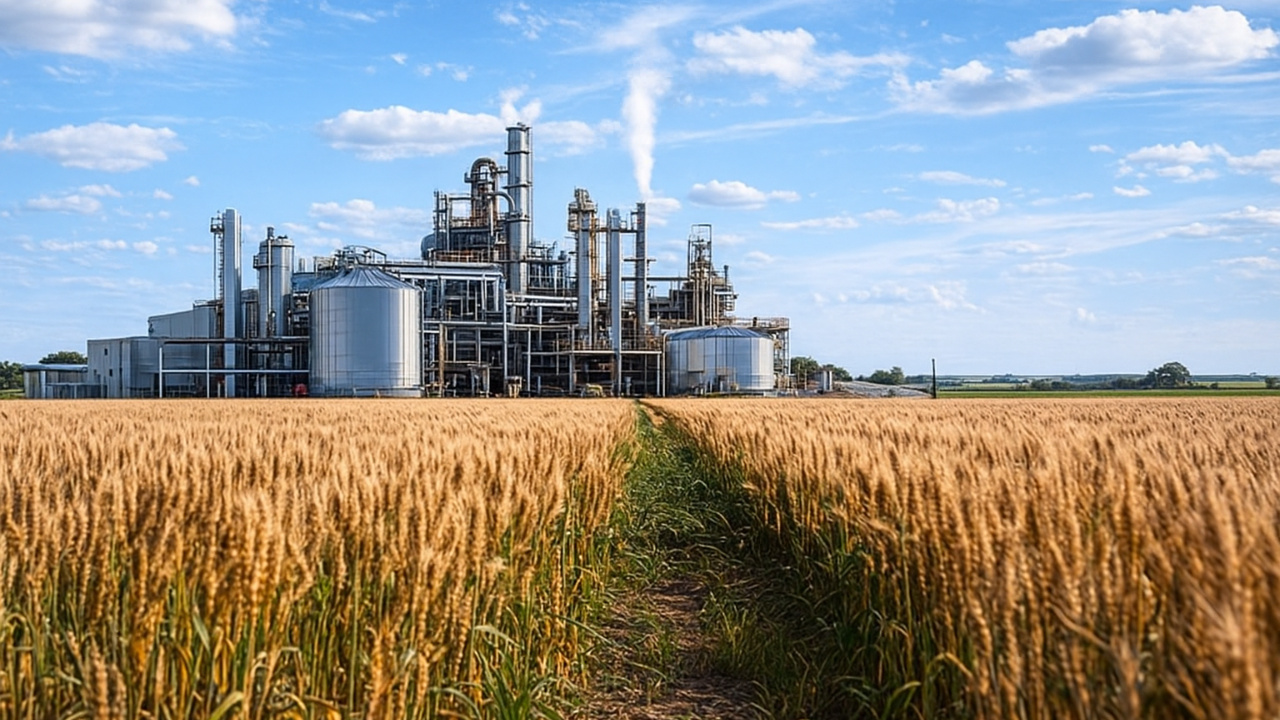


Wheat Ethanol Plant Receives Operating License in Rio Grande do Sul and Begins Pioneering Production in Santiago
The first wheat ethanol plant receives its operating license in Rio Grande do Sul and officially begins its activities in Santiago (RS), after approval from the Department of the Environment and Infrastructure (Sema) and the State Environmental Protection Foundation (Fepam).
The venture, owned by C.B Bioenergia, starts operating with the aim of increasing the supply of biofuels in the south of the country, using a raw material previously unused in Brazilian ethanol production.
The authorization represents a milestone because it inaugurates a technological alternative capable of diversifying the national energy matrix and strengthening the regional economy.
-
Itaipu Dam Stuns Visitors with First Spillway Opening in 2026, Showcasing the Power of Water Once Again

-
USP researcher creates thesis to attract international funds for the country’s electric energy sector
-
Trafigura receives authorization from ANEEL to trade electricity in Brazil and expands its operations in the largest energy market in Latin America.
-
Mobile solar panels promised to share space with corn crops, but the 20% to 25% shade reduced production by an average of 7.7% and opened a new dispute between energy and food.


First Plant in the Country Specialized in Wheat Ethanol
The wheat ethanol plant receives its operating license in Rio Grande do Sul at a strategic moment for the renewable energy sector. This is because the plant will be the first in Brazil fully dedicated to processing the grain for the production of biofuels.
According to the technical information released, the unit will have the capacity to produce more than 1,300 m³ monthly of hydrated alcohol and 1,140 m³ of neutral alcohol.
These two products have distinct uses: the hydrated alcohol is widely used as vehicle fuel, while the neutral alcohol is intended for the chemical, food, pharmaceutical, and cosmetic industries.
Economic Impact and Innovation in Wheat Use
The initiative positions Rio Grande do Sul as a leader in the development of new technological routes within the clean energy sector.
Additionally, it boosts local production chains, as the state is the largest wheat producer in the country.
On the other hand, experts believe that the installation of the plant could generate positive effects in agricultural logistics.
Thus, the production of ethanol from wheat is likely to serve as a complementary solution to corn and cane ethanol.
License Reinforces Environmental and Operational Safety
The Operating License granted by Sema and Fepam confirms that the venture meets environmental requirements.
The approval is crucial because it certifies that production can occur safely and within environmental protection standards.
According to the official statement, “C.B Bioenergia received, on this Monday (11/24), the Operating License from the Department of the Environment and Infrastructure (Sema) and the State Environmental Protection Foundation (Fepam), which authorizes the start of activities at its plant in Santiago (RS).”
This technical validation signals confidence in the applied technology, as well as reinforcing the state’s commitment to promoting sustainable projects.
Potential to Transform the Biofuels Sector
With the authorization, the wheat ethanol plant receives its operating license in Rio Grande do Sul and envisions a promising future.
As a renewable and low-impact alternative, wheat ethanol can enhance Brazil’s competitiveness in the bioenergy sector and contribute to decarbonization targets.
Furthermore, the new production model is likely to stimulate studies on agricultural efficiency, utilization of byproducts, and integration with other industrial chains.
New Phase for Rio Grande do Sul and Brazil
With the start of operations, Santiago now hosts a pioneering venture capable of positioning Rio Grande do Sul as a reference in energy innovation.
Meanwhile, C.B Bioenergia takes a decisive step to diversify the supply of renewable fuels in the country, reinforcing the relevance of sustainability in today’s economy.







maravilha