Portuguese
  Spanish




Therefore, experts advocate that combating plastic pollution should also become part of global strategies for addressing climate change.
With information from Nature Climate Change
Scientists warn that microplastics in the atmosphere absorb heat and can intensify climate change, according to new international study.
Microplastics have already been found in rivers, oceans, food, drinking water, and even the human body. Now, a new study published in the journal Nature Climate Change on May 4 indicates that these particles can also heat the Earth’s atmosphere.
-
OnePlus N6 Smartphone to Launch in India with 8,000mAh Battery and 45W SuperVOOC Charging, Lasting Up to Three Days

-
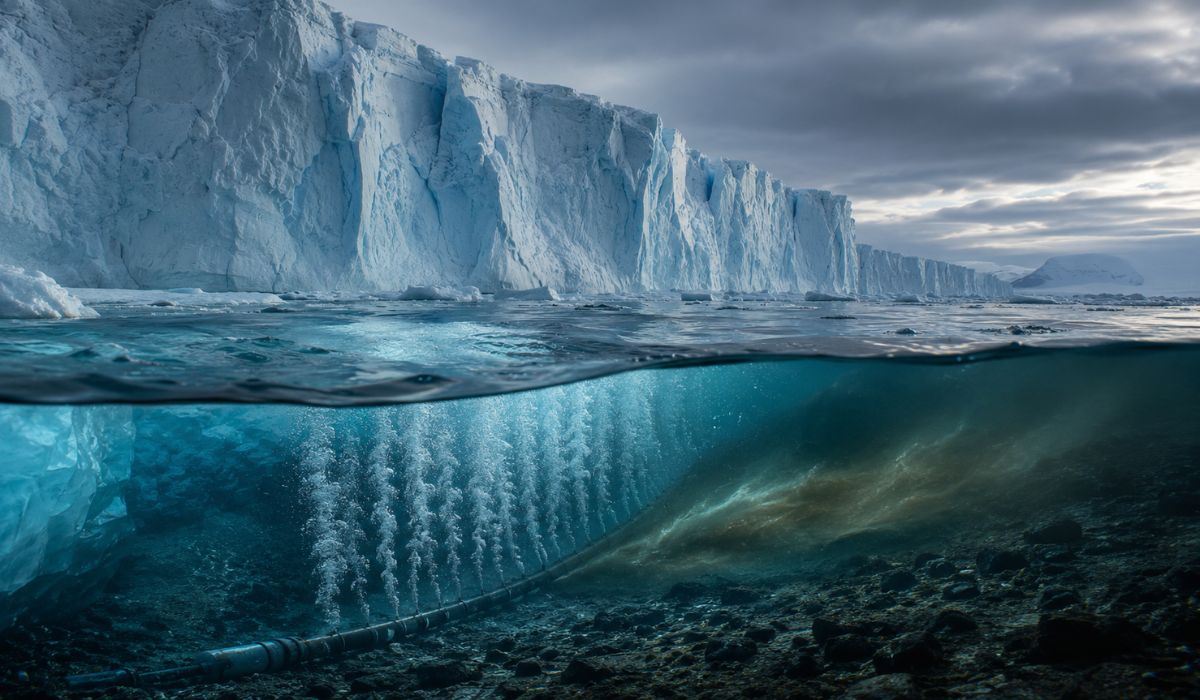
Scientists Plan to Release Air Bubbles Underwater to Protect Antarctica’s “Doomsday Glacier” from Melting

-
Chinese R6000 Drone Combines Airplane and Helicopter Features, Carries Up to 12 People for Multiple Missions
-
In the World’s Most Densely Populated Desert, Families Dig Funnel-Shaped Underground Cisterns to Capture Rare Rainfall and Store Drinking Water for Up to Eight Months




According to Chinese scientists, plastic fragments suspended in the air absorb more heat than they reflect. The estimated climate impact would be comparable to the operation of about 200 coal-fired power plants for an entire year.
The research expands the global warning about plastic pollution and shows that microplastics can represent not only an environmental problem but also a climatic one.
New study reveals how microplastics absorb heat in the atmosphere
The work was led by researchers from Fudan University, China, with the participation of international experts. The scientists analyzed how different types of microplastics interact with sunlight within the atmosphere.
Simulations showed that black, red, yellow, and blue particles absorb much more heat than transparent or white plastics. According to the survey, pigmented materials showed almost 75 times greater thermal absorption.
Drew Shindell, a professor at Duke University and co-author of the study, highlighted that there is already sufficient evidence to state that these particles contribute to global warming.


Scientists investigate climate impact equivalent to 200 coal-fired power plants
The new study indicates that microplastics present in the atmosphere can generate a climate effect equivalent to the annual operation of approximately 200 coal-fired power plants.
The researchers explain that the impact represents about one-sixth of the effect caused by black carbon, a substance produced mainly by the burning of fossil fuels.
Although the index is lower than that caused by vehicles and industries, scientists state that the result cannot be treated as irrelevant.
Another worrying point is the cumulative nature of the problem. As these particles remain in the environment for decades, the trend is for impacts to increase over time.

Earth’s atmosphere faces invisible and difficult-to-control threat
Microplastics are fragments smaller than five millimeters originating from the decomposition of larger plastic waste. Nanoplastics, on the other hand, have even smaller dimensions, often less than the thickness of a human hair.
Once released, these particles can travel long distances through the atmosphere. Previous studies have already found plastic residues in polar regions, mountains, and remote areas of the planet.
Scientists state that controlling this dispersion is one of the biggest current challenges. This is because the fragments can remain suspended in the air for long periods before returning to the ground.
Among the main sources of microplastic emissions are:
- Tire wear
- Decomposition of packaging
- Washing synthetic clothes
- Irregular waste burning
- Industrial waste

New study expands concern over environmental and human impacts
In addition to climate effects, microplastics already concern researchers due to environmental risks and their possible link to health problems.
In recent years, scientists have found plastic particles in lungs, blood, placenta, and breast milk. Fragments have also been identified in fish, fruits, drinking water, and processed foods.
The new study reinforces that these particles can affect not only living organisms but also the thermal balance of the atmosphere.
Hongbo Fu, a professor at Fudan University and one of the study’s authors, stated that this work represents only a first step to fully understand the climatic effects of plastic waste.

Global plastic production worries scientists
Another factor that draws attention is the continuous growth of plastic production worldwide. Data from the United Nations Environment Programme indicate that more than 430 million tons are produced annually.
Much of this material ends up improperly discarded, increasing the presence of microplastics in soil, rivers, oceans, and the atmosphere.
Experts advocate for stricter measures to reduce plastic pollution. Among the solutions most cited by scientists are:
- Expansion of recycling
- Incentive for biodegradable materials
- Reduction of disposable plastics
- Creation of global environmental policies
- Investments in circular economy
Even with some restrictions already adopted in several countries, researchers warn that current actions are still insufficient given the speed of growth in global production.
Discovery could change global debate on plastic pollution
The new study published in Nature Climate Change reinforces that microplastics can have much greater impacts than previously imagined.
In addition to environmental damage and possible risks to human health, scientists are now investigating how these particles directly interfere with the warming of the atmosphere.
The comparison with 200 coal-fired power plants helps to gauge the severity of the problem. Although the impact is still smaller than that caused by fossil fuels, researchers warn that the effects could grow continuously in the coming decades.
Therefore, experts advocate that combating plastic pollution should also become part of global strategies for addressing climate change.
With information from Nature Climate Change