






 Portuguese
  Spanish


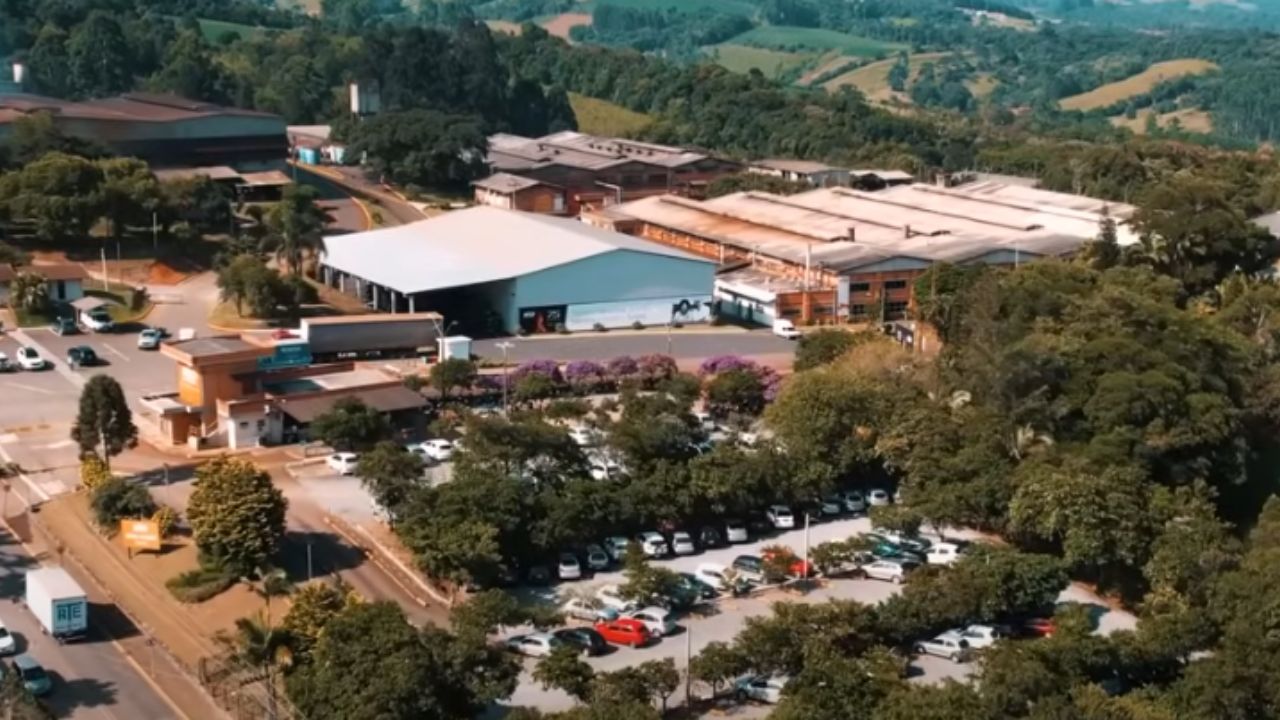
Near Its 80th Anniversary, RIO Riosulense Ensures the Use of Decarbonized Sources and Receives International Renewable Energy Certificates, Offsetting More Than a Third of Its Total Emissions.
RIO Riosulense, one of the leading automotive parts manufacturers in Latin America, is about to celebrate 80 years. The company from Rio do Sul (SC) has set a milestone for this historic date. It has ensured the proven use of renewable energy and decarbonized sources in its operations. As a key step, it has already received the International Renewable Energy Certificates (I-RECs) for the first quarter of 2025.
Sustainability in Anniversary Celebration
To celebrate its eight decades of activity, RIO Riosulense has made a commitment to the future. The company has decided to assure its stakeholders that the energy consumed comes from clean sources.
The initiative was solidified with the acquisition of International Renewable Energy Certificates, the I-RECs. They attest to the use of audited hydropower, enhancing the company’s image as one of the sustainable leaders in the Latin American automotive sector.
-
Brazilian scientists are simultaneously advancing two research projects on clean hydrogen and driving solutions that could transform the energy matrix, enhance industrial competitiveness, and accelerate large-scale emission reduction targets.

-
Advancement in renewable energy: A R$ 150 million project launched by Petrobras and Finep aims to create state-of-the-art electrolyzers for green hydrogen, strengthening national research and preparing Brazil to compete in a billion-dollar energy market.
-
Illiterate or semi-literate grandmothers were trained to repair solar systems, open rural workshops, and light up homes that still depended on kerosene.
-
The world has bet on green hydrogen as the fuel of the future, but now faces the side effect: producing 1 kilogram requires about 9 liters of ultrapure water, and the largest projects on the planet are precisely in the driest regions of the Earth, where water is already scarce for people.





What Is the I-REC? The Guarantee of Renewable Energy
The International Renewable Energy Certificate (I-REC) is a global system. It certifies that the electricity consumed by a company comes from renewable sources. It operates as a title with international registration validated by the TOTUM Institute.
The certificates ensure the tracking of the origin of renewable energy. Therefore, they can be used to offset Greenhouse Gas (GHG) emissions. Each certificate corresponds to 1 MWh (megawatt-hour) of energy generated.
Proven Emission Reduction with Renewable Energy
The process began with a Greenhouse Gas (GHG) Inventory in 2024. The study, which included data from 2023, allowed for identifying the origin of emissions. It was revealed that 36% of the company’s total emissions came from electricity consumption (Scope 2).
“RIO opted for the acquisition of I-RECs on a quarterly basis,” says Clebson Ferreira, technical manager at RIO. “With the receipt of the certificates for the first quarter of 2025, we celebrate this achievement in our program toward decarbonization, validating the reduction of 36% of the company’s total emissions.”
Rogério C. Pereira, Coordinator of Quality and Environment, explains the impact. “By validating that this renewable energy is clean, through the I-RECs, RIO will be able to offset more than a third of its total emissions.” He adds that this action will allow for zeroing Scope 2 emissions.
Next Steps in the ESG Journey
The certificates are part of a broader ESG strategy. Initially, investments focused on Environmental Management, with obtaining ISO 14001 certification. Now, the company is defining its next steps.
Future initiatives include developing the Materiality Matrix and defining the United Nations Sustainable Development Goals (SDGs). The company will also seek to zero direct emissions (Scope 1), with projects such as the quest for Zero Waste.
In addition to sustainable development and renewable energy, the company is also preparing for new market demands. One example is adapting to the CBAM, the European Union’s carbon pricing mechanism. Another priority is producing the first Sustainability Report, aligned with international IFRS standards.
“As it is listed on the B3, RIO will have the legal obligation, starting next year, to produce its Sustainability Report. We decided to test the model this year, voluntarily, to improve the process in 2026,” concludes Ferreira.






Be the first to react!