






 Portuguese
  Spanish


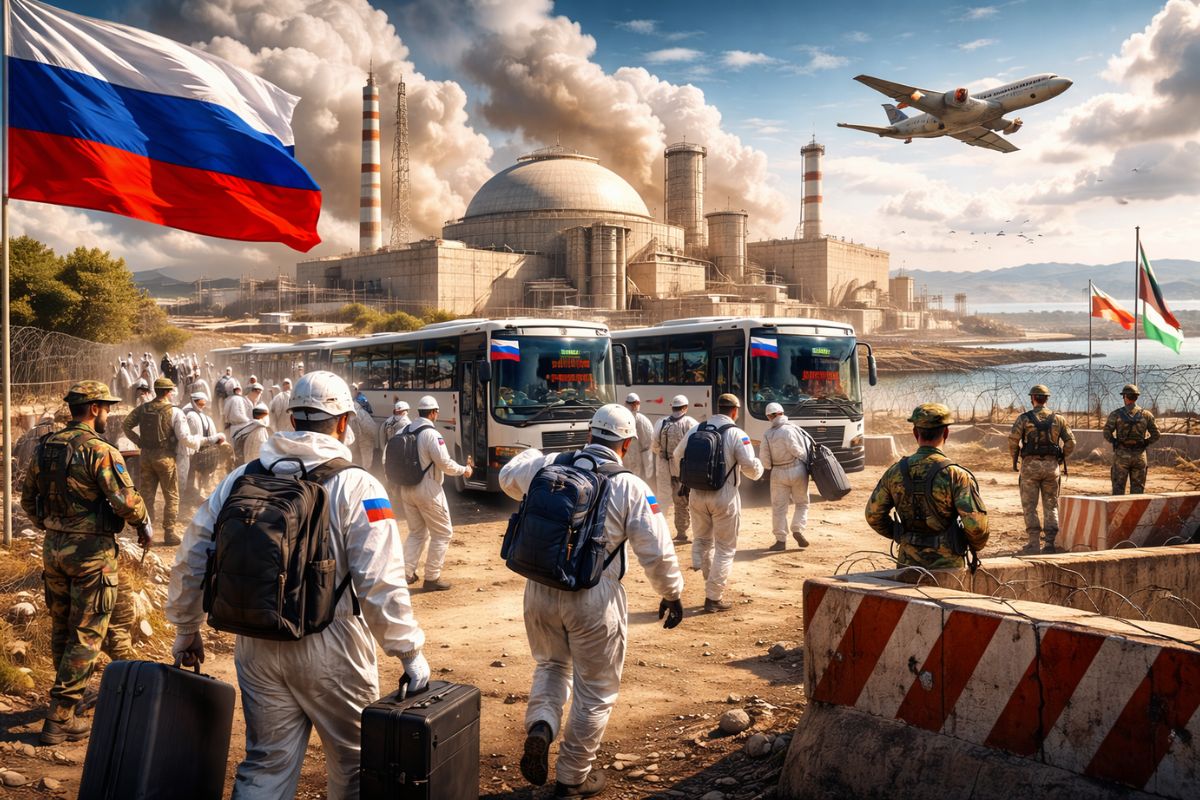

Attack alert at the Bushehr nuclear plant: Russia withdraws almost all technicians from Iran and keeps only a minimal team.
The attack alert gained strength after Russia began the final phase of withdrawing its personnel from the main nuclear plant linked to its operations in Iran. According to the provided data, 108 Russian technicians left the facility, while only a minimal team remained to ensure technical safety and the preservation of equipment.
The large-scale exit draws attention because it occurs at a time of military and diplomatic escalation. When a power like Russia decides to remove almost all of its personnel from a nuclear plant, the message to the market and the international community is that the risk is no longer abstract. The gesture also raises questions about what Moscow knows, what it intends to avoid, and how far this crisis may advance in the coming hours.
What happened in Bushehr
According to the attached data, the information was associated with Alexei Likhachev, head of Rosatom, the Russian state nuclear corporation. The report indicates that 108 Russian employees were evacuated from the Bushehr nuclear plant in Iran, while a small group remained behind to manage the minimal security operation.
-
The Arctic is no longer just a frozen region and is becoming a new military board with the opening of maritime routes, expansion of bases, nuclear icebreakers, and competition among Russia, NATO, the United States, and China.

-
U.S. Dismisses Brazilian Foreign Ministry’s Military Risk Warning as “Absurd,” Cites Brazilian Criminal Gangs Operating in the U.S. Since May 2026
-
Ukraine War Impacts Brazilian Fuel Supply: Russian Diesel Imports Drop 65% in June, Brazil Turns to US and India Amid Market Concerns

-
Chinese Nuclear Submarine Launches Simulated Warhead Missile in Pacific, Heightening Regional Tensions Amid Naval Drills with Russia Near Qingdao; New Zealand and Papua New Guinea Warn of Persistent Chinese Military Presence


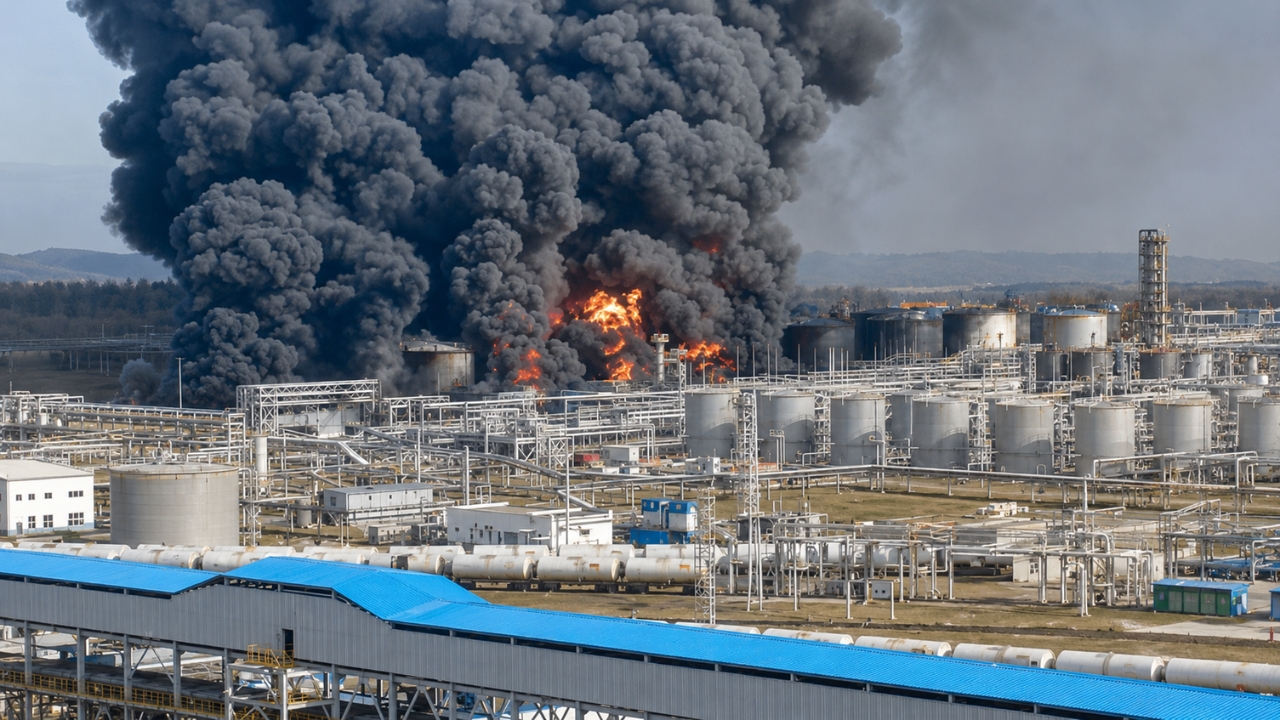

This movement was not treated as something routine. On the contrary. The near-total withdrawal suggests that Moscow is trying to reduce its direct exposure in case the escalation targets Iranian nuclear facilities. At the same time, the presence of a minimal team shows that Russia does not want to completely abandon the structure or lose its position within the diplomatic landscape.
Why the withdrawal raises an attack alert
The central point of the story is that the evacuation does not happen in a vacuum. It occurs amid threats, international pressure, and fear of bombings in sensitive regions. Therefore, the case has come to be read as a strong attack alert.
In practice, the logic is simple. If Russia decides to withdraw almost all of its technicians from a nuclear plant in Iranian territory, it is because the cost of keeping them there has become too high given the perceived risk. This does not automatically confirm an imminent offensive, but it shows that Moscow is working with a scenario of real danger.
The data itself indicates that Russia is trying to preserve two fronts at the same time: the safety of its employees and its role as a mediator. This balance reveals that the Kremlin wants to avoid direct exposure in case a nuclear plant becomes a target, without completely breaking off diplomatic channels.
Trump increases pressure on the Iranian scenario
Another element that amplifies the attack alert is the statements attributed to Donald Trump. According to the transcript, the president stated that if there is no agreement, there could be an attack on Iranian energy plants. The mention of the next 48 hours further heightened the atmosphere of tension.
This type of statement weighs even more when the focus is on nuclear infrastructure. Attacks near atomic plants tend to trigger immediate international concern, not only due to military impact but also because of the technical, environmental, and human risks involved.
The basis also mentions the concern already expressed in other contexts by Rafael Grossi, head of the International Atomic Energy Agency, when conflicts approach nuclear facilities. This history helps to understand why the movements in Bushehr have been observed with such attention.
The role of Russia in the Iranian nuclear program returns to the spotlight
The withdrawal of technicians has highlighted the depth of the relationship between Moscow and the Iranian nuclear program. The attached material supports that the presence of these professionals reveals a structural connection between Russia and the atomic operation in Iran.
Within this context, doubts arise that gain political and strategic weight. If Russian technicians were involved in this apparatus, to what extent does Moscow know the location of sensitive materials, the operational structure, and the points of greatest vulnerability? This question emerges as one of the most relevant at the current moment.
The basis also mentions discussions about Iranian enriched uranium and the Russian proposal to withdraw this material for safeguarding. This adds another layer of complexity to the scenario, as it transforms the evacuation into not just a decision for human protection but also a move connected to the struggle for control, influence, and information.
What the maintenance of a minimum team signals


The presence of a small group in Bushehr is another important detail. On one hand, the evacuation amplifies the attack alert, but on the other hand, the maintenance of a technical core shows that Russia has not abandoned the plant.
This point indicates two things at the same time. First, that Moscow wants to avoid a complete break with the project and preserve its operational presence. Second, that there is still a need to keep minimum equipment and protocols functioning. In a nuclear facility, leaving completely can also represent a risk.
Therefore, the Russian decision seems to have been designed to reduce exposure without creating an absolute technical void. It is an almost total withdrawal, but not complete. And precisely this intermediate choice helps convey the extent of the concern.
What may come next
The scenario described in the background is one of strong tension and a short timeframe for a resolution. The statements about the next 48 hours, combined with the withdrawal of the Russians from Bushehr, have created an atmosphere of international expectation.
At this moment, the most relevant point is that the attack alert has ceased to be just a vague rumor and has become supported by concrete actions on the ground. The departure of 108 Russian technicians does not resolve the crisis, but it changes the perception of it. When a directly involved actor reduces its presence at a sensitive nuclear facility, the market and governments interpret this as a sign that the safety margin has shrunk.
If negotiations resume, the evacuation may be remembered as a preventive measure. However, if the crisis escalates, the Bushehr episode tends to be seen as one of the clearest signs that the behind-the-scenes operations were already in contingency mode.
In your opinion, is this Russian evacuation just a precautionary measure or does it already indicate that the risk of an attack on Iran has concretely increased?







