Portuguese
  Spanish


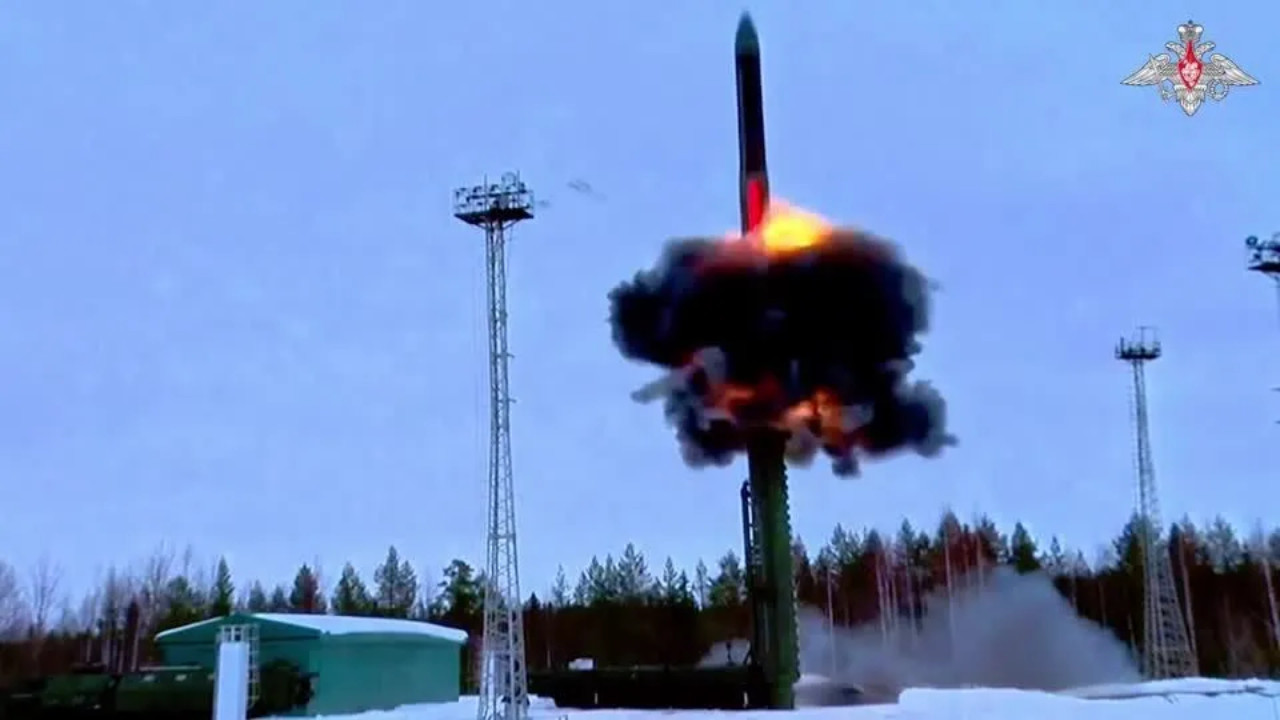

Movement of the Yars Ballistic Missiles Occurs Amid Tensions Between Russia and Ukraine, With a Focus on Military Training and Security
The Russia has begun planned exercises involving intercontinental ballistic missiles Yars, as reported by the state news agency RIA. The Russian Defense Ministry confirmed that Yars ICBM regiments have been “deployed to field positions” in the Sverdlovsk and Altai regions, areas close to Kazakhstan.
What Is the Yars Missile?
The Yars missile has thermonuclear capability, and can be transported on trucks or stationed in silos.
It is a second-generation weapon utilizing fusion, like the hydrogen bomb, which provides significantly greater destructive power than first-generation atomic bombs, in a more compact form.
-
She spent 73 years breathing inside an iron lung, survived the aftereffects of polio, and became the last woman in the United States dependent on the equipment before dying at 78 years old.

-
Brazilian students created a $1 filter using pine bark, cotton, and 3D-printed parts to clean cassava wastewater, reduce the toxicity of a hazardous waste, and transform contaminated water into biofertilizer.

-
Astronaut from Artemis II steps down after mission to the Moon and decision surprises after a record of 406,771 km, a historic 10-day journey, and an unprecedented achievement for Canada.

-
A fossil kept for years in a small museum in Montreal concealed 450-million-year-old soft tissue, a discovery that has only happened once before in history.


With a range of up to 12,000 km, the Yars can cross continents at an impressive speed of 30,600 km/h, and has an accuracy of approximately 100 meters, even against highly protected targets.
Its structure measures 22.5 meters in length and 2 meters in diameter, weighing around 49,600 kg.
The project was developed in secret, with the first tests conducted in 2007 in response to the missile shield that the U.S. planned to deploy in Europe.
The Importance of the Yars in International Relations
Since its introduction, the Yars has become a point of contention between the U.S. and Russia. Documents from the U.S. National Aerospace Intelligence Center indicate that the Bush administration considered the development of the Yars a violation of the START treaty, signed in 1991, which limited the creation of strategic offensive weapons.
At the time of the first test, it was believed that the Yars could penetrate any existing missile defense shield.
Russian President Vladimir Putin defended the project, stating that it was not an aggressive response, but rather a necessity to maintain global strategic balance.
Recent Military Exercises and Their Implications
The current movement of Yars missiles occurs in the context of negotiations for a ceasefire between Russia and Ukraine.
The defense ministry explained that security and support units operating near Kazakhstan are performing engineering tasks and radiological, chemical, and biological protection.

In addition, the military is participating in shift training for combat missions, preparing for more complex operations, although specific details have not been disclosed.
These military exercises are particularly relevant, as they occur amid rising tensions between Russia and NATO.
In 2022, the Yars had already been used in tests involving more than 1,000 troops and a hundred vehicles, focusing on the search and destruction of saboteurs and reconnaissance formations, both during the day and at night.
International Reactions and Leaders’ Statements
The then president of the U.S., Joe Biden, declared that the use of nuclear weapons in Ukraine would be unacceptable and would have “unimaginable” consequences.
On the other hand, Russian Deputy Prime Minister Yuri Borisov stated that Russia would not be the first to carry out a nuclear attack but would respond to any provocation.
In 2024, the Yars were repositioned, serving as a nuclear alert to the West amid a climate of rising tension.

In February 2025, Russia also conducted exercises with the Yars missile in areas close to Ukraine, demonstrating the country’s willingness to maintain its military readiness.
The continuation of military exercises and the development of armaments like the Yars underscore the persistent tension and complexity of international relations, especially in the context of the war between Russia and Ukraine.
This scenario continues to be closely monitored by analysts and defense officials around the world.
SOURCE: UOL