Portuguese
  Spanish


How W. L. Gore turned a lab accident in 1969 into a material that waterproofs clothes, went to space, and replaces blood vessels inside patients
A large part of the world’s best rain jackets, hiking boots, and ski clothing depends on a single material born from a mistake. The waterproof membrane called Gore-Tex emerged when a frustrated scientist gave a sharp pull on a heated plastic rod, and the material, instead of breaking, stretched like chewing gum.
That accident turned into one of the most important technical fabrics ever invented. Gore-Tex is waterproof on the outside but lets sweat escape from the inside, and this seemingly impossible combination made it standard in mountain gear, military uniforms, and even in surgeries, where it replaces pieces of human veins and arteries.
How an accident created the world’s most famous waterproof membrane
The story is proof that great inventions sometimes arise from impatience. One night in October 1969, researcher Bob Gore was trying to slowly stretch heated rods of PTFE, the same plastic as Teflon, without success. Tired of the breaks, he gave a quick and strong pull, expecting to ruin the piece for good.
-
China’s “Great Green Wall” of 66 Billion Trees Grows 66% Faster Than Natural Forests, but Scientists Warn Rapid Growth May Not Last

-
China to Launch World’s First Industrial-Scale Solid-State Battery in 2026, Doubling Energy Storage of Current Electric Car Batteries

-
Brazilian Steel Giant Donates 6 Million Tons of Waste to Pave Streets in 60 Cities, Tackling Infrastructure and Waste Challenges

-
BMW Demonstrates Real Value of Humanoid Robots: 30,000 Cars Assembled with Physical AI in European Production Line, Experiment Continues


The result was the opposite. According to the Science History Institute, instead of stretching slowly, he applied “a sudden and accelerated pull that unexpectedly made the material stretch about 800%,” forming a microporous structure with about 70% air. This structure was named expanded PTFE, or ePTFE. A purposeful failure ended up revealing one of the most versatile materials of the 20th century, the waterproof membrane that today dominates the technical clothing market.
The pull that changed everything, in 1969
The detail that makes the scene almost unbelievable is its simplicity. There was no supercomputer or billion-dollar laboratory, just a man frustrated with a stubborn material, acting on intuition. The Science History Institute itself records that the discovery came after “a series of unsuccessful experiments” in which Bob Gore tried to stretch heated rods of PTFE.
The ePTFE became filled with microscopic pores, which completely changed the behavior of the plastic. From that point on, a previously rigid material turned into a flexible, lightweight film full of invisible holes. Bob Gore patented the discovery, and the family turned the chance occurrence into an industrial business spanning sectors as diverse as fashion and medicine.
The patent that gave Gore almost a monopoly
The chance only turned into an empire because it was protected on paper. According to the Science History Institute, it was by applying a sudden and accelerated pull on the heated material that Bob Gore stretched it about 800%, creating expanded PTFE, a microporous structure composed of approximately 70% air. The discovery was later patented in the United States, and it was this document that shielded the technology for years.
While the patent was valid, practically no one else could manufacture the same high-performance waterproof film. Mastering a technology early on gave the company an advantage that extended for decades. Major sportswear brands bought the material from Gore instead of trying to reinvent it, and the label became synonymous with quality.
9 billion pores per inch and the physical trick
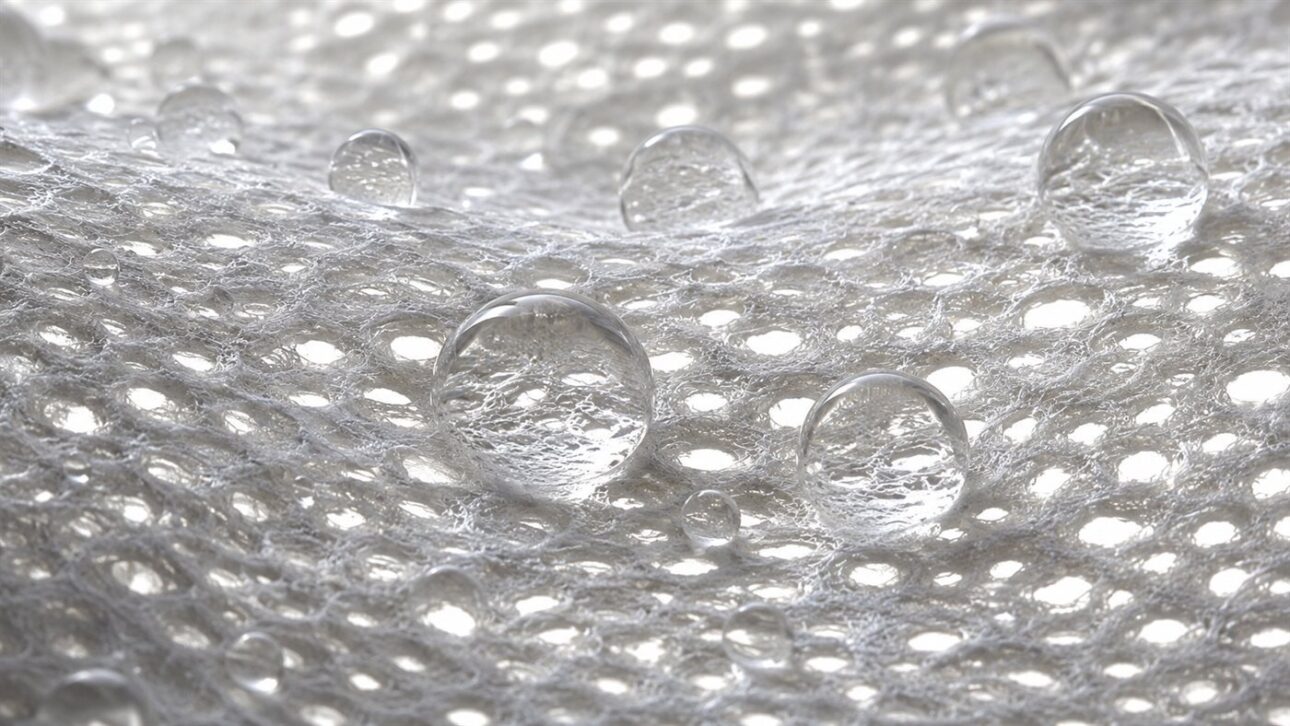
The secret of Gore-Tex lies in a matter of size. According to GORE-TEX, “each square inch of the GORE-TEX membrane has nine billion pores,” and each one is “20,000 times smaller than a drop of water.” That’s why liquid rainwater cannot pass through.
At the same time, the same source states that each pore is “700 times larger than a water vapor molecule,” meaning evaporated sweat from the body passes through without a problem. This is why the waterproof fabric doesn’t turn into a sauna, the classic problem of plastic raincoats. The user stays dry from the rain outside and dry from their own sweat inside, a balance that seemed impossible to achieve.
From a company created by a couple
The company behind the material has an origin as modest as the invention. W. L. Gore & Associates was created by Bill Gore and his wife, Vieve, in the United States, after he left years of career in a large chemical industry to venture alone into PTFE. The business started small and family-run.
It was the couple’s son, Bob, who years later would make the discovery that would elevate the company. A family venture turned into a multinational with billions in revenue and thousands of employees. The trajectory resembles other great innovation stories that started far from corporate spotlights.
The company without bosses that almost no one understands
Gore is also famous for a management model that challenges common sense. The company practically has no bosses or traditional hierarchical positions, employees are called “associates” and organize themselves into teams, choosing which projects to work on and whom to follow based on merit, not orders.
This horizontal format, attributed to Bill Gore, was designed to stimulate creativity and responsibility. The idea is that good ideas can come from anywhere, not just from a boardroom. Decades before startups talked about horizontal culture, the manufacturer of Gore-Tex was already operating this way, and the model became a subject of study in business schools.
From space to the operating room: the same material
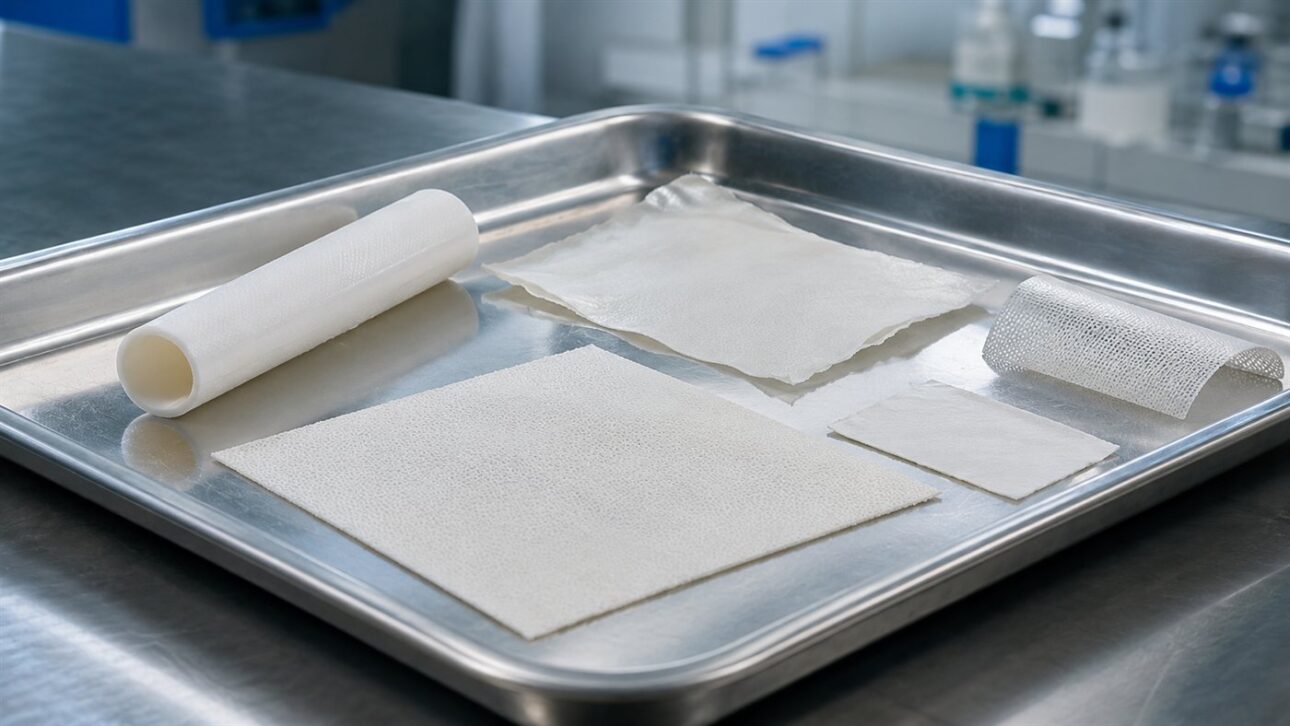
The most shocking use is medical. The same ePTFE that coats hiking jackets is used inside the human body as a vascular graft, serving to replace or bypass diseased vessels in patients, an application consolidated in medicine for decades precisely because of the chemical stability of the material.
In other words, the material that keeps the rain out on top of a mountain might be, at this moment, keeping blood circulating inside a patient. Few products transition naturally between the sports shelf and the operating table. Gore’s material has also been to space, and the company itself recalls that when Apollo 11 landed on the Moon in 1969, a Gore cable connected the seismographic equipment to the lunar module.
Why almost every waterproof garment depends on it
For many years, the ePTFE patent gave Gore an almost absolute dominance over high-performance waterproof clothing. Major sports material brands did not manufacture their own membrane, they bought the technology from Gore and stamped the seal on the final product, a quality sign recognized by consumers.
Even with the original patent expired and competitors emerging, the brand remains synonymous with the sector. When someone looks for a truly waterproof jacket, it’s the name Gore-Tex that comes to mind, a brand power built on a laboratory accident. It is proof that mastering a technology early can guarantee an advantage for generations.
What an Accidental Tug Teaches About Innovation
At its core, the story of Gore-Tex is a tribute to the unexpected. The discovery did not come from a perfect plan, but from a mistake, an impatient gesture that succeeded by luck and keen observation. If Bob Gore had thrown away that stretched rod, the world might never have had the material.
It is a reminder that innovation also depends on perceiving value where others only see failure. The next time you wear a raincoat that truly works, remember that it exists because of an angry tug in a laboratory. How many great ideas have been lost because they were not noticed at the moment of chance?