Portuguese
  Spanish


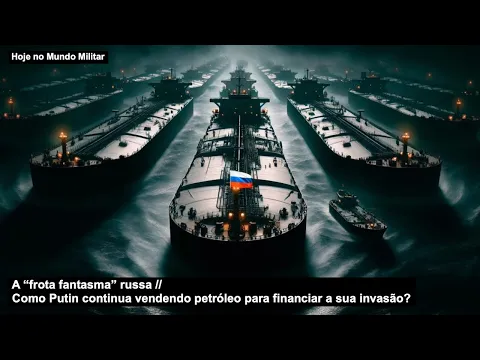
Russian Ghost Fleet: Over 1,400 Ships Illegally Transport Oil by Shutting Down Tracking Systems and Ignoring Safety Regulations
In recent years, the “ghost fleet” of Russia has emerged as one of the most controversial and effective tools to ensure the continuity of the country’s oil exports, despite the international sanctions imposed by the invasion of Ukraine. Using improperly registered ships, uninsured and often operating without mandatory identification systems, Russia has managed to bypass much of the restrictions, maintaining oil flow to key markets like China and India. This practice, although widely documented, remains a little-discussed issue, yet its impact is significant both economically and environmentally.
What Is a Ghost Fleet?
A “ghost fleet,” or “dark fleet,” refers to ships that operate outside the conventional standards of the global shipping industry. These ships deactivate their Automatic Identification Systems (AIS), making them invisible to radar and authorities, in addition to sailing under flags of convenience – registrations made in countries that impose little to no oversight on their vessels.
While this is not a new tactic, as countries like Iran, Venezuela, and North Korea use it to evade sanctions, Russia has elevated the use of this fleet to a new level. Since 2022, with the tightening of Western sanctions after the invasion of Ukraine, Vladimir Putin’s government has resorted massively to this strategy to ensure oil sales, a crucial source of revenue for sustaining the war.
-
Ayatollah Ali Khamenei’s Funeral Draws 15 to 20 Million in Tehran, Calls for Revenge Against Trump After Joint Israel-U.S. Attack

-
U.S. Establishes Permanent Embassy in Jerusalem, Reigniting International Debate Over Israel’s Capital
-
OPEC+ Boosts Oil Supply by 188,000 Barrels per Day in July 2026, Leading to Price Drop from $112 to $89 per Barrel in Under Two Months

-
TotalEnergies Signs 20-Year Deal to Purchase 2 Million Tons of LNG from Alaska, Boosting Project Viability


The Impact of Sanctions
After Russia’s invasion of Ukraine, Western powers such as the United States and the European Union implemented severe economic sanctions aimed at choking off Moscow’s revenue sources. One of the main focuses of these sanctions was the energy sector, with the imposition of a price cap of $60 per barrel for oil exported by Russia. Western companies were also prohibited from providing transportation and insurance services to ships transporting Russian oil sold above this price.
In light of these restrictions, Russia has turned to the ghost fleet to circumvent the sanctions. Oil accounts for about 30% of the country’s budget revenue, making the continuity of exports vital for supporting the economy and the war efforts. It is estimated that, by 2023, Russia already had a ghost fleet of approximately 1,400 ships, the largest number ever recorded in history.
The Environmental and Safety Risks of This Type of Oil Transportation by Ghost Ships
The increasing use of this ghost fleet presents serious environmental and safety risks. The ships are often old, poorly maintained, and operate without insurance. This significantly increases the risk of maritime accidents, such as fires and oil spills. An emblematic example occurred in May 2023, when the tanker Pablo, registered under the Gabon flag, caught fire while sailing in Malaysia’s exclusive economic zone. As it was a ghost ship, local authorities had to bear all the costs of rescue and firefighting.
Between 2022 and 2023, there were dozens of accidents involving these ships, causing serious environmental damage. A large-scale oil spill caused by one of these ships could create an environmental catastrophe of significant proportions, irreversibly affecting marine ecosystems and local economies that depend on those waters.
Geopolitical Implications and the Grey Zone of War
The operation of this ghost fleet is part of what experts call “grey zone warfare,” which refers to tactics that fall below the threshold of open military conflict but cause significant harm. For Russia, this strategy serves a dual purpose: continuing to finance its invasion of Ukraine and imposing indirect costs on nations that suffer the consequences of the irregular operations of these ships.
Countries whose waters are crossed by this fleet find themselves in a complicated position. Even when they detect the presence of a ghost ship, the United Nations Convention on the Law of the Sea (UNCLOS) guarantees the right of innocent passage to these vessels. Blocking the passage of these ships could provoke political retaliations, or even military ones, from Russia.
What Can Be Done?
Although there are international efforts to regulate and track these vessels, the measures are still insufficient. The Russian ghost fleet operates extensively in international waters, beyond the reach of many coastal authorities. There is also a lack of global governance to tackle this large-scale problem.
A possible solution would be the implementation of stricter sanctions against companies operating under flags of convenience, or a more rigorous control over the buying and selling of ships. However, these measures are still far from being realized.
The use of the ghost fleet by Russia exposes the flaws in a global maritime system that relies on rules that can be easily circumvented. And as long as sanctions against Moscow continue, it is unlikely that the use of these vessels will decrease – on the contrary, as the fleet ages, the environmental and safety risks are only expected to increase.