Portuguese
  Spanish


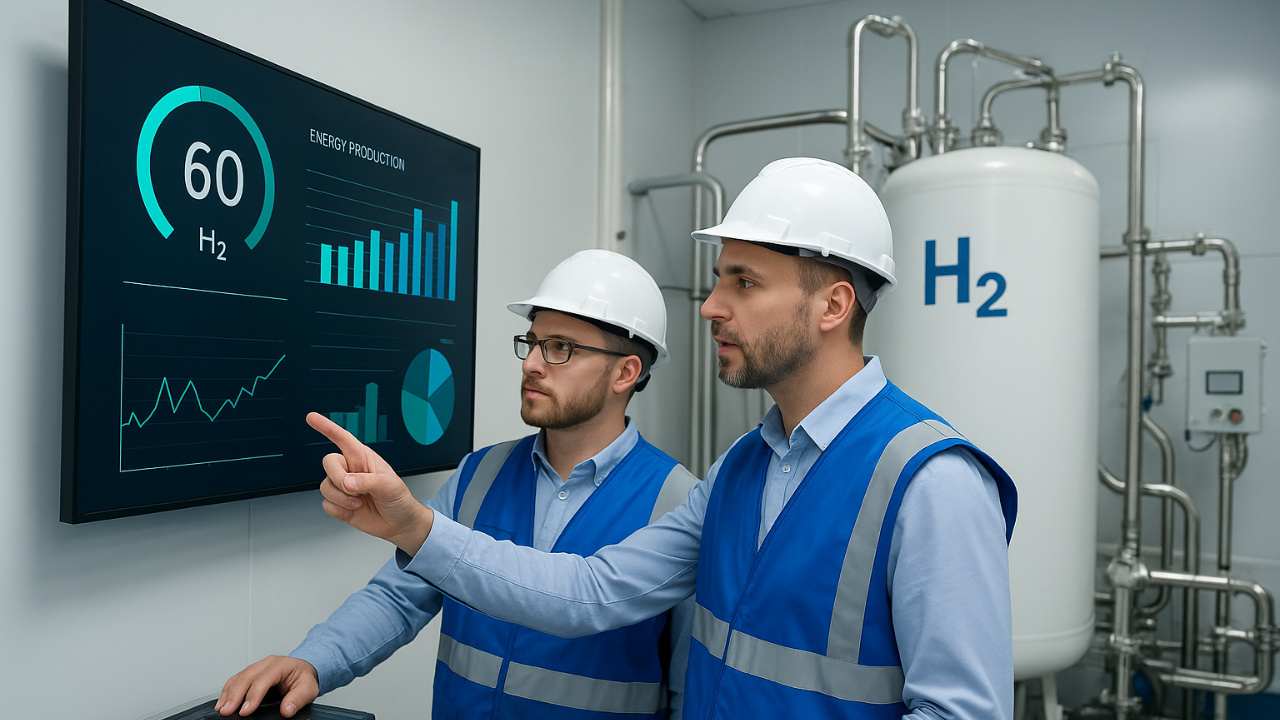

Santa Catarina Enters the Global Map of Energy Innovation with the First Brazilian Microgrid Integrating Solar Energy and Green Hydrogen, Developed by Celesc and the Itaipu Technological Park. Project Marks a Decisive Step in the Country’s Energy Transition.
At a time when the entire world is seeking sustainable alternatives to replace fossil fuels, Santa Catarina stands out with an unprecedented and promising project. Celesc, in partnership with the Itaipu Technological Park (PTI), is developing the first microgrid in Brazil capable of integrating solar energy and green hydrogen through smart automation — an innovation that places the state at the center of the national energy transition.
The project, initiated in August 2023, has already reached 78% completion in October 2025 and is set to begin its pilot operation in January 2026. With an investment of R$ 9.25 million, the initiative combines solar generation, battery storage, and water electrolysis to create an autonomous, stable, and completely clean system.
According to Júlio Normey, coordinator of the Green Hydrogen Multiuser Laboratory at UFSC, the microgrid concept revolutionizes how energy is generated and distributed:
-
USP researcher creates thesis to attract international funds for the country’s electric energy sector

-
Trafigura receives authorization from ANEEL to trade electricity in Brazil and expands its operations in the largest energy market in Latin America.
-
Mobile solar panels promised to share space with corn crops, but the 20% to 25% shade reduced production by an average of 7.7% and opened a new dispute between energy and food.
-
More than 80 million kilometers of wires need to be replaced by 2040: the energy transition doesn’t just depend on panels and electric cars, but on a colossal race for copper, aluminum, transformers, and recycling of old cables.


“The microgrid is a set of generation, storage, and consumption systems. We call it that because it is a small-scale, local grid, different from conventional electric grids — like Celesc’s, which is connected to the entire national system.”
Faxinal dos Guedes: The Santa Catarina Clean Energy Laboratory
The new microgrid will be installed at the Celso Ramos Hydroelectric Plant, located in Faxinal dos Guedes, in the western region of Santa Catarina — an area with high solar incidence and ideal electrical infrastructure for testing energy innovation.
The equipment, prior to final installation, is being evaluated at the Itaipu Technological Park in Paraná. This phase is essential for adjusting the integration between the components and ensuring that the system operates efficiently and autonomously.
According to Igor Kursancew Khairalla, electrical engineer at Celesc and project coordinator, the choice of location was strategic:
“We chose Faxinal dos Guedes because we have a Celesc generation hydroelectric plant there and high solar radiation, which improves system performance.”
The project, named Gemai-H2V, represents a fusion of science, engineering, and sustainability. Jonas Villela de Souza, an electrical engineer at Itaipu Parquetec and co-coordinator of the program, summarizes the essence of the initiative:
“Just like at the Celso Ramos plant in Faxinal dos Guedes (SC), the energy used in this process is 100% renewable, which characterizes the product as green hydrogen. This is the concept of GEMAI: an intelligent and autonomous system capable of generating, storing, and reusing clean energy efficiently, promoting the advancement of the energy transition in Brazil.”
Green Hydrogen: The Fuel of the Future and the Global Bet on Decarbonization
Green hydrogen is emerging as one of the pillars of the global energy transition. It is produced through water electrolysis, a process that separates hydrogen (H₂) and oxygen (O₂) using energy from renewable sources, such as solar, wind, hydroelectric, or biomass. The term “green” refers to the complete absence of carbon emissions during its production.
According to Helton Alves, technical director of the Brazilian Hydrogen Association (ABH2), hydrogen can be obtained from both electrical energy and residual biomass, utilizing agricultural and industrial waste. He classifies the main production categories:
- Gray Hydrogen: produced from natural gas through steam reforming, releasing large amounts of CO₂.
- Blue Hydrogen: uses the same process as gray hydrogen but with carbon capture and storage (CCUS), which mitigates environmental impacts.
- Green Hydrogen: derived exclusively from renewable sources, without the emission of polluting gases.
Among all the variants, green hydrogen is the most sustainable and promising — precisely what is being implemented in Santa Catarina.
How the Santa Catarina Project Transforms Solar Energy into Clean Hydrogen
In the Gemai-H2V microgrid, the solar energy captured by the photovoltaic panels powers an electrolyzer. This equipment separates water molecules (H₂O), generating hydrogen and oxygen. The hydrogen, after being produced, is stored under pressure in cylinders and can be converted back into electrical energy when needed.
According to Daniel Cantane, manager of the Hydrogen Technologies Center at Itaipu Parquetec, the process is essential to solving one of the greatest challenges of renewable energies: storage.
“In microgrid systems, energy sources are intermittent. All excess generated can be stored in batteries or hydrogen for later use, ensuring efficiency and stability of the system.”
Unlike batteries, hydrogen allows for long-term energy storage without significant losses. Júlio Normey, from UFSC, highlights this advantage:
“You can leave a tank full and, a year later, the energy will still be there. A battery, however, will discharge over that time. They are complementary technologies: batteries for quick use, hydrogen for prolonged storage.”
Despite the advantages, efficiency remains a challenge. Only about 25% of the energy used in electrolysis returns as electricity, which makes green hydrogen projects intensive in investment. For Khairalla, however, the strategic value outweighs the immediate cost:
“The goal is to generate knowledge and prepare the country for when the technology becomes economically viable.”
The “Brain” of the System: Automation and Artificial Intelligence in Energy Management
More than just a generation project, the Santa Catarina innovation represents a technological leap in energy automation. The differential of the microgrid lies in the creation of a smart algorithm — developed by Celesc itself — capable of managing, in real-time, the use of available energy sources.
“Green hydrogen itself is already known, but our differential is the brain of the system — the algorithm that defines which source to use at each moment,” explains Khairalla. “It ensures quality and security in energy supply, working with the uncertainties of weather and demand.”
This intelligent control system monitors factors such as solar radiation, consumption level, battery charge, and hydrogen stock. Based on this data, the algorithm automatically decides whether to use solar energy, store energy in the form of hydrogen, or resort to batteries.
Villela, from Itaipu Parquetec, elaborates:
“GEMAI functions as the ‘brain’ of a microgrid, which is a small independent electric network capable of generating, storing, and distributing its own energy.”
Automation not only increases energy efficiency but also makes the system replicable in any region of Brazil, adapting to different matrices — solar, wind, or hydro.
Intelligent Microgrids: A Global Trend and New Frontier of Energy Transition
The integration of automation and green hydrogen is already a consolidated trend in countries like Switzerland, Germany, India, and Japan. In these regions, automated plants utilize sensors and artificial intelligence software to optimize the production and storage of energy.
In Brazil, similar projects are beginning to emerge. In addition to Gemai-H2V, there are initiatives like MIRAHV, developed by Norte Energia at the Pimental Hydroelectric Plant (PA), and the green hydrogen hub in the Port of Pecém (CE), aimed at export to Europe.
According to the Energy Research Company (EPE), there are already more than 30 ongoing green hydrogen projects in the country — although few integrate automation as advanced as the Santa Catarina model.
“But it’s not enough to have the equipment. It’s necessary for the system to have intelligent energy management — that is, knowing when to charge and discharge the batteries, when to produce or use hydrogen. If this management is poorly done, the system will not be efficient,” Normey emphasizes.
The trend is that costs will decrease with technological advancement, as occurred with solar panels over the last decade. Daniel Cantane believes that the knowledge gained from the Santa Catarina project will be crucial:
“The project helps define ideal technical arrangements for microgrids, preparing the ground for future viability.”
Green Hydrogen at the Center of Global Climate Policies
Green hydrogen is currently one of the priorities of the international climate agenda. According to Helton Alves, more than 50% of the UN’s Sustainable Development Goals (SDGs) relate to the hydrogen economy.
“There is an environmental impact in reducing greenhouse gas emissions and a social impact in job creation and training. The human factor is also decisive in the energy transition.”
The National Hydrogen Plan (PNH2), coordinated by the Ministry of Mines and Energy, reinforces this commitment. The plan aims to install pilot plants in all regions of the country by 2025, making Brazil the most competitive producer by 2030 and creating regional production hubs by 2035.
Among the goals are the regulatory framework for green hydrogen, tax incentives, investment in research, and access to sustainable financing. Júlio Normey summarizes the importance of this movement:
“The equipment will evolve, become more efficient, costs will drop, and with the increase in demand, a virtuous cycle will be created.”
Brazilian Potential and Santa Catarina’s Leadership in Clean Energy
According to the International Energy Agency (IEA), Brazil has the potential to achieve 41 GW of green hydrogen production capacity by 2030 — enough energy to supply around 205 million households.
Currently, the country operates only 5 MW, demonstrating the size of the opportunity. Santa Catarina, in turn, stands out as a national reference: it has a majority renewable energy matrix, high solar radiation index, and strong wind potential.
The state currently ranks 6th in the national solar generation ranking, creating ideal conditions to consolidate green hydrogen production hubs.
“Compared to other countries, our differential is the variety of renewable sources available. Green hydrogen leverages this surplus and prevents the waste of natural resources,” emphasizes Helton Alves.
According to him, hydrogen can be the foundation of a new national industry, strengthening regional economies and creating skilled jobs.
Energy Transition and Celesc’s Role in Brazil’s Sustainable Future
Celesc’s initiative symbolizes more than a technological advance — it is a strategic milestone for Brazilian energy sovereignty. With an initial capacity of 75 kW, the pilot system in Faxinal dos Guedes can supply 20 to 25 consumer units, practically demonstrating how green hydrogen can sustain entire communities autonomously and cleanly.
For the specialists involved, the main lesson is clear: the energy transition requires not only innovation but also continuous planning and investment.
The Santa Catarina project shows that the future of green hydrogen in Brazil is closer than one might think — and that science, technology, and sustainability can walk hand in hand toward a new national energy model.