Portuguese
  Spanish


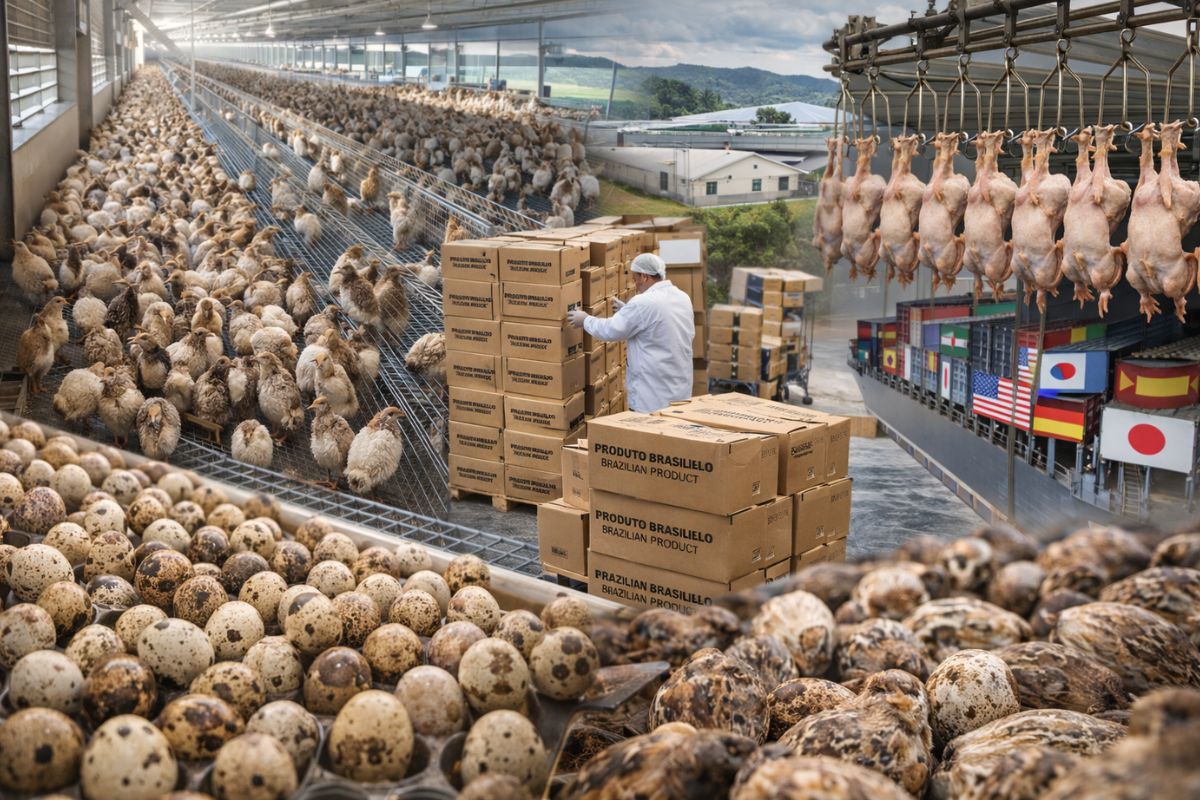


In Santa Catarina, Quail Integrates Quail Production, Quail Meat, and Quail Eggs in a Modern Chain That Delivers Value from the Interior to the Markets of Brazil and Abroad.
Santa Catarina demonstrates, in practice, how to turn quail into a structured business: a complete cycle in the same region, 44,000 eggs per incubation, 17,000 birds processed daily, 40 tons monthly, and half of this production going in refrigerated containers to 10 countries.
In the field, at the processing plant, and in the city, the journey of the small bird that many people know only from pickled eggs has become a case of integrated agriculture, technology, gastronomy, and income. From the breeding farm to the festival of quail on charcoal, everything is part of a chain that keeps families in the field, generates jobs in the industry, and occupies space on menus in Brazil and abroad.
From Table Curiosity to Quail in Global Business

Many people have tried pickled quail eggs at parties or restaurants but have never seen the whole bird on the plate.
-
Producer receives news and had to cull almost the entire herd, bounced back with the help of compensation, and is now producing 450 liters of milk per day in SC.

-
Quail Eggs Reveal a “Secret Code” on Their Shells Explaining Unique Patterns and Colors

-
Rare Tropical Fruit Canistel, with Egg Yolk Color and Caramel Flavor, Gains Interest from Researchers and Small Producers in Brazil
-
Brazilian Farmers Develop Wheeled Metal Lever to Ease Cassava Harvesting Without Heavy Machinery


In Santa Catarina, this distance between the consumer and the origin of the food has decreased because the state has decided to take quail as a serious business, with a complete cycle of production, slaughter, processing, and export.
The state has become a reference because it combines three elements in the same route: professional farms, agro-industries with federal inspection, and an internal market that has learned to consume meat in roasted, stuffed, or served as “passarinho”.
Santa Catarina is currently the only Brazilian state that exports quail meat on an industrial scale and still maintains strong demand within the country.
Breeding, Eggs, and Incubation: Where the Business is Born
The cycle begins at the breeding facility in Coronel Freitas, in western Santa Catarina. The breeders arrive at six weeks of age and enter a management system designed to ensure health and productivity.
Each cage holds 30 females and 9 males, a calculated combination to maintain a high rate of fertile eggs and continue the chain.
Quail eggs are more sensitive than chicken eggs, so collection is done with increased care. Each day, a single aviary can reach about 3,200 eggs, which then go to sorting and refrigerated chambers.
The goal is to accumulate up to 44,000 eggs per cycle, a number that feeds the incubator and ensures sufficient volume to keep quail as a constant business, without interruptions in the production line.
In the incubator, the eggs stay for 16 days at a controlled temperature between 37.5 and 38 degrees, followed by two days in the hatching area before being moved to the fattening aviary.
At this stage, there is another screening: the newly hatched birds are classified, discarding the less developed ones to maintain uniformity and technical performance in the batches going to the field.
Fattening, Slaughter, and Certification: The Quail That Reaches the World
Each aviary houses up to 33,000 birds in the fattening stage for about 30 days until reaching the ideal slaughter weight. The choice to concentrate breeding, the incubator, aviaries, and the industrial plant in the same area is not by chance.
Keeping all phases on the same property, in separate structures, increases sanitary control and biosecurity, which are essential for placing quail into the export business.
In the industry, daily slaughter reaches 17,000 birds, generating a monthly production of approximately 40 tons of quail meat.
The plant operates under federal inspection, which opens doors to more demanding external markets.
The company also carries a halal certification, a requirement for Middle Eastern countries, where consumption follows specific religious guidelines.
Half of the production is shipped in refrigerated trucks to the port of Itajaí, on the northern coast of Santa Catarina. From there, containers with processed and frozen quail head to 10 countries, serving clients from South America, the Middle East, and markets that are still being conquered in Europe.
To compete abroad, the focus is clear: quality standard, presentation of the carcass, and regularity of supply.
When Quail Becomes Tradition, Festival, and Main Course
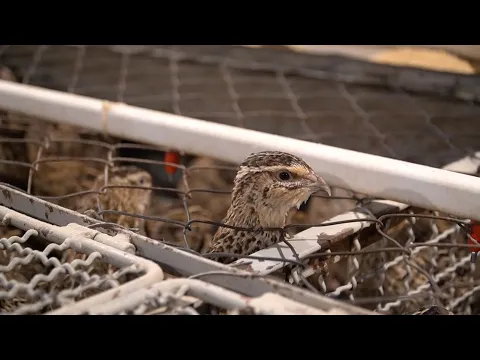

While abroad quail is gaining space for its visual appeal and plating presentation, in Brazil it is gaining status as a delicacy for barbecues, restaurants, and culinary festivals.
In Chapecó, one of the pioneering restaurants serves roasted quail with long marinades, a combination of onion, tomato, rosemary, sage, and pepper, in a slow oven for about two hours.
In western Santa Catarina and other regions, festivals gather thousands of people at events known as “codornadas”.
In Joinville, in the northern part of the state, the Quail Festival is already in its eighth edition, with roasters who started at home and can now serve up to 2,500 people, roasting about 5,000 birds in a single lunch.
Quail has ceased to be merely a side dish to become the protagonist of parties, Sunday lunches, and regional events.
There are versions with bacon, garlic and oil, cream, butter with cheese, and even stuffed. For many, the flavor resembles game birds like partridge, with firm, darker, and more pronounced meat, which requires careful seasoning and preparation.
This combination of regional tradition, preparation technique, and constant supply from farms is what transforms, in practice, quail into both a cultural and economic asset.
Quail Eggs: Automation, Preserve, and Structured Market
The chain does not end with the meat. Quail eggs have taken on a life of their own in Santa Catarina’s agriculture. On properties like the one in Petrolândia, in the Alto Vale do Itajaí, technological advancement is evident: an aviary with 100,000 birds receives feed distributed by robots every two hours, totaling 3,000 kg of food per day, produced on the farm with a mix of corn, soy, and other ingredients.
The goal is clear: for every 10 quails, at least 8 eggs per day. The waste moves on conveyor belts to storage lagoons and then becomes organic fertilizer, applied to the region’s crops.
The automation of feeding, collection, and waste management shows how quail has ceased to be a craft activity and has begun operating at scale, with planning and recycling.
In the canning industry, quail eggs undergo pre-washing, cooking to center the yolk, cooling, mechanical peeling, and finally immersion in a brine with vinegar, water, and salt.
The jars are then pasteurized in a water bath, ensuring food safety without the need for chemical preservatives.
A single factory can jar 15,000 bottles per week, serving cooperatives and third-party brands throughout the state.
Nutrition, Health, and Added Value for Santa Catarina’s Agriculture
In addition to tradition and culinary appeal, the expansion of quail in business also supports nutritional arguments. Meat and eggs are rich in high-quality proteins, essential for maintaining muscles, tissues, skin, and hair.
With good satiety, protein helps those who need to control weight and reduce body fat without losing lean mass.
Quail eggs are concentrated with vitamins, minerals, and good fats, such as omega 3 and omega 6, while the meat, leaner and firmer than chicken, fits into diets seeking to vary sources of animal protein.
When consumers realize they are facing a food that is both tasty, versatile in the kitchen, and interesting from a nutritional standpoint, the trend is that demand will consolidate and push the entire chain forward.
In the end, what is seen in Santa Catarina is an example of how a small bird can support a large structure: egg producers, families that invested in farms, industries that automated slaughter and cuts, restaurants that focus on plating, and exporters that place the product on shelves in other continents.
If quail were more present in the supermarkets and restaurants in your city, would you include this protein more often on your plate or would you still hesitate to try the meat beyond the pickled egg?