





 Portuguese
  English
  Spanish
  3 min of reading
  0 comments


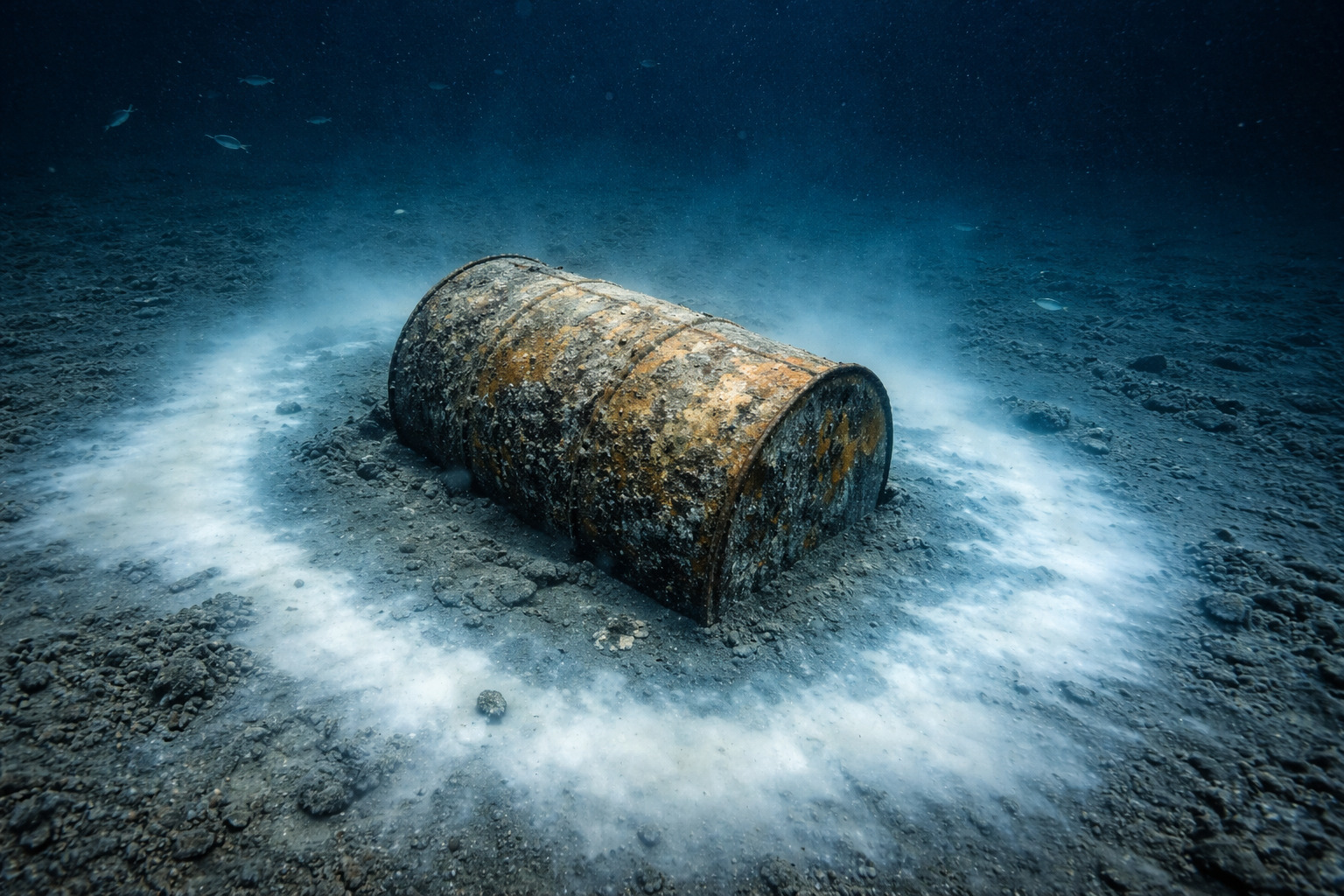
Scientists identify leak of alkaline waste in barrels on the seafloor off Los Angeles, reigniting alerts about prolonged damage to marine life
An underwater garbage hotspot off the coast of Los Angeles reveals its contents after scientists identified a leak of alkaline substances from submerged barrels, forming zones where marine life cannot survive.
What the new analyses found
For decades, the area was known to harbor industrial waste on the seafloor, but the contents of the barrels remained uncertain.
Now, research shows that this underwater waste is releasing alkaline compounds into the sediments.
-
Italy opens the Grottino del Campidoglio in Rome with 3,000 m² of tunnels sealed by Mussolini in 1929 and over $2.8 million in restoration after almost a century closed.

-
NATO investigates the tenth submarine cable cut in the Baltic since 2022, and the Chinese ship Yi Peng 3 becomes the face of the Russian shadow fleet’s hybrid warfare on the seabed.
-
Critical Metals unlocks in Qaqortoq the first rare earths pilot plant in Greenland with 45 million tons at Tanbreez, and the United States finally breaks the Chinese processing monopoly.
-
Paleontologists describe in Davinópolis, Maranhão, a 20-meter, 120-million-year-old sauropod whose closest relative lived in what is now Spain: Dasosaurus tocantinensis


Results published in PNAS Nexus indicate that three barrels surrounded by white halos exhibited high pH levels, around 12, in the sediments. This points to the presence of caustic alkaline waste.

How this disposal happened
The problem dates back to the period between the 1930s and the early 1970s, when different types of waste were routinely dumped offshore off the coast of Los Angeles.
Data from the U.S. Environmental Protection Agency shows that, at 14 disposal sites, chemical waste, byproducts from oil drilling, as well as radioactive materials and military explosives were dumped. This history helps explain the scale of the underwater waste.
The dimension discovered on the seafloor
The severity of the case gained attention in 2020 when an investigation by the Los Angeles Times revealed that deep-water research had found barrel-shaped objects scattered across the ocean floor.
Subsequent missions by the Scripps Institution of Oceanography identified about 27,000 barrel-like objects and over 100,000 fragments of debris.
The discovery expanded the scope of the underwater waste and raised doubts about the contents stored there.

Why DDT Stopped Being the Main Hypothesis
For years, scientists suspected that many of the barrels contained DDT, a banned pesticide associated with contamination in the area. However, recent analyses have taken a different direction.
The team led by microbiologist Johanna Gutleben did not detect an increase in DDT concentrations near the analyzed barrels.
Instead, they found signs consistent with caustic alkaline residues, shifting the focus of the investigations.
Gutleben stated that the search was primarily focused on DDT. She mentioned that no one thought about alkaline residues before this and that it may be necessary to look for other substances.
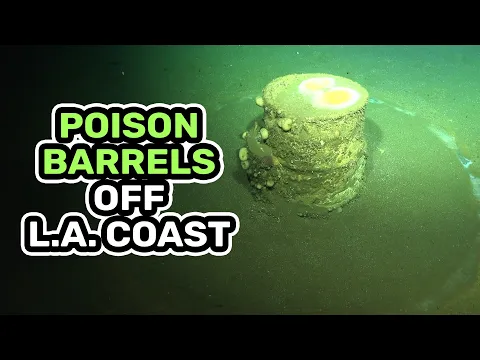

Direct Impact on Marine Life
Samples of sediments collected near the barrels with white halos showed very little microbial DNA. This data suggests that organisms cannot survive in such an alkaline and marine environment.
The researchers found specialized bacteria, similar to those living in deep-sea hydrothermal vents or alkaline hot springs.
Still, these microorganisms represent only a small fraction of life under normal conditions.
Paul Jensen stated it is shocking that, more than 50 years later, these effects are still visible. According to him, it is not possible to quantify the total impact without knowing how many barrels with white halos exist.
The scientists highlighted that alkaline residues behave like a long-term pollutant, capable of altering marine ecosystems for decades. The exact number of barrels and their total contents remain unanswered.
With information from Daily Galaxy.



Be the first to react!