Portuguese
  Spanish


Discover GJ 3378b, an exoplanet 25 light-years away that may harbor life. Understand the challenges and hopes of this recent astronomical discovery.
The search for worlds capable of sustaining life has advanced with the identification of GJ 3378b, an exoplanet located about 25 light-years from Earth. Discovered by researchers from the University of California, Irvine (UCI), this celestial body is classified as a “super-Earth” for being approximately twice the size of our planet.
Although the distance is vast, it is considered “door to door” when compared to the total diameter of the Milky Way, which reaches 100 thousand light-years. The discovery was reported in a study published in the journal The Astrophysical Journal.
The mystery of the atmosphere on GJ 3378b
Despite its location in a favorable zone, the existence of a gaseous layer on GJ 3378b is still a mystery that scientists need to unravel. The planet is located on the edge of the so-called “cosmic shore,” an area where stellar radiation is intense enough to determine if the celestial body can maintain its atmosphere.
-
17-Year-Old Develops Mind-Controlled Robotic Arm Using AI for Affordable Prosthetics

-
Brazil’s Most Famous Virtual Sales Assistant Drives $100 Million in Sales in 8 Months: Magazine Luiza’s AI-Powered WhatsApp Engages 7.7 Million Users and Triples Conversion Rates Compared to Other Digital Channels

-
Mozambican Teen Develops Drone Using Market Kits to Deliver Food and Medicine to Remote Areas

-
Experiment Shows Sea Water-Treated Ice Resists Melting Better from May to September




If the exoplanet is outside the protected range, radiation may have destroyed this layer, similar to what is believed to have happened to Mars in past eras. Without this protection, the maintenance of liquid water becomes unlikely, which would hinder the development of ideal conditions for life.
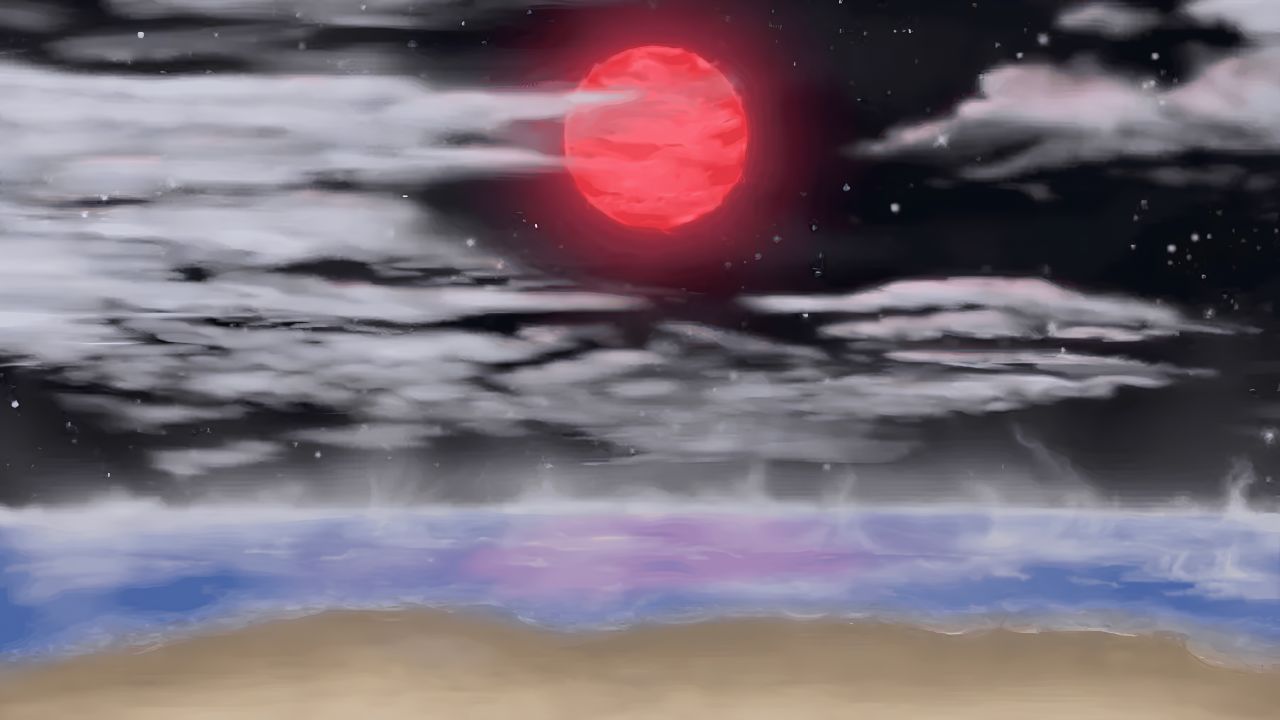
The great scientific asset of GJ 3378b is its orbit, which places it within the habitable zone, a region where the temperature allows for the existence of liquid water on the surface.
As explained by Paul Robertson, professor of astronomy at UCI, the “super-Earth” receives approximately 90% of the stellar radiation that our planet receives from the Sun, placing it exactly at the ideal point. This characteristic makes GJ 3378b one of the best current candidates for harboring life outside the Solar System.
The role of future space missions
The confirmation of the habitability of this “neighbor” depends on technologies that are still being developed. Researchers hope to obtain more data about GJ 3378b through future missions, focusing on the identification of biosignatures — chemical substances in the atmosphere that may indicate biological origin.
Expectations for the coming years include:
- The use of NASA’s Habitable Worlds Observatory, scheduled for the 2040s.
- The capture of direct images of the planet to confirm the presence of an atmosphere.
- The chemical analysis of the gaseous layer in search of signs of life.
Why is this discovery a milestone for science?
Studying this exoplanet goes beyond astronomical cataloging; it is about understanding the diversity of rocky worlds.
According to Gogod James, a UCI student: “If a planet in the habitable zone has a suitable atmosphere, we can justify additional research in search of biosignatures, liquid water, or other signs of life that require both an atmosphere and the right amount of heating from the host star.”
The exploration of GJ 3378b reinforces the importance of investigating nearby planetary systems, consolidating this celestial body as one of the most crucial targets for astronomy in the coming decades in the search for answers about life beyond Earth.