Portuguese
  Spanish


The mollusk fossil identified by UEPG scientists in Ponta Grossa indicates a species not yet recorded and reinforces that part of Paraná was covered by the sea about 400 million years ago, when rocks from the Devonian period preserved marine organisms, ancient environments, and important mineral clues.
The mollusk fossil found by researchers linked to UEPG, in Ponta Grossa, Paraná, revealed a species not yet recorded in the region. The discovery occurred in exposed rocks associated with the Devonian period, when the area that today forms part of the Campos Gerais was covered by ancient seas.
The information is based on a video published on the Rede Massa – Ponta Grossa channel on July 6, 2026. According to the content, the find was made during fieldwork in Ponta Grossa and analyzed with the support of researchers from UEPG and the National Museum.
Paraná was once covered by ancient seas
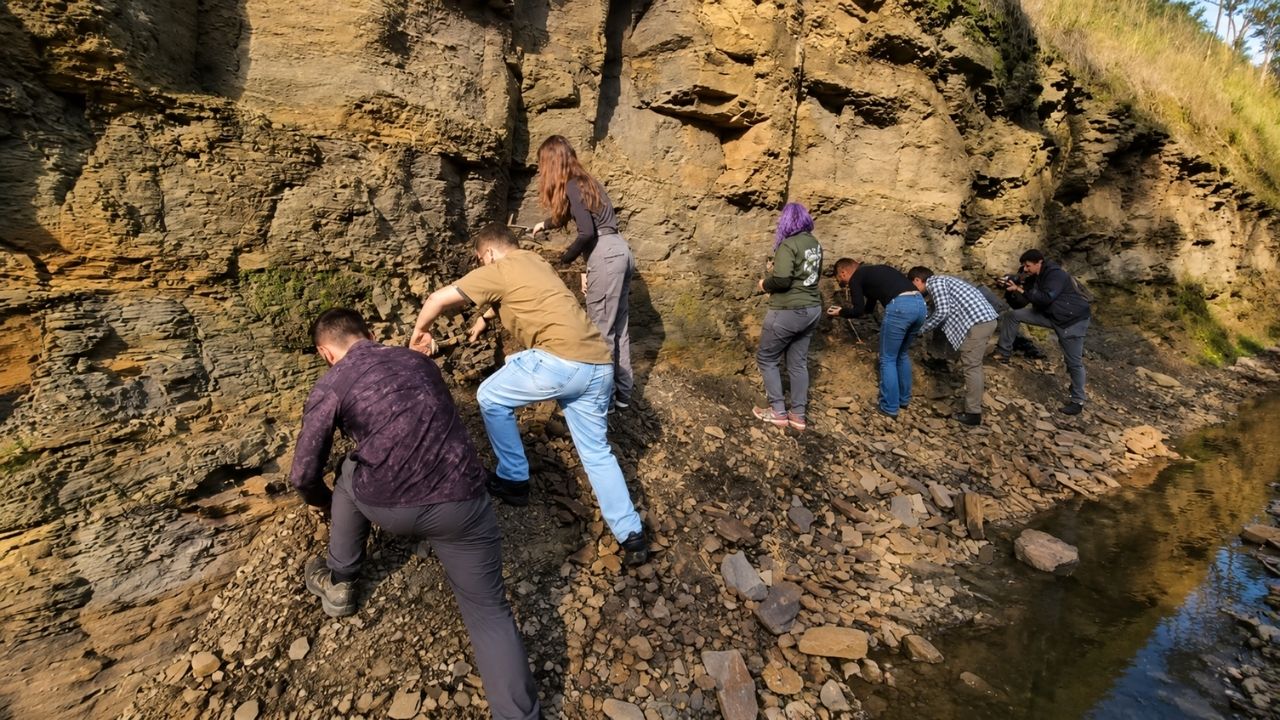
Today, Ponta Grossa is far from any coastline, but the rocks of the region hold marks of a very different past. About 400 million years ago, during the Devonian, this area was part of a marine environment where mollusks and other organisms lived, preserved in sedimentary layers.
-
14.6-liter hydrogen engine surprises by delivering 600 horsepower, using more than 90% of the diesel engine structure, and still operating with less pure fuel, reducing changes in manufacturing and installation in heavy vehicles.

-
USA releases UFO photos taken during astronauts’ flight on the space shuttle Columbia, revealing a triangular object changing position over Earth and admitting that there is still not enough data to identify its origin.

-
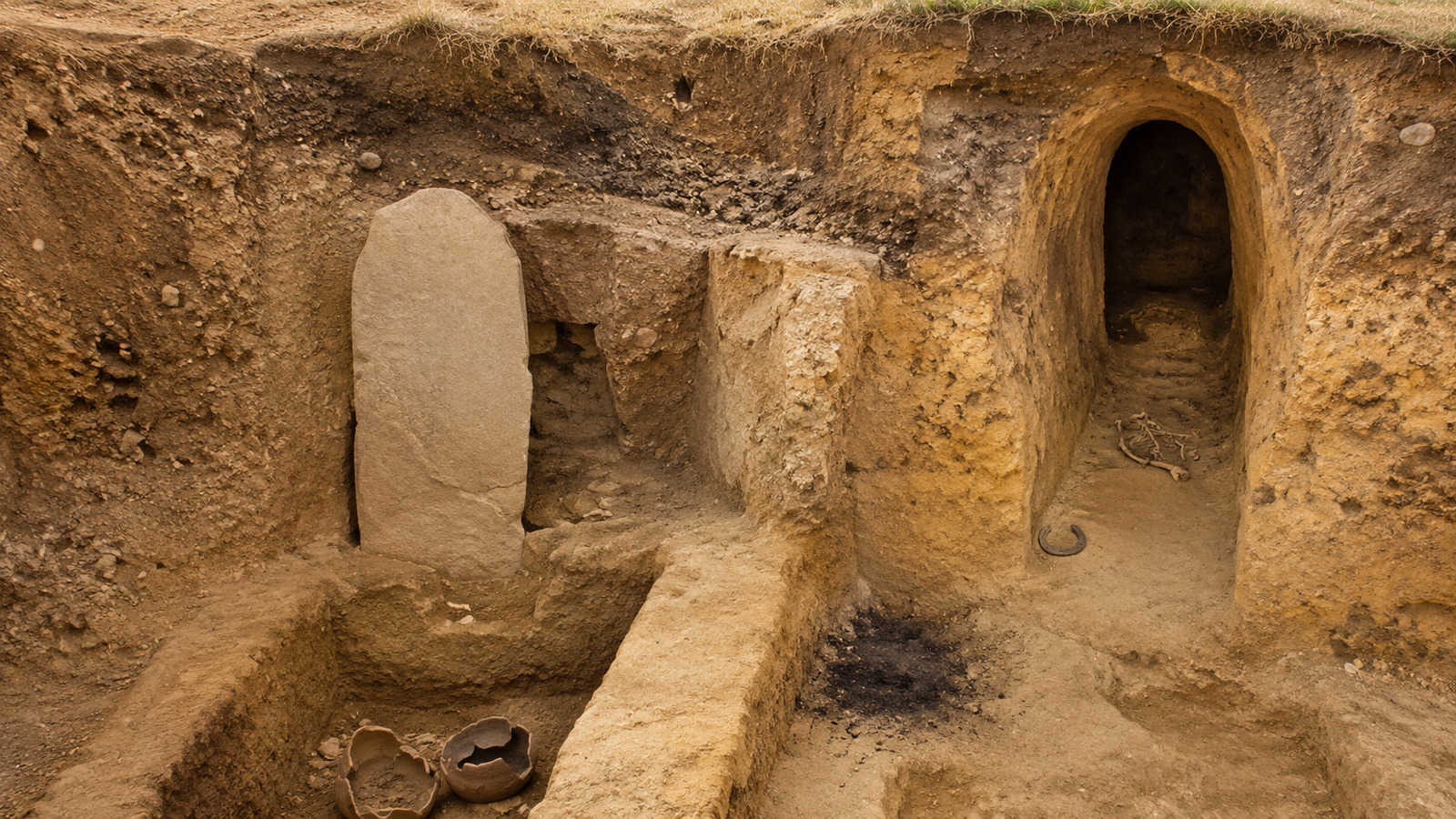
Archaeologists find a hidden medieval tunnel under a Stone Age tomb in Germany, with a fox skeleton, horseshoe, pottery, signs of a fire, and a sealed entrance that may have concealed clandestine rituals.

-
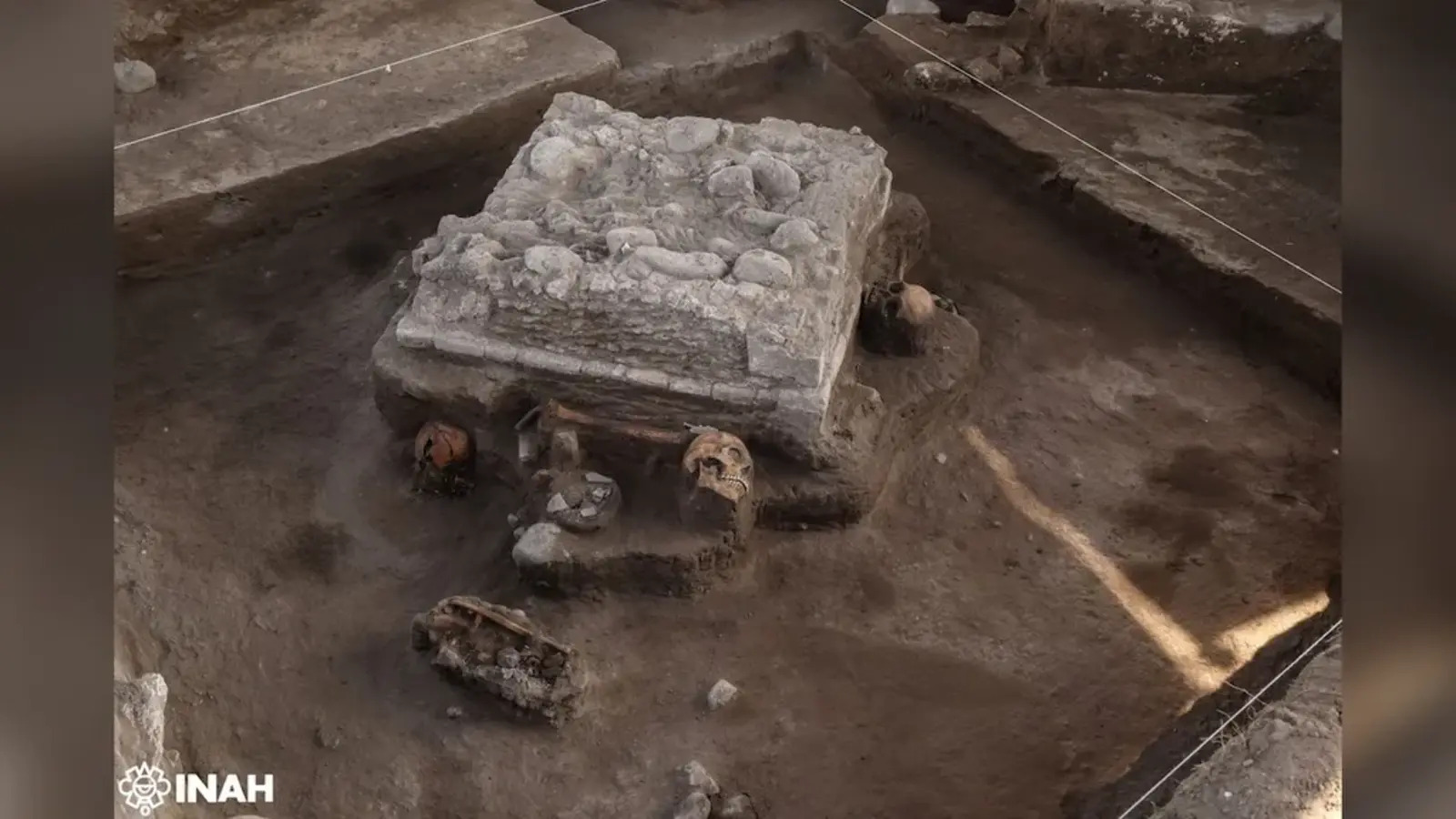
Work in Mexico reveals a 1,000-year-old Toltec altar surrounded by human skulls, bones, obsidian knives, and signs of ritual decapitation.


This context is not new to science. The first research on marine organisms in the region dates back to the 19th century, with records associated with the Geological Commission of the Empire. Even after more than a century of studies, the rocks of Ponta Grossa continue to reveal unknown species.
Mollusk fossil appeared during search for another species
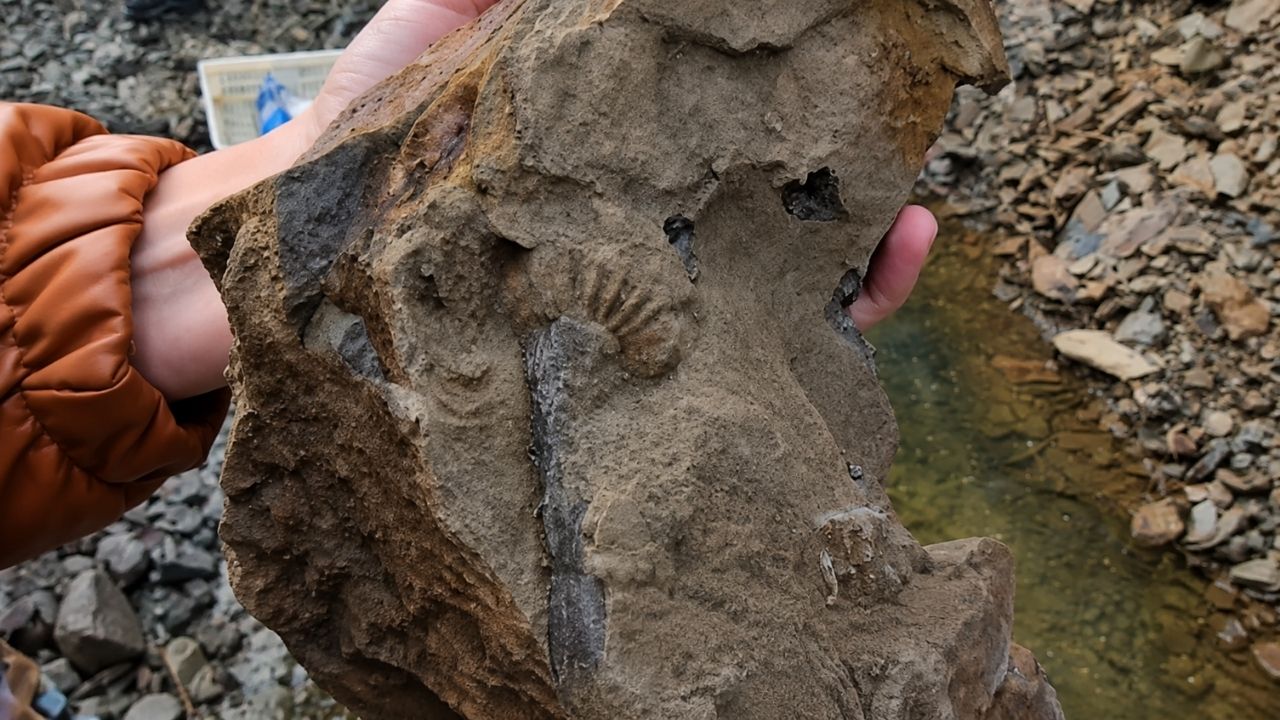
The fieldwork initially had another objective. The doctoral student Kevin returned to the rocks of Jardim Gianna, in Ponta Grossa, to look for more specimens of a species already known to researchers, following the initial proposal of his investigation.
During the analysis of the samples, however, one piece caught attention for having different characteristics. The mollusk fossil did not exactly match what the researchers expected to find. What seemed like another specimen within a known collection ended up becoming a new species for science.
Collaborative analysis confirmed the difference
The identification was not made solely by the general appearance of the shell preserved in the rock. According to the source, the sample was analyzed in collaboration with Professor Sandro Marcelo Scheffler, from the National Museum, who observed different diagnostic characters in the material.
From this more detailed evaluation, the researchers concluded that it was a species not yet recorded. The study was published in the United Kingdom, increasing the scientific visibility of the discovery made in Ponta Grossa and reinforcing the paleontological importance of the region.
Exposed rocks function as an open book
The location where the mollusk fossil was found attracts researchers from various parts of the world, especially due to the ease of access to the rock layers. To those passing by without technical knowledge, the formations may seem like just exposed stones.
For paleontologists, however, each layer functions as a page of an ancient book. The marks of the shells preserved in the rocks help reconstruct which organisms lived there, how they were distributed, and what type of marine environment existed in the region millions of years ago.
Devonian period preserved marine organisms
The Devonian period is known for recording an intense presence of life in the oceans. In Ponta Grossa, the preserved layers from this interval hold evidence of organisms that inhabited ancient seas, including shells, mollusks, and other marine fossils.
These records allow scientists to understand not only the existence of a species but also its relationship with the environment. The newly identified mollusk fossil helps expand this biological map, showing that the local marine diversity may still be underestimated.
Discovery may revise old collections

The importance of the find is not limited to the location where it was discovered. Since the new species may resemble already cataloged fossils, researchers from other institutions may review collections stored in laboratories and museums.
According to the source, similar specimens may be mixed with materials previously identified as other species. This means that drawers of scientific collections in Brazil and other countries may hide records of the same organism, still without proper recognition.
Ancient sea extended beyond Ponta Grossa
The Devonian marine environment was not restricted to the current area of Ponta Grossa. The source highlights that this ancient sea extended over large areas of South America and also regions connected to the ancient continent Gondwana.
Even so, Ponta Grossa stands out because it preserved important layers from this period. This conservation allows the study of shallow, medium, and deeper environments, as well as the organisms that lived in each zone. The city has become a rare window to view a Paraná that was once under the sea.
Museum helps to bring science and public closer
Many fossils found in the region can be seen at the UEPG Museum of Natural Sciences. The expectation, according to the transcript, is that the new species will also become part of the collection, allowing visitors to closely observe records of ancient marine organisms.
This public exhibition is important because it transforms a technical discovery into accessible knowledge. The mollusk fossil ceases to be just a laboratory object and begins to tell a larger story: that of a territory that changed completely over hundreds of millions of years.
Fossils also help to understand mineral resources
The study of fossils is not only used to reconstruct animals and environments of the past. According to the researchers cited in the source, understanding paleoenvironments helps to interpret the formation of mineral resources, gas, oil, and coal.
This occurs because many natural resources are associated with ancient depositional environments. By studying who lived in each area of the Devonian sea, scientists can also better understand how certain layers formed and why they may have geological and economic interest.
Ponta Grossa may still hide new species


The discovery shows that even in a region studied since the 19th century, there is still room for scientific novelties. The fact that a fieldwork focused on an already known species revealed another, not yet recorded, reinforces the richness of the rocks exposed in Ponta Grossa.
The finding also values research done in collaboration, with students, teachers, and specialists from different institutions. Paleontology depends precisely on this combination of fieldwork, laboratory, collection comparison, and a keen eye for small details preserved in the stone.
An oceanic past still written in the rocks
The mollusk fossil found in Ponta Grossa transforms an apparently common rock into concrete proof of a Paraná submerged by ancient seas. The newly identified species helps reconstruct the marine life of the Devonian and shows that the region still holds answers about environments that disappeared millions of years ago.
The question that remains is how many other species remain hidden in rocks, museum drawers, and old collections, waiting for a new analysis. Did you imagine that Paraná had once been the seabed and could still reveal unknown marine organisms? Share your opinion.