






 Portuguese
  Spanish


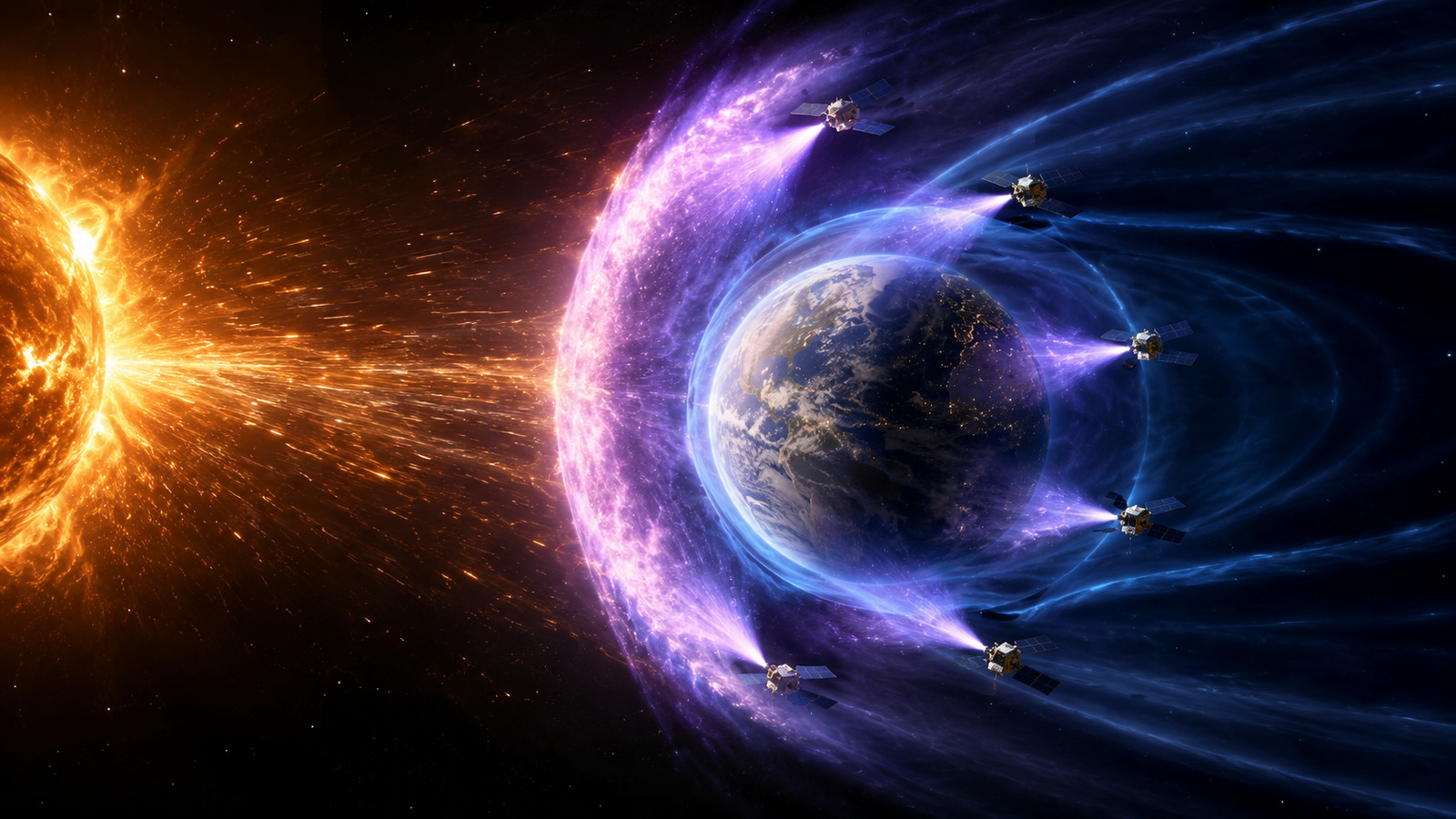


System proposed by researchers at Boston University would use six spacecraft to release ionized particles into space, reinforce the magnetosphere, and reduce the intensity of geomagnetic storms by more than 50%
A team led by Brian Walsh from Boston University proposed StormWall, a system to reinforce Earth’s magnetosphere with artificial plasma and reduce the strength of solar storms. Simulations with the geomagnetic storm of May 2024 indicated a drop of more than 50% in the intensity of the event.
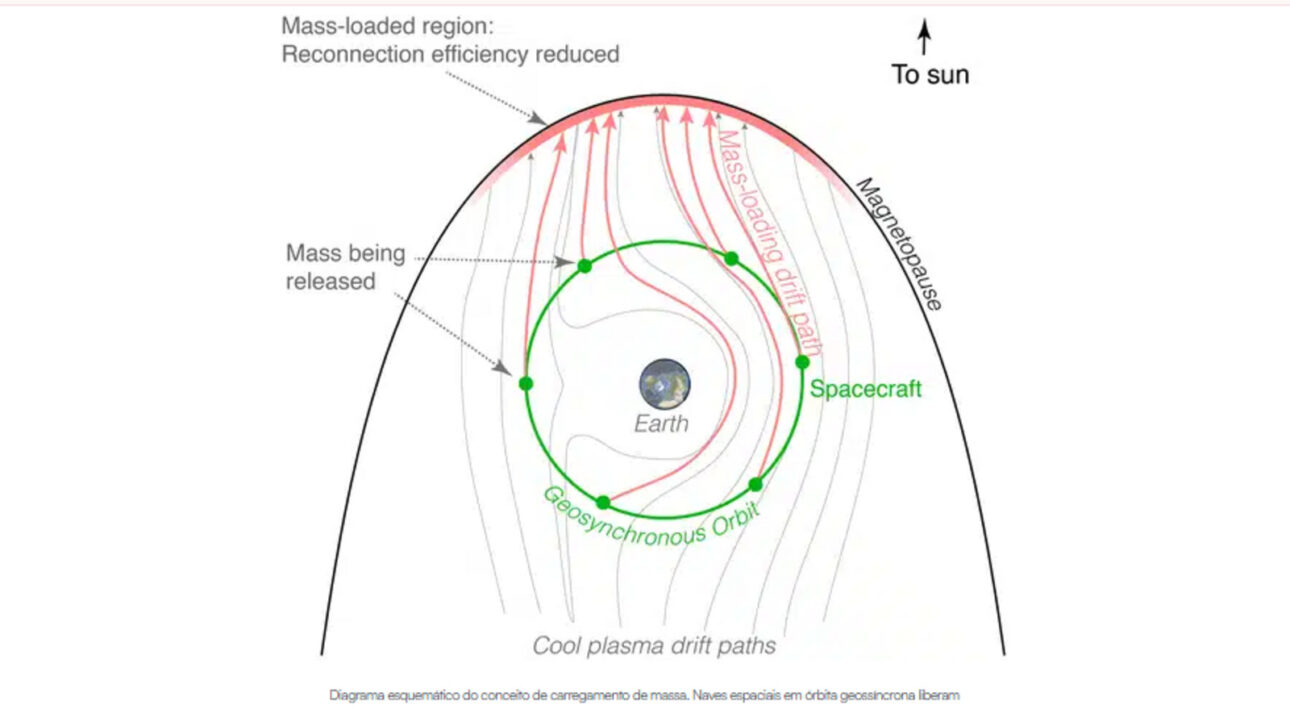
Credit: Space Weather
StormWall aims to transform space defense into preventive action
The proposal stems from a known problem in so-called space weather: Earth already has the magnetosphere, a natural shield against charged particles from the Sun, but extreme events can pressure this protection system.
When this happens, geomagnetic storms can affect satellites, GPS systems, power grids, and global communications.
-
She spent 73 years breathing inside an iron lung, survived the aftereffects of polio, and became the last woman in the United States dependent on the equipment before dying at 78 years old.

-
Brazilian students created a $1 filter using pine bark, cotton, and 3D-printed parts to clean cassava wastewater, reduce the toxicity of a hazardous waste, and transform contaminated water into biofertilizer.

-
Astronaut from Artemis II steps down after mission to the Moon and decision surprises after a record of 406,771 km, a historic 10-day journey, and an unprecedented achievement for Canada.

-
A fossil kept for years in a small museum in Montreal concealed 450-million-year-old soft tissue, a discovery that has only happened once before in history.


So far, the most common scientific strategy has been to predict these events and prepare vulnerable systems.
StormWall changes this reasoning. Instead of just reacting to solar storms, the idea is to try to reduce their intensity before they cause a greater impact on the environment near Earth.
Walsh summarized the change in approach by stating, in a statement, that people used to think they just had to accept what came from the Sun, but researchers discovered it is possible to influence this process.


How artificial plasma would reinforce the magnetosphere
The concept envisions a fleet of six spacecraft in geosynchronous orbit. Each would carry a “mass payload material,” such as barium, lithium, sodium, or calcium, substances that could be stored and vaporized when a solar storm is detected.
After release, sunlight would quickly ionize these particles, turning the material into an electrically charged plasma cloud. This plasma would move toward the sun-facing region of the magnetosphere.
In practice, the artificial cloud would thicken Earth’s natural shield. The goal would be to interrupt magnetic reconnection, a process that allows solar energy to enter the space near the planet.
With this extra barrier, part of the incident solar winds would be deflected around the Earth. Walsh compared the proposal to a containment wall erected before a river floods.
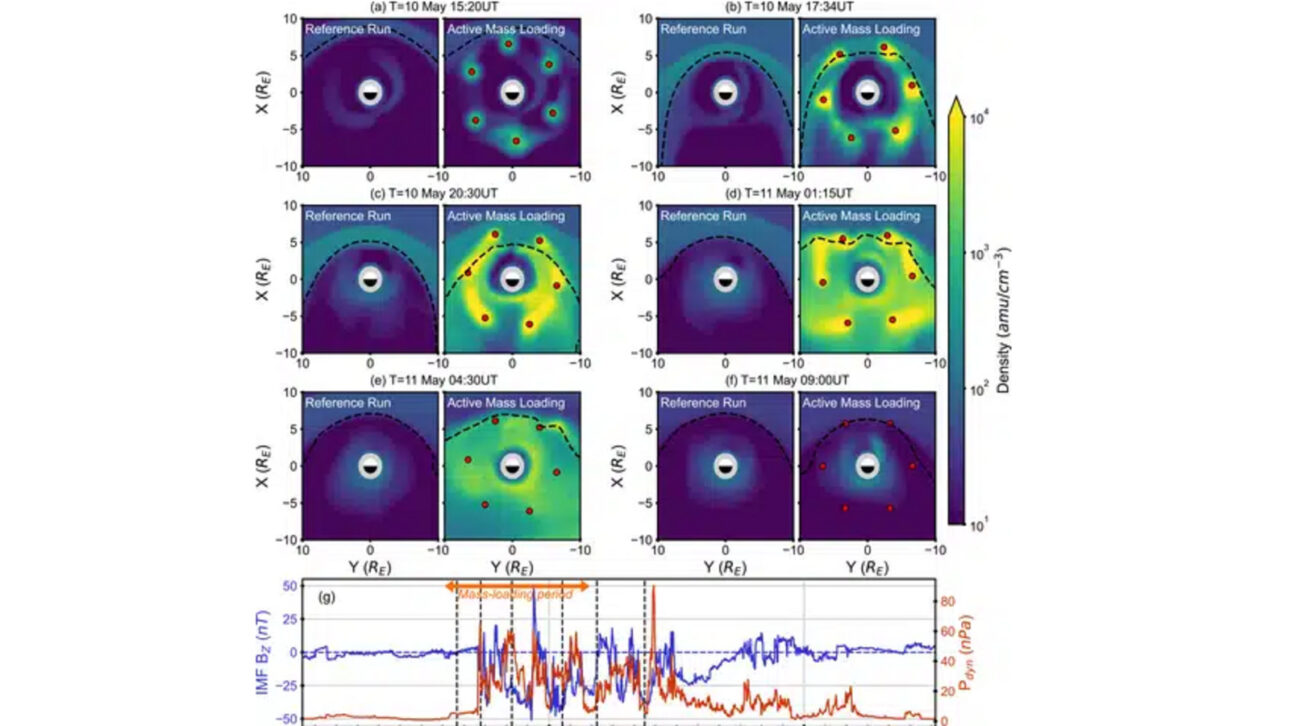
Simulation used the geomagnetic storm of May 2024
To test the StormWall, researchers conducted computational simulations based on the geomagnetic storm of May 2024, referred to in the material as the Mother’s Day storm.
One model represented the normal storm conditions. The other included the artificial plasma shield.
The comparison indicated that the system would not completely prevent the event, but could reduce its intensity by more than 50%.
This result is the central point of the study, as it shows a possible way to reduce damage to satellites and terrestrial structures in strong solar storms.
According to Walsh, by applying “real physics,” the system works. He also stated that the amount of mass required and the launch capability are within current possibilities.
Protection would be global, but the system would need to be recharged
The study published in the journal Space Weather indicates that the concept is technologically viable, but still functions as a single-use solution. The plasma dissipates in approximately six hours.
This means that, to face new solar storms, the system would need to be recharged. Even so, the researchers emphasize that the protection would have a planetary reach.
Walsh stated that, if built and deployed, the StormWall would help all the people on the planet, with no possibility of protecting just one country or a specific group of satellites.
The material also indicates a low risk of long-term contamination, as the ionized particles would be quickly dispersed by the solar wind.
This article was prepared based on information from the Space Weather magazine and the statement attributed to the team led by Brian Walsh, from Boston University, with data, numbers, and statements preserved as per the consulted material.







So you f@#$ up the earth so now attack the sun