Portuguese
  Spanish


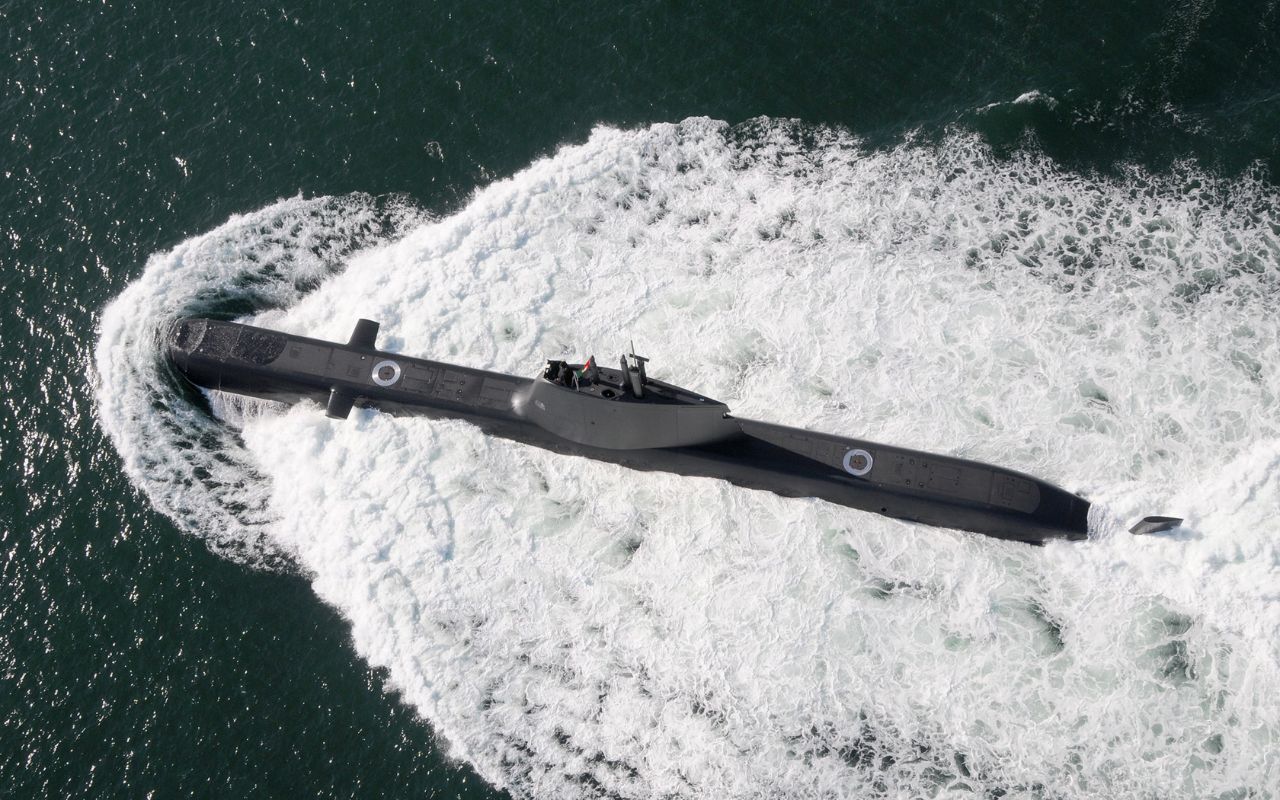

Portuguese Navy sends the submarine NRP Tridente for NATO mission and strengthens international presence in the ocean.
The Portuguese Navy expanded its international operations by sending the submarine NRP Tridente on Tuesday, the 14th, to join a NATO operation focused on maritime security, which began in April 2026. The mission takes place in strategic regions and brings together forces from different countries to strengthen naval surveillance and military cooperation.
The deployment departed from the Naval Base of Lisbon as part of Portugal’s commitment to the Alliance. The operation involves practical exercises, monitoring, and integration between naval and air units. This reinforces the country’s response capability in maritime defense scenarios.
NRP Tridente enhances the Navy’s capacity in international operations
The dispatch of the NRP Tridente represents an important reinforcement for the Navy in missions outside national territory. The submarine has characteristics that allow it to operate discreetly and efficiently in complex environments. Furthermore, its participation directly contributes to the monitoring of strategic areas. This increases NATO’s joint surveillance capability.
-
Australia to Deploy Up to 8 Nuclear-Powered Submarines in Indo-Pacific, Establishes Billion-Dollar Naval Chain Through AUKUS, Joining Elite Group Capable of Extended Underwater Missions

-
Indonesia Begins Construction of 2,000-Ton Scorpène Stealth Submarines with Advanced Weaponry and French Steel

-
Brazil’s Largest Navy Ship, NAM Atlântico, Transforms into Field Hospital During National Crises

-
Brazilian Navy Demonstrates Strength in Naval Exercise with Over 20 Nations, Deploys Frigate Independência in Anti-Submarine and Air Defense Scenarios, and Joins Historic Formation with 26 Ships from 14 Allied Navies off the U.S. Coast



One of the main focuses of the mission is the participation of the NRP Tridente in the Dynamic Mongoose exercise. This is a training aimed at detecting and combating underwater threats. In this context, the Navy operates alongside other naval and air forces. The simulation of real scenarios helps to improve operational techniques.
Integration with allies strengthens the Navy’s operations
During the operation, the NRP Tridente works together with other Portuguese and international units. Among them are the frigate D. Francisco de Almeida and a P-3 aircraft. This cooperation allows the Navy to develop coordinated operations. Additionally, it improves interoperability among NATO countries.
Another relevant point is the support of the NRP Tridente to the FOST program of the Royal Navy. The training aims to standardize operational procedures among allied forces. Over two weeks, the Portuguese Navy contributes to the assessment and improvement of naval capabilities. This strengthens the readiness of the involved units.
Navy Command highlights the importance of the submarine
During the departure, the Navy command emphasized the strategic role of the NRP Tridente in the mission. The leadership highlighted the relevance of the operation for international security.
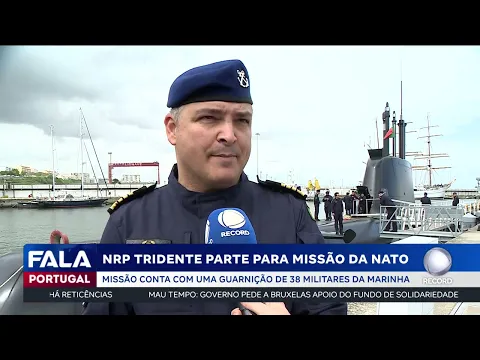

According to the Chief of Staff, “By participating in Operation Brilliant Shield, the Tridente will contribute to the surveillance and security of central areas for the Alliance’s objectives, ensuring a credible presence and enhancing the capacity to monitor the activities of relevant stakeholders.”
In addition to the operational role, the Navy emphasized the preparation of the NRP Tridente crew. The command highlighted the level of training of the military personnel involved. The admiral stated that he has “full confidence in the competence, training, and discipline” of the crew. He also emphasized that the military will act with “zeal, aptitude, and integrity” throughout the mission.
Technical capabilities of the NRP Tridente
The NRP Tridente is a high-tech submarine designed for prolonged missions and discreet operations. It can operate at great depths and has advanced combat systems. Additionally, it is equipped with armament that includes torpedoes and missiles, enhancing its offensive capability. These features make the submarine one of the Navy’s main assets.
The NRP Tridente is part of a class of submarines called “Tridente,” developed to fulfill long-duration missions at sea, focusing on low detectability and high efficiency in combat scenarios. When navigating on the surface, its displacement is about 1,842 tons, reaching approximately 2,020 tons when submerged.

The vessel measures nearly 68 meters in length, has a beam of 6.35 meters, and a draft of 6.6 meters, which ensures its capability to operate at depths greater than 300 meters.
Among the onboard equipment, the Kelvin Hughes KH-1007 navigation radar stands out, as well as the integrated combat system ISUS 90-50, developed by Atlas Elektronik GmbH, responsible for gathering sensor data and supporting the conduct of tactical operations.
In terms of armament, the submarine can carry up to 12 torpedoes and up to 6 anti-ship missiles of the Harpoon UGM-84 type. The propulsion system consists of two MTU 16V396 TB-94 diesel engines, one Siemens Permasyn electric motor, and two Siemens Sinavy air-independent propulsion (AIP) systems, allowing it to reach speeds close to 20 knots when submerged.
The mission occurs in parallel with other movements by allied countries, such as Spain, which has also mobilized submarines for strategic operations. This context highlights the increase in naval activity in sensitive regions. Thus, the Portuguese Navy is part of a collective effort for global maritime security.
With information from Zona Militar