






 Portuguese
  Spanish
  6 min of reading
  0 comments


Man Digs Hole to Start Construction and Bets That the Empty Space Will Become the House of His Dreams, Transforming into a Complete Shelter with Curved Wooden Arches, Joint Connections, and a Glass Front That Catches the Attention of Experts.
He did not raise walls high, did not open a foundation for a building, did not start with blocks. This elderly man went straight to the point that scares any construction: digging the ground and betting that the empty space would become a hobbit house.
The curious thing is that there are no shortcuts. The construction progresses at the pace of the site, with ground marking, log cutting, adjustments that go back to the saw, supports holding weight, and that insistence that decides whether the structure stands or not.
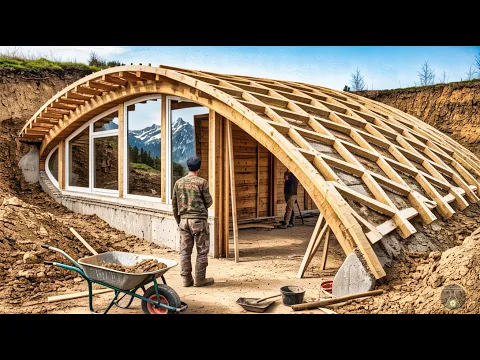

The result catches attention because it mixes two things that rarely appear together in the same place: heavy wood in the structure and a large glass front that lets in light without giving up shelter.
-
India assembles two giant tunnel boring machines weighing over 3,000 tons to dig the country’s first underwater railway tunnel, with 7 km under Thane Creek and high-speed train tracks running up to 114 meters deep.

-
New Zealand aligns nearly 7,000 X-shaped concrete blocks like puzzle pieces to protect railway, highway, and cycle path against waves, erosion, and earthquakes on one of Wellington’s most sensitive coasts.
-
Baixada Santista receives water reservoirs worth R$ 84.6 million in Itanhaém with 20 million liters to reinforce the supply for 1.2 million residents in five cities.

-
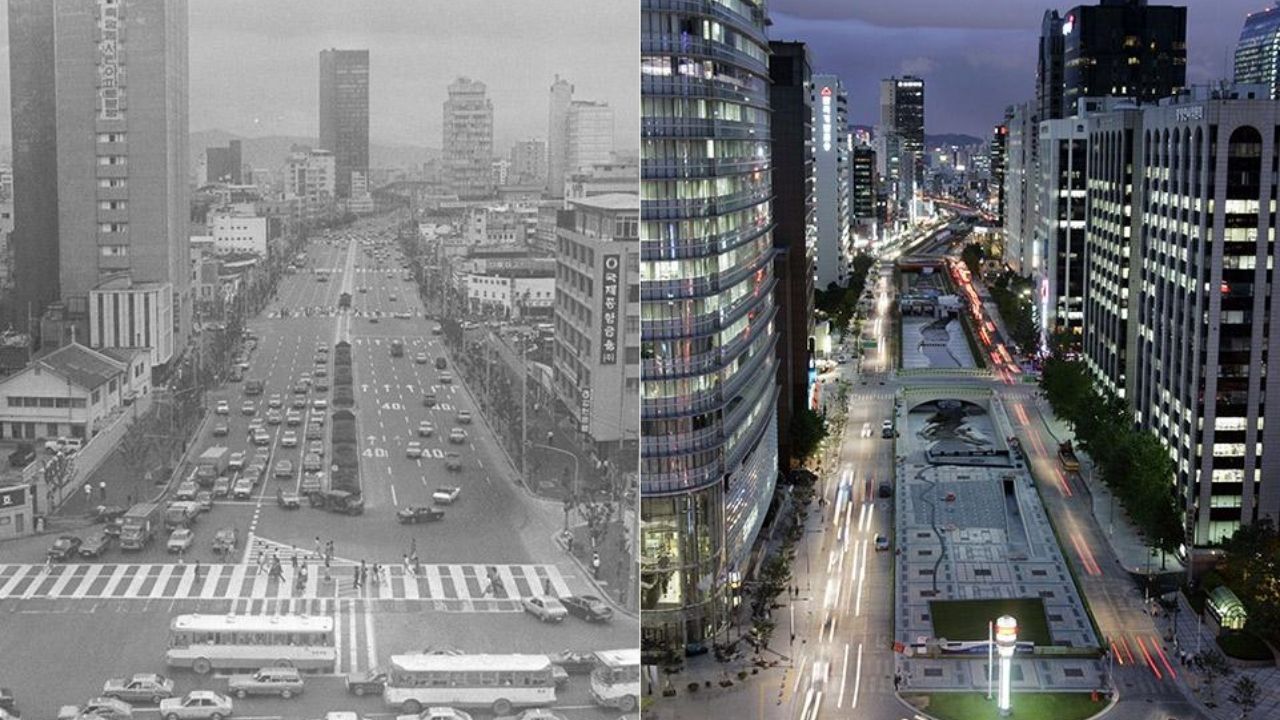
A river buried under a highway became an urban park in Seoul after a multimillion-dollar project at Cheonggyecheon, attracting 64,000 visitors per day, increasing biodiversity by 639%, and showing why cities are replacing concrete with water and green areas.



The Construction Plan Appears in the First Cut, When the Work Decides to Grow Downward Instead of Outward
The story of the construction begins with the land cleared and a well-defined excavation rectangle. It does not look like a random hole. The edge is aligned, and the internal space already has the appearance of a planned area, with a leveled bottom and clean corners.
Those who look closely notice a simple rule governing the work: before placing a piece, the ground must accept the piece. Shovels, hoes, and adjustments come in until the ground is firm and more even, without hidden steps to knock the rest down.
This choice changes everything. A construction that grows downward gains natural protection from the land itself, but demands discipline at the base. If the first layer fails, the entire wall suffers later, and fixing it costs dearly in time and effort.
The detail that reveals control is the marking. Stretched line, stake in place, tool left at the right point. It’s the kind of organization that doesn’t attract attention for those outside the trade, but decides the direction of the work.

The First Contest at the Hobbit House Construction Site Is Against the Log, Cutting, Notching, and Fitting That Does Not Forgive Rush
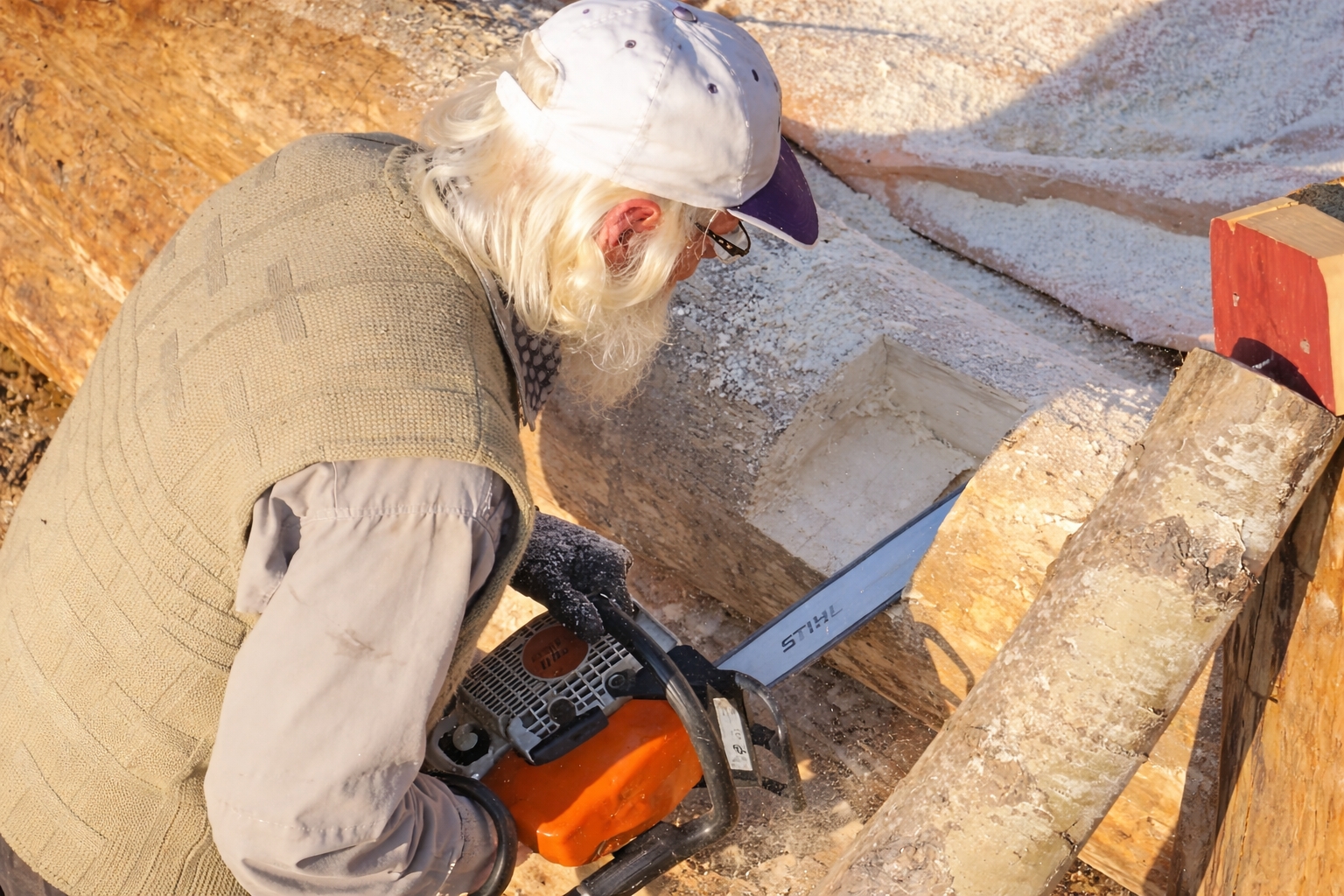
When the logs come in, the project changes scale. The wood is the main material, heavy, with an uneven surface, and requires clean cuts to fit where it needs to fit. The chainsaw then appears as a tool of production, not as a spectacle.
The game here is fitting. The ends gain notches, some faces are adjusted, and the pieces are stacked sequentially, like a wall that grows layer by layer. There’s no pretending alignment; the log reveals itself immediately.
The effect is immediate on the interior. The hole begins to look like a shelter, because the sides stop being just earth and begin to have massive wood holding the volume. The space gains clear boundaries, and the project stops looking provisional.
And there’s the classic sign of real work: sawdust on the ground, wood chips on the edge, cutting marks going back for corrections. The wall rises because someone persisted until the log settled correctly.
The Secret That Determines the Outcome of the Construction Lies in the Wooden Arches, the Curvature of the Hobbit-Style House That Changes the Roofing Rules

From the moment the arches appear, it becomes clear that it was not just about stacking wood and covering it with anything. The arches have visible layers, like curved blades mounted to maintain a constant radius.
Raising this is not a solitary task. The large piece requires hands to hold it, fine alignment, and temporary supports. The arch needs to stop at the exact point, because it dictates the shape of the roof and also the internal space.
The consequence of this choice is practical and strong. With the arch, the roof ceases to be a flat cover and becomes a structural tunnel. The internal volume gains continuity and the whole structure starts to work as a single body, without relying on just one piece to support everything.
The detail that reveals the engineering of well-done improvisation is the bracing. Vertical posts holding, diagonal braces locking, everything to keep the arch from giving way before the roof skin goes in.
Slats, Boards, and Sheets Lock the Curve; Here the Shelter Ceases to Be a Skeleton and Begins to Be a Refuge
An arch without bracing is an empty promise. The work knows this and includes slats and boards fixed to follow the curve, one next to the other, creating a repeated surface that starts to close the sky above.
Then larger panels come, and later, corrugated metal roofing appears. The leaning ladder and the high work indicate the part that requires calm, because poorly made fixes here turn into gaps, and gaps become headaches.
As the closure progresses, the interior shifts atmosphere. The wind loses its way, direct light diminishes, and the space begins to appear protected. The shelter takes on the appearance of a place where one can stop, organize, and work inside.
The point that draws attention is the transition between materials. Wood and sheet meet at the top and edges, and there, it is not enough to just nail. They need to align so that the curve remains coherent, without steps and without evident holes.

The Part That No One Wants to Do Becomes Apparent in the Gaps, Expanding Foam, and Adjustments That Decide the Comfort in the Hobbit House
After the structure is upright, the phase that defines whether it will work on a daily basis begins. The gaps appear in the joins of the boards, at the corners, at the points where the wood does not touch perfectly.
The solution comes in the form of controlled application. Expanding foam fills gaps, rises in seams, and later receives cutting and cleaning of excess. In some joins, a dark layer emerges at the edge, like a physical barrier between parts.
The gain is visible. Less opening, less free passage for dust and wind, and an interior more prepared for real use. The work no longer looks like an open site. It starts to look like a closed space that can withstand routine.
The repetition of hand returning to the same point is something that carefully occurs. It is not just a spray and done. It is apply, check, adjust, clean, return. This is what separates a beautiful shelter from a usable one.
The Glass Facade Closes the Case; the Rounded Door and Light Enter the Story Without Revealing Fragility

The final turn occurs when the front of the shelter appears closed with wooden panels and large glass areas. It is not a shy little window. It is a facade that assumes the function of entrance as well as lighting.
The rounded door follows the logic of the arch. The curved frame fits into the whole and gives identity to the refuge. The assembly shows cutting, fixing, and adjusting until the front aligns with the roof without leaving glaring gaps.
The practical effect is immediate: the interior brightens, access becomes defined, and space starts to accept organization. One can notice a counter, containers, a ladder, and stored items, as in any work that moves toward use.
And here comes the silent concern with edges and joins. The top of the facade and the sides show careful transitions, because it is there that any failure allows the ground to invade what should be protected.
In the end, what makes this underground hobbit house stand out is not just the idea of digging the ground. It is, then, the way the project solves the basics without excuses: properly joined log walls, curved arches supported with bracing, locking by slats and sheets, and sealing of gaps for the shelter to really function.
Now tell me: would you trust the log wall or the arching roof to hold the whole together? And which stage do you think would give you the most work in your daily construction activities?





-

-

-

-

6 people reacted to this.