






 Portuguese
  Spanish


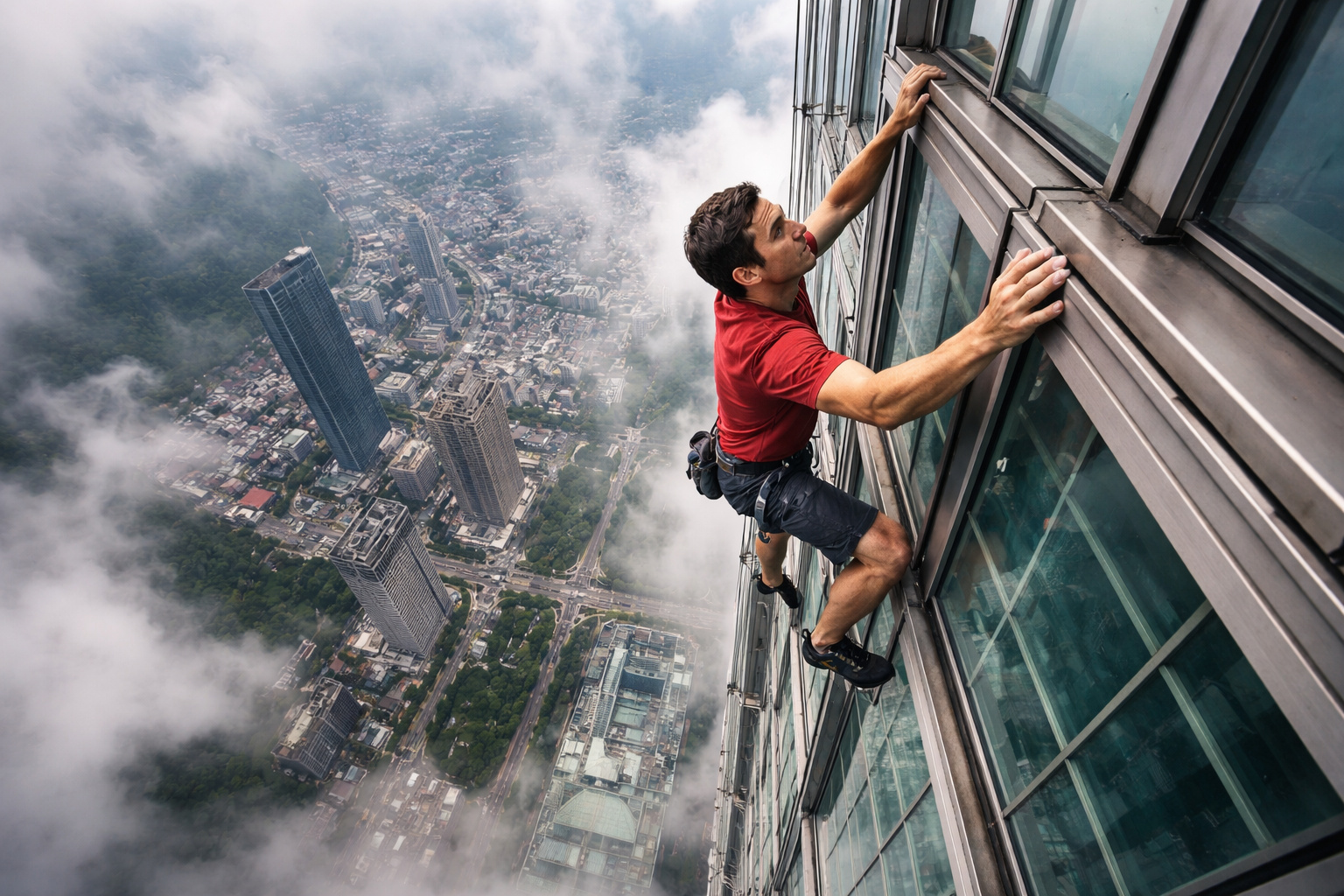


While Most Feel Vertigo When Looking Down, Neurological Exams Reveal Why The Climber Who Scaled Taipei 101 Without Protection Interprets Fear in a Completely Different Way
The ability to face extreme heights without showing fear has turned Alex Honnold into one of the most intriguing athletes in the world. Known for climbing large structures without any ropes or safety equipment, the American climber captured attention once again by scaling Taipei 101 in Taiwan, in a challenge broadcast live on Netflix and watched by thousands of spectators on-site and around the world.
Over the years, Honnold has built an impressive resume in the world of free solo climbing. Among his most well-known feats is the ascent of El Capitan, a monolith nearly 1,000 meters tall located in Yosemite National Park in the United States, a challenge that earned him international awards and global recognition. Additionally, he completed the solo traverse of Ingmikortilaq cliff in Greenland, standing 1,144 meters high, solidifying his reputation as an unconventional athlete.
However, what most intrigues scientists and the public is not only his physical ability but how his brain reacts to situations that would normally trigger intense panic. In light of this, in 2016, Alex Honnold agreed to undergo a series of neurological studies to better understand his relationship with fear and risk.
-
11-Year-Old Entrepreneur Turns Fear of Bees into Honey Lemonade, Wins $60,000 on Shark Tank, Secures Whole Foods Deal, and Expands Brand Across U.S. Stores

-
9-Year-Old in Brazil Sells Homemade Sweets to Support Grandfather with Parkinson’s, Family Dreams of Buying Candy-Making Machine

-
Man Disguises as His Own Mother to Collect €3,000 Monthly Pension, but Makeup and Beard Stubble Raise Suspicions at Registry Office

-
Brazilian Airport to Receive $2.8 Million Investment, Completion Expected Within a Year





What Science Discovered When Analyzing The Climber’s Brain

Credits: Illustrative image created by AI – editorial use.
This information was released by the website Nautilus, which published the results of exams conducted by James Purl and neuroscientist Jane Joseph. During the study, Honnold underwent functional magnetic resonance imaging, a technique used to observe brain activity in real-time in response to specific stimuli.
The researchers focused especially on the amygdala, a structure of the brain responsible for processing emotions, including fear. In common situations, such as viewing images associated with great heights or imminent danger, the amygdala usually shows strong activation, triggering physical responses such as increased heart rate, excessive sweating, and the sensation of vertigo.
In Honnold’s case, the results were surprising. The climber’s amygdala showed significantly lower activation compared to most people. This means that stimuli that would normally cause intense fear simply do not provoke the same emotional response in his brain.
To deepen the analysis, scientists compared Honnold’s brain to that of another man of the same age who also practiced extreme sports. Both were exposed to the same potentially frightening images during the exams. While the other athlete’s amygdala demonstrated intense excitement, the American climber’s remained virtually inert, showing no significant activity.
Extreme Training and Mental Self-Control Explain The Absence of Fear

Experts point out that this difference does not mean a total absence of fear, but rather a distinct interpretation of danger signals. The particular functioning of the amygdala makes Alex Honnold’s brain process risks more rationally and less emotionally, which favors precise decision-making in critical situations.
Moreover, scientists highlight that years of rigorous training may have contributed to this neurological adaptation. Free solo climbing requires an extreme level of mental self-control, absolute concentration, and the ability to remain calm under constant pressure, factors that directly influence how the brain regulates emotions.
This emotional control is essential, as any mistake, distraction, or impulsive response can be fatal. According to researchers, Honnold’s brain appears to interpret fear as information to be processed rather than as a paralyzing alert, which explains his apparent calm in the face of dizzying heights.
The Ascent of Taipei 101 and The Spectacle Before The Public
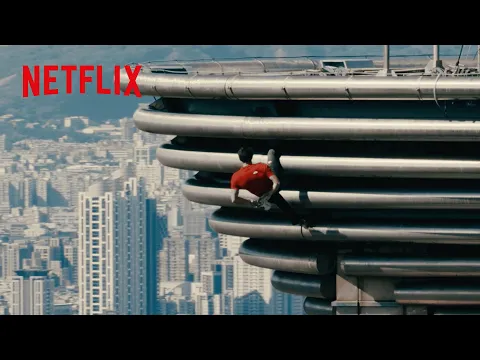
The recent peak of this combination of physical preparation and mental control occurred in Taiwan. In a challenge that drew the attention of the country, Alex Honnold scaled Taipei 101 in approximately an hour and a half. The building, which has exactly 101 floors, was considered the tallest building in the world from 2004 to 2010, standing at 508 meters tall.
During the ascent, adverse conditions made the challenge even more risky. “There was a lot of wind, so I was trying to balance myself well so I wouldn’t fall off the tower,” the climber reported after the feat. From the ground, a crowd watched in silence and apprehension as the athlete made each move on the skyscraper’s facade.
The climb, carried out without ropes or any safety equipment, was broadcast live on Netflix and turned into a global spectacle. While it sparked admiration, the feat also generated debates about the limits of extreme sports and the risks to the climber’s physical integrity.
A Brain Shaped To Challenge Human Limits
By bringing together science, sports, and entertainment, Alex Honnold’s story reveals how the human brain can adapt in extraordinary ways. The combination of neurological predisposition and extreme training seems to have shaped an athlete capable of facing risks that challenge the basic survival instinct.
More than just the absence of fear, studies indicate that Honnold has developed a unique way to interpret danger, transforming extreme situations into calculated challenges. This characteristic explains why, while crowds observe with racing hearts, he climbs skyscrapers as if he is in complete control of each movement.
If the brain can be trained to interpret fear differently, how far do the real limits of what we consider impossible for humans go?
Source: O Globo




Isso é particularmente importante, para pessoas que de ansiedade pois o medo passa a ser passível de controle através de treinamento.
São milhões de pessoas pelo mundo om qualidade de vida alterada, pela ativação de comportamentos que causam respostas físicas e emocionais