






 Portuguese
  Spanish


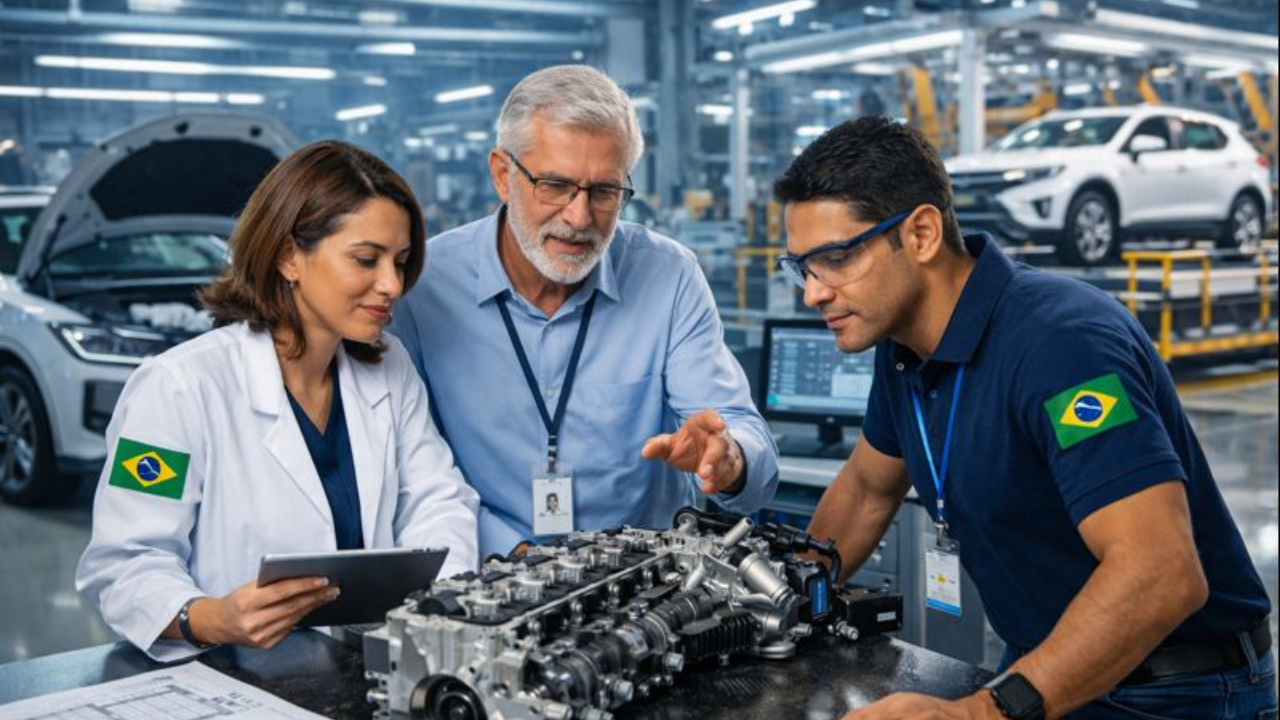

The Advance Of Imports Weakens National Automotive Engineering And Exposes Flaws In Brazilian Industrial Policy And Local Content.
National automotive engineering faces a silent process of weakening in the face of the advance of production models based on imports, warned the Brazilian Automotive Engineering Association (AEA).
The diagnosis was presented by the association’s president, Marcus Vinicius Aguiar, on Tuesday, December 16, 2025, during the launch of the Strategic Engineering Forum in São Paulo.
According to the AEA, the absence of a structured Brazilian industrial policy has reduced the country’s role as a hub for engineering, research, and development, even in the face of a global scenario that demands solutions in decarbonization, local content, and technological development.
-
France Revamps 530 Social Housing Units with Large Balconies and Glass Facades Without Demolishing Existing Buildings

-
10-Year-Old Max Makes History with Paris Fashion Show, Launches Own Brand, Hires Staff, and Sets World Record as Youngest Runway Designer

-
Bolivian Female Construction Workers Form Association to Combat Discrimination and 38% Pay Gap in the Industry
-
Near Amsterdam, residents buy land and discover they must also build streets, manage drainage, handle waste, and grow food on half their plot.




Current Productive Model Pressures National Automotive Engineering
The AEA’s alert comes at a time of accelerated change in the automotive industry, marked by an increase in imports in different productive formats.
Vehicles arrive in the country fully assembled, partially assembled, or dismantled in kits, with low requirements for local content.
According to the association, this model limits technology transfer and reduces the need for engineering centers in Brazil.
As a consequence, national automotive engineering loses ground, even with highly qualified professionals.
“We are watching, with our arms crossed, the weakening of national engineering,” said Marcus Vinicius Aguiar.
Local Content And Technological Development At Risk
For the AEA, the problem is not in the opening of the market, but in the lack of structural countermeasures.
The absence of clear local content and technological development requirements prevents demand from transforming into industrial learning and value generation.
Aguiar highlights that Brazil has relevant technological expertise, especially in strategic areas for the global automotive industry.
Among them are biofuels, electrification, and bioelectrification, technologies aligned with Brazil’s energy reality.
“This more recent scenario worries us because, in recent years, we have been watching, with our arms crossed, a certain weakening of national engineering, when — in reality — our professionals have technological expertise,” argues the president of the AEA.
Paradox Of The Brazilian Automotive Industry
The diagnosis presented by the entity exposes a paradox.
The country has qualified engineers and recognized technical knowledge, but cannot convert this asset into a sustainable competitive advantage within the automotive industry.
Without a consistent Brazilian industrial policy, human capital ends up underutilized. This compromises the generation of qualified jobs and limits the country’s ability to lead technological solutions in sustainable mobility.
Meanwhile, other markets are transforming the energy transition into a long-term industrial strategy.
Experience Of São Paulo Metro Reinforces Importance Of Industrial Policy
The AEA’s analysis finds support in the assessment of Claudio de Senna Frederico, vice president of the National Association of Public Transport (ANTP).
In an interview with Diário do Transporte, Frederico recalled that the implementation of the São Paulo Metro in the 1970s was associated with an explicit guideline of protection for the national industry and technology transfer.
This strategy allowed for the emergence and consolidation of Brazilian manufacturers, creating a solid industrial base. Over time, however, this strategic vision has been abandoned.
Public Procurement As A Development Tool
According to Frederico, countries like Canada, the United States, and European Union members use public procurement as active instruments of industrial policy.
Brazil, on the other hand, maintains a stance that no longer finds support in the international scenario.
He cites the recent case of Toronto, which canceled an international bidding process to ensure a minimum percentage of local content in the procurement of trains. For Frederico, this is economic pragmatism, not ideology.
“The world has changed. We live in an era of aggressive barriers and widespread protectionist practices,” he said.
Strategic Engineering Forum Aims For State Policies
With the Strategic Engineering Forum, the AEA seeks to contribute technical subsidies for the formulation of state industrial policies.
The initiative aims to bring together manufacturers, system providers, government, academia, and financial institutions around a common agenda.
The proposal is to strengthen national automotive engineering, increase local content, and boost technological development, with direct impacts on public transportation and urban mobility.
The entity plans to hold four editions of the forum per year starting in 2026.
Strong Engineering As A Development Strategy
Thus, the convergence between the analyses of the AEA and sector specialists reinforces a central point: defending national automotive industry is a strategic decision.
Without strong engineering, the country loses its ability to decide, innovate, and transform public investments into lasting economic and social development.
In this context, Brazilian industrial policy ceases to be an option and becomes a necessity to ensure competitiveness, technological sovereignty, and long-term value generation.








