






 Portuguese
  Spanish


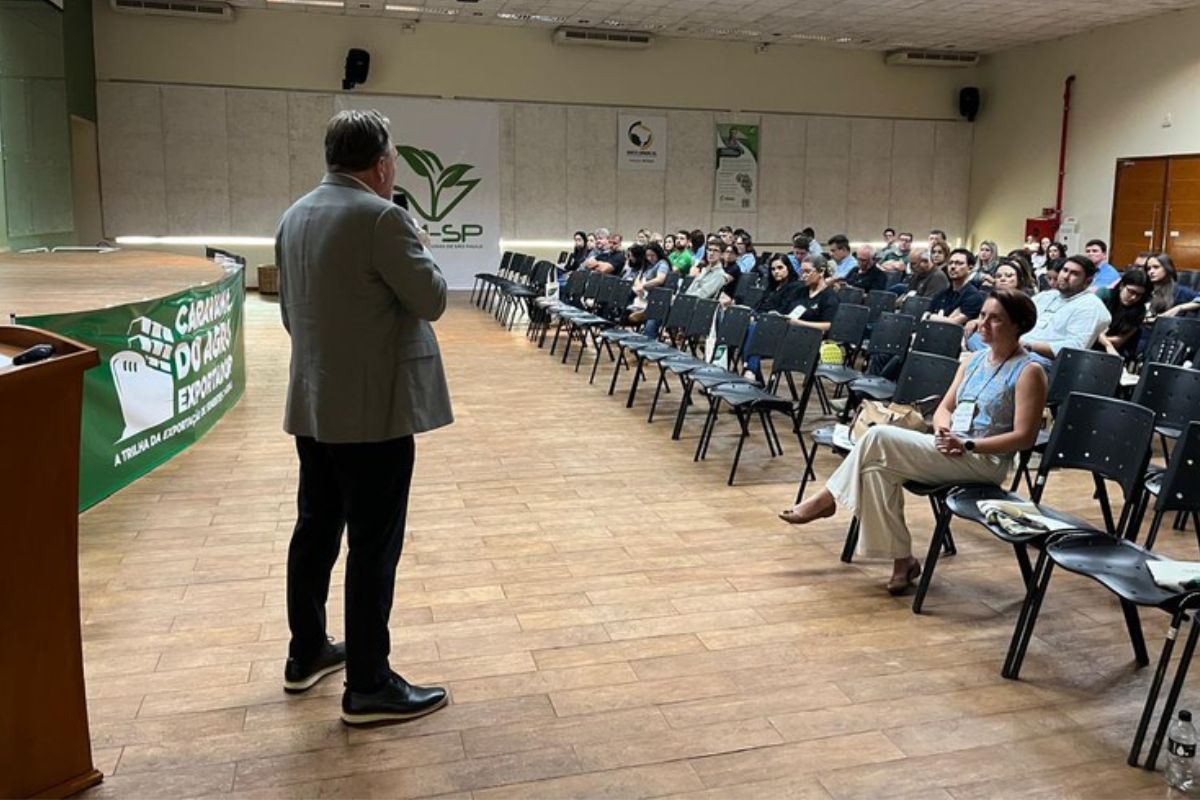

African Interest in Brazilian Seeds Grows After Agro Exporter Caravan in Ribeirão Preto, Highlighting Sustainable Opportunities and Programs from the Ministry of Agriculture
Brazilian seeds are increasingly gaining prominence in the international arena, especially among African countries interested in expanding their agricultural boundaries, according to a report published.
On the last day of October 29, Ribeirão Preto (SP) hosted the Agro Exporter Caravan, an initiative from the Ministry of Agriculture and Livestock (MAPA) aimed at rural producers, technicians, and entrepreneurs who wish to enter the external market.
About 100 participants attended lectures and discussions covering everything from export opportunities to regulations and financing.
-
El Niño may boost corn and soybean harvests in Brazil and Argentina, offering potential relief for global food prices.

-
Japanese Wagyu Gains International Fame for Its Intense Marbling, Tender Cuts, and High Prices in Brazil
-
Brazilian Farmers with Basic Education Create Backyard Machines That Win National Invention Contest, Beating 242 Projects

-
Brazilian Farm Innovates with Cage-Free Chickens, Producing 3,300 Odorless Eggs Daily


The event revealed a strong interest from the African continent in acquiring Brazilian propagation material, reinforcing the strategic role of the country in providing technology and agricultural innovation.
Agricultural Exchange and Brazilian Seeds: New Opportunities with Angola
During the meeting, Brazil’s agricultural attaché in Angola, José Guilherme Leal, highlighted the similarities between part of Angola’s territory and the Brazilian Cerrado.
According to him, this climatic affinity facilitates the use of Brazilian seeds for agricultural development in Africa.
Angola and other countries on the continent demonstrate a growing demand for varieties adapted to tropical soils and sustainable cultivation systems.
This connection opens up space for technical and commercial exchange that can generate jobs, expand exports, and solidify Brazilian agribusiness as a reference in productivity and seed quality.
The superintendent of MAPA in São Paulo, Estanislau Steck, emphasized the importance of the caravan in bringing rural producers closer to international opportunities.
He noted that technical clarifications regarding certifications and sanitary requirements make the export process more accessible and transparent.
Financing, Training, and Brazilian Seeds in the Global Market
The Caravan’s schedule included lectures on PROEX (Federal Government Export Financing Program), presented by Banco do Brasil, and PEIEX (Export Qualification Program from APEX Brazil), in partnership with SEBRAE.
These programs were pointed out as essential tools for boosting the presence of Brazilian seeds abroad.
Representatives from the Department of Commerce and International Relations of MAPA, such as Fabiana Maldonado, explained that the goal is to strengthen the export culture in agricultural regions.
The event also featured technicians from the General Coordination of Seeds and Seedlings and the International Agricultural Surveillance System (Vigiagro), linked to the Agricultural Defense Secretariat (SDA).
They addressed safe transport practices, certification, and phytosanitary control, crucial elements for ensuring the quality of products sent abroad.
With over 25 editions held by 2025, the Agro Exporter Caravan has become a strategic channel for connecting Brazilian producers to emerging markets.
The success of the event in Ribeirão Preto reinforced that the internationalization of agribusiness depends on both training and institutional support.
Sustainability, Innovation, and Brazilian Seeds in African Agricultural Expansion
On the second day of the program, which took place on October 30, the São Paulo Seed and Seedlings Commission (CSM-SP) held a workshop dedicated to sharing experiences between the public sector and private initiative.
The meeting discussed topics such as traceability, sustainability, and technological innovation in the use of Brazilian seeds.
Experts emphasized that adopting sustainable practices is one of the main differentiators of Brazilian products in the international market.
In addition to ensuring productivity, the Brazilian seed production model contributes to environmental preservation and rural development.
For African countries, these solutions represent a concrete opportunity to strengthen their agriculture and reduce external dependencies on inputs.
The Agro Exporter Caravan in Ribeirão Preto demonstrated that technical cooperation between Brazil and Africa is just beginning.
By uniting scientific knowledge, institutional structure, and incentive programs, the country positions itself as one of the main partners of the continent in the search for food security and sustainable growth.
With this, Brazilian seeds reaffirm their strategic role as vectors of economic and social development on a global scale.


