






 Portuguese
  Spanish


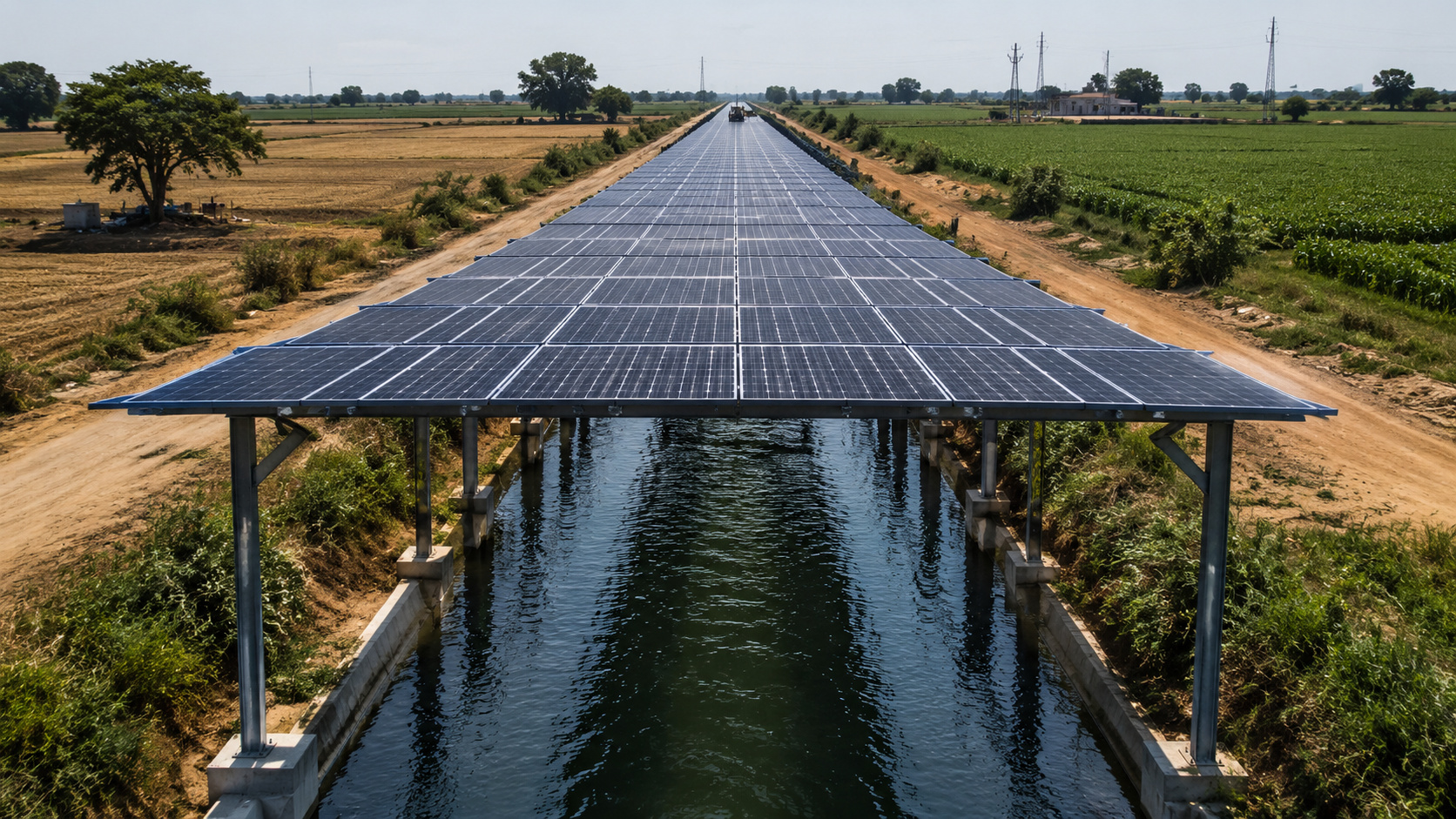


The Gujarat experience shows how solar panels on irrigation canals can generate solar energy, reduce water evaporation, preserve agricultural areas, and transform a common rural structure into a dual-use solution for regions that need to deal with heat, scarce water, and demand for clean electricity
India has placed solar panels over irrigation canals to generate electricity and, at the same time, create shade over the water. The idea transforms a common agricultural structure into a kind of clean power plant installed directly over the irrigation path.
The project gained prominence in Gujarat, an Indian state that pioneered this model. The proposal draws attention because it combines solar energy, reduced water evaporation, and more intelligent land use, without occupying large areas that could remain linked to agriculture.
The investigation was published by Mongabay India, a journalistic website on environment and development. The case shows a solution with strong environmental appeal, but also with cost and maintenance challenges.
-
Mother discovers she may have won £12 million in the lottery but faces an agonizing wait after the shopkeeper threw the ticket in the trash.

-
A couple bought a house in Sheffield and, when removing the carpet from the hallway, found a trapdoor leading to a secret 23 m² basement with a 2-meter ceiling height, a discovery that eliminated the need for an expensive extension and, according to them, added £70,000 to the property’s value.

-
A nurse bought for 20,000 a 1955 house abandoned by a hoarder in Texas, and months later, rain revealed a buried pool in the backyard valued at $160,000, which he restored himself for about $10,000, a fraction of the cost of building a new one.
-
The United Kingdom is transforming dog feces left on trails into gas to light a streetlamp through an unlikely and surprising project that shows how even one of the most rejected wastes in cities can generate energy.




Irrigation canals become a base for solar energy and cease to be just a water passage
Irrigation canals exist to carry water to agricultural areas. With the installation of solar panels over these canals, the same structure gains a second function: producing electricity.
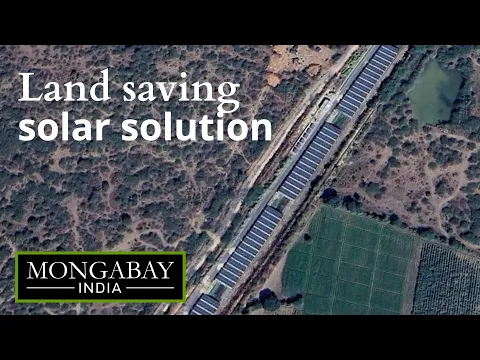

This change seems simple, but it has a big impact. The area over the water, which was previously empty, is now used to generate clean energy.
Furthermore, the panels cast shade over the canal. With less direct sun on the water, the solution helps reduce water evaporation, an important problem in hot regions.
The result is a dual-use structure. The canal continues to carry water for irrigation and, at the same time, becomes a support for solar energy production.
Gujarat shows why the idea attracts attention in agricultural regions
Gujarat became a reference because it pioneered this type of installation. The Indian state showed that existing canals can be used as a base for solar panels on irrigation canals.
The main advantage lies in land use. Common solar farms require large open areas, which can lead to competition for space in agricultural regions.
In solar canals, this competition decreases. Energy is now generated on a structure that is already part of the irrigation system.
Therefore, the model is of interest to regions that need to balance agricultural production, water conservation, and solar energy generation. The solution does not eliminate problems, but it opens up a smart alternative for places with pressure on land and water.
The solar power plant that also functions as shade for water
The most curious point of the project is the visual aspect and function of the structure. The panels form a cover over the canal, like a roof that produces energy.
In practice, it is a solar power plant suspended over the water. While capturing sunlight, the structure reduces the direct incidence of heat on the canal.
This combination explains the interest in the model. The same work delivers electricity and helps protect part of the water used for irrigation.
The logic is direct: the sun that could accelerate evaporation is also used to generate energy. The water is better protected, and the infrastructure gains an extra function.
The solution avoids occupying farmlands, but requires more care in operation
The great strength of solar canals lies in avoiding the use of new land areas. This matters because the expansion of solar energy can compete with other land uses.
In agricultural areas, every space has value. Installing solar energy over canals allows for the utilization of a strip already occupied by irrigation infrastructure.
Even so, the solution is neither automatic nor simple. Installation over canals can be more complex than in common solar farms.
Maintenance also requires attention. Access to the panels can be more difficult, and the structure needs to coexist with the operation of the irrigation canal.
Mongabay India points out that progress has been slower than that of common solar parks
Mongabay India, a journalistic website on environment and development, detailed the central points of the topic. The expansion of solar canals in India has been slower than that of conventional solar parks.
The reason involves economic and operational challenges. Although the solution has environmental benefits, it can cost more and be more difficult to maintain.
This point helps to understand why an idea considered ingenious doesn’t spread as quickly. The technology needs to be good for the environment, but it also needs to fit the budget and function well in daily life.
The comparison with common solar parks is important. They can be simpler to install, even if they occupy more land. Solar canals, on the other hand, save space but require a more careful structure.
Clean energy over scarce water puts a brilliant idea before economic reality
The installation of solar panels over irrigation canals shows a creative way to better use agricultural infrastructure. The canal ceases to have only one function and also helps in electricity production.
The real impact appears in four points: energy, water, land, and agricultural planning. The proposal addresses problems affecting hot regions and areas dependent on irrigation.
At the same time, the case shows that innovation needs to overcome economic reality. A beautiful and efficient solution on paper can face barriers when it involves cost, maintenance, and operation.
Still, Gujarat highlighted an important question for the future of solar energy: where to install panels without further pressuring land use?
India showed that irrigation canals can become clean power plants without ceasing to bring water to the fields. The idea combines solar energy and protection against evaporation but depends on viable cost to scale.
Do you think covering canals with solar panels would be a smart solution for agricultural regions in Brazil, or would the cost still outweigh the benefits? Don’t forget to leave your comment.






This has been done in Gujarat almost 15 years back and news is old. But worth revisiting!
Excellent idea that the canal system utilised for solar panels for generation of electricity therby this system can be called multipurpose CanSol (Canal &Solar) Project. Congratulations for innovation and minimum utilisation of land for solar panels. I support this CanSol Project to expand to entire India.