Portuguese
  Spanish


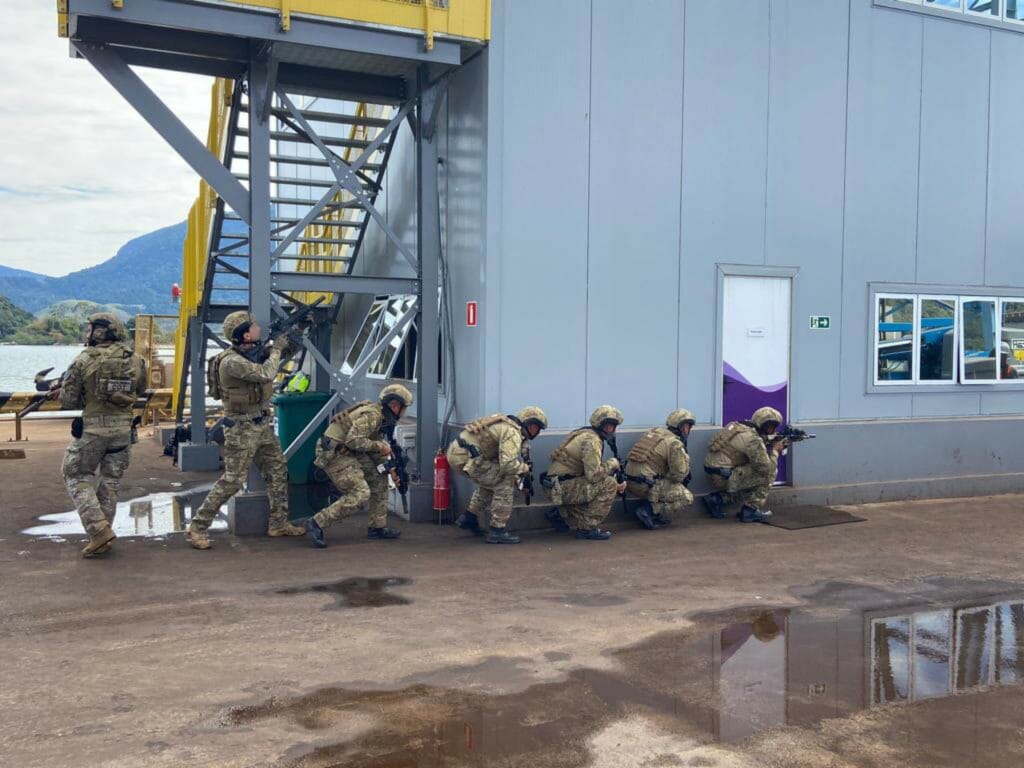

Partnership with Conportos and Federal Police Tests and Improves Port Security Protocols
The Porto Sudeste, a renowned name in the port industry, joined forces with the National Commission on Public Security in Ports, Terminals, and Navigable Ways (Conportos) and the Federal Police on July 26, Wednesday. This partnership served to conduct a Simulated Exercise of Illicit Ship Seizure (ESAIN), thus assessing the efficiency of the Port Security Plan in a fictional scenario of an invasion of the terminal.
The exercise was also supported by the Special Maritime Police Nucleus of the Federal Police Regional Superintendency in the State of Rio de Janeiro. With the mission of ensuring prevention and combating illicit acts in ports, terminals, and navigable ways, the event aimed to strengthen collaboration between public and private entities.
The Importance of Regular Testing and Cooperation
Marcelo João, a Federal Police delegate and leader of the exercise, emphasized the relevance of the activity, stating: “Maritime security is a responsibility of the Federal Police, and the intention of this simulation is to establish a routine of exercises in the main ports of the country. This will equip us with the necessary leadership for a quick and efficient response. As port facilities are complex and involve many actors, it is crucial that we understand the side of the private initiative and that they are aware of our capabilities and challenges.”
-
Brazilian Port Expands Ship Capacity to 9.5 Meters, Boosting Cargo Transport and Reducing Logistics Costs

-
New Smart Radar Begins Issuing Fines to Solo Drivers in Carpool Lanes, Uses Cameras to Count Occupants, Changing Traffic Enforcement Rules on Busy European Roads

-
Why can the crane operator only obey the correct signalman on the construction site: among dozens of workers, a hand raised by the wrong person can confuse the maneuver and turn a load of tons into an immediate risk.
-
What changes with the new public transportation rules that can reduce pressure on fares and pave the way for zero fare in Brazil?




During the event, federal officers simulated an invasion of the terminal in a hostage scenario. The exercise served to evaluate the effectiveness of the security protocols in place, as well as to understand the impacts of maritime elements on security, defense, economy, and environment.
Technology as an Ally in Port Security
The monitoring system of Porto Sudeste was in full operation throughout the event. Marcelo João emphasized the importance of technology, stating that it played a significant role in the exercise.
Alex Gatto, Security Manager of Porto Sudeste, expressed that the simulation was essential to test the effectiveness of the Port Security Plan. He mentioned: “This exercise was a great opportunity to put our contingency protocols into practice. We continuously invest in new technologies and the training of our professionals, and I believe this was evident in today’s simulation.”
Porto Sudeste is a member of a select global group of ports that meet the International Maritime Organization (IMO) security requirements. The International Code for the Security of Ships and Port Facilities (ISPS Code) is a crucial protocol that guides the assessment of threats and defines appropriate protective actions for ships and port facilities.
The Conportos and the State Commissions of Public Security in Ports (Cesportos), coordinated by the Federal Police, are essential in building adequate security protocols for Brazilian port complexes, in addition to complying with the ISPS Code. This code requires continuous and effective cooperation between the public and private sectors involved in the maritime and port environment, to detect threats to protection and take preventive measures against incidents affecting ships or port facilities.