





 Portuguese
  English
  Spanish
  3 min of reading
  0 comments


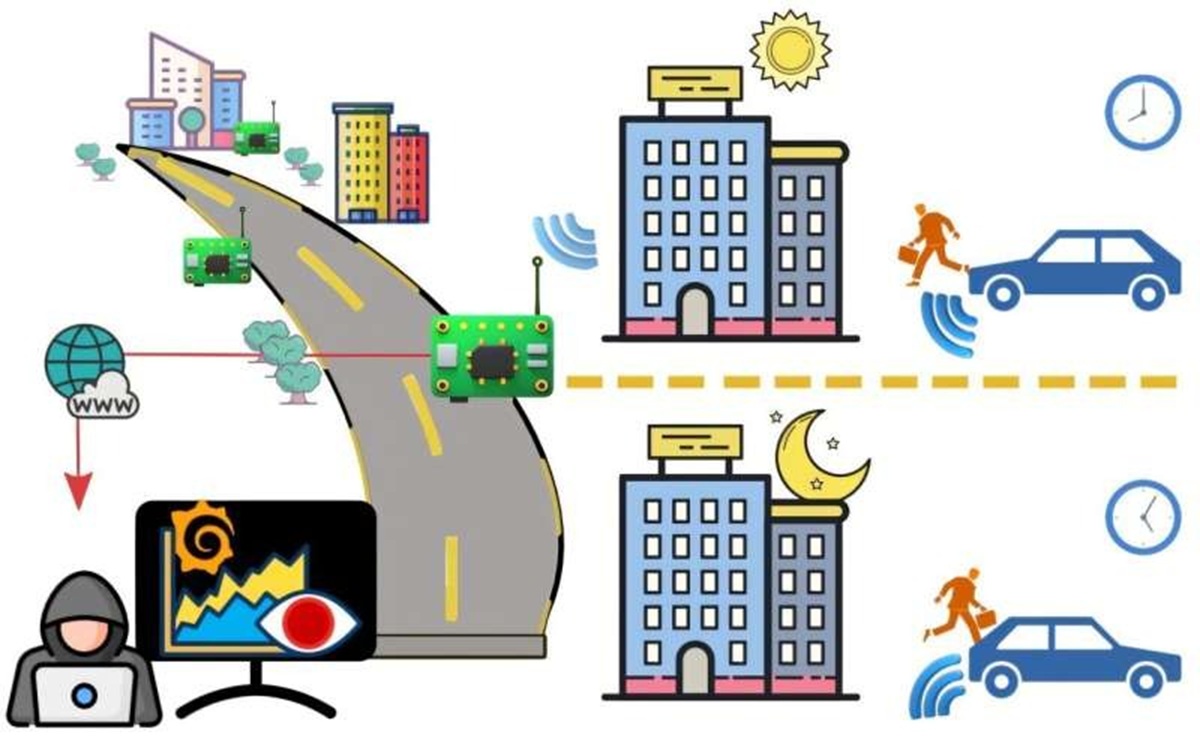
Study Conducted by IMDEA Networks Institute Over Ten Weeks Analyzed More Than Six Million Signals Emitted by Sensors Installed in More Than 20,000 Vehicles and Identified That the Tire Sensors Can Transmit Unique Identifiers Capable of Allowing Silent and Repeated Tracking of Vehicles
A study conducted by IMDEA Networks Institute revealed that tire sensors installed in modern vehicles can allow the unintentional tracking of drivers, after collecting wireless signals from more than 20,000 cars over ten weeks in real-world environments.
Researchers identified that tire sensors, present in pressure monitoring systems, transmit continuous signals capable of exposing movement patterns of vehicles without the drivers being aware of the process.
Tire Sensors Transmit Unique Identifiers Without Encryption
Most modern vehicles use the Tire Pressure Monitoring System, known as TPMS, adopted in various countries since the late 2000s due to its focus on road safety.
-
800-year-old skeletons found embracing have their impressive story revealed after DNA results

-
Christmas trees thrown away become a natural barrier in Alabama, where teams repurpose thousands of pines on the beaches of Gulf Shores to trap sand, rebuild dunes, and protect houses against storms and hurricanes for almost four decades.

-
Cane fences become a natural wall in Catalonia, where researchers and residents use sand traps on the beaches to capture sediments, rebuild dunes, and protect cities after Sant Pere Pescador lost 50 meters of coastline in 50 years.
-
Archaeologists open a 2,300-year-old tomb near the Great Wall of Qin and find a bronze bottle with preserved ancient beer.





The system operates through small sensors installed in each wheel, responsible for continuously measuring pressure and sending wireless signals to the vehicle’s computer whenever there is insufficient pressure.
The study identified that these sensors also transmit a unique identification number in clear, unencrypted signals. This identifier can be picked up by any simple radio receiver located nearby.
Unlike camera-based systems, which rely on direct visibility, signals emitted by the sensors penetrate walls and vehicles, allowing detection without the need for visual contact with the automobile.
Low-Cost Network Successfully Registered Millions of Tire Sensor Signals
To assess the scope of the risk, researchers installed a network of low-cost radio receivers near roads and parking lots.
Each receiver used costs approximately US$ 100. Throughout the experiment, more than six million messages from the tire sensors of over 20,000 different vehicles were collected.
According to Domenico Giustiniano, research professor at the IMDEA Networks Institute, the results demonstrated that the signals could be used to track vehicles and identify movement patterns.
The analysis showed that a discreet network of wireless receivers could silently monitor mobility routines in real-world environments, including frequent arrival times and recurring routes.
Study Shows Tracking Possible Even Without License Plate Reading
Researchers developed methods capable of separately identifying signals emitted by the four tires of the same vehicle.
This procedure increased accuracy in identifying specific cars, allowing recognition of when a vehicle arrives, stays, or regularly returns to certain locations.
Tests indicated that signals can be captured from distances greater than 50 meters, even when vehicles are in motion or parked inside buildings.
Besides the unique identifier, TPMS signals include tire pressure data, which can indicate vehicle characteristics or reveal situations such as carrying heavier loads.
Tire Sensors Increase Risks of Passive Surveillance in Connected Vehicles
According to researcher Alessio Scalingi, data considered passive can become relevant identifiers when collected on a large scale, especially in light of increasing vehicle connectivity.
The study points out that sensors originally designed for safety can generate new forms of surveillance when they do not incorporate appropriate digital protection mechanisms.
Researchers emphasize that current automotive cybersecurity standards still do not specifically address the protection of TPMS systems.
According to Yago Lizarribar, the system was developed with exclusive focus on the operational safety of vehicles, without considering privacy-related risks.
Researchers Advocate Update of Vehicle Safety Standards
The team responsible for the study warns that, without encryption or authentication mechanisms, the sensors remain vulnerable to passive data capture.
Researchers advocate that manufacturers and regulatory bodies adopt more robust security measures in future vehicle sensor systems.
The goal is to prevent automotive safety technologies from being used as tools for population monitoring.
The study titled “You Can’t Hide Your Footprint: Inferring Movement Patterns of Cars from Passive TPMS Measurements” was accepted for publication at IEEE WONS 2026.







Be the first to react!