






 Portuguese
  Spanish
  3 min of reading
  1 comment


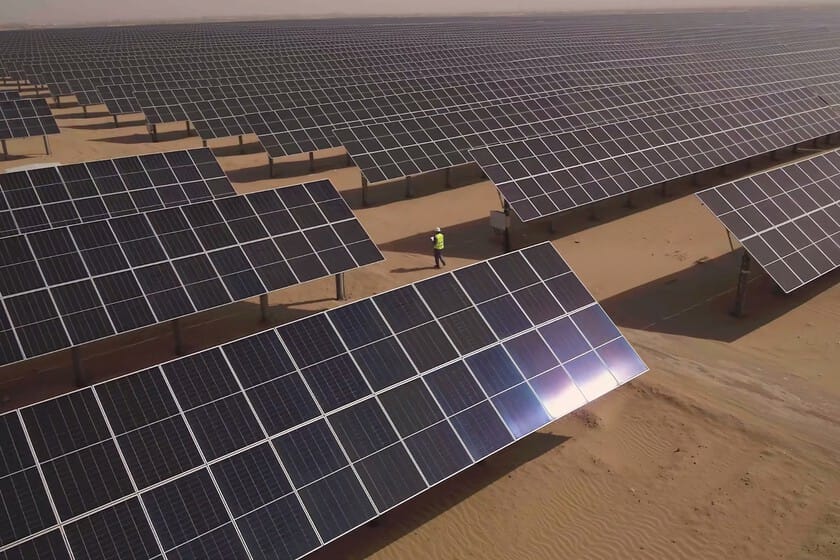

The Solar Energy Revolution: Seven Chinese Companies Are Challenging Oil Giants. See How Solar Energy Is Changing the Global Energy Landscape
As the International Energy Agency predicts the decline of the oil industry, analysts are naming the new giants of the sector. Solar energy companies that you may not be familiar with.
The Seven New Leaders of the Energy Sector
Tongwei, GCL Technology, Xinte Energy, Longi Green Energy, Trina Solar, JA Solar, and Jinko Solar. These are the seven companies in the Chinese photovoltaic industry that have grown to the point of becoming a threat to oil companies.
Not only in terms of sustainability in the face of the energy transition, as one would expect from companies controlling the supply of renewable technologies, but also in terms of solar energy production, which is incredibly counterintuitive.
-
Helicopter Drops 180 Tons of Sand and Gravel on Swedish River to Revive Ecosystem Damaged by Decades of Exploitation

-
Brazilian Company Launches Retro Smartphone with 48 MP Camera, T9 Keyboard, and Privacy Features for Social Media-Free Use

-
Self-Taught Chinese Farmer Builds 5-Ton Submarine from Scrap, Launches It in Anhui River
-
Invisible Induction Technology Enables Wireless Power for Blenders, Coffee Makers, and Air Fryers, Reducing Countertop Cables





How can seven virtually unknown Chinese solar companies eclipse ExxonMobil, Chevron, Shell, BP, TotalEnergies, ConocoPhillips, and Eni, the seven oil giants that have led the energy sector since the 20th century?
The Inefficiency of a Barrel of Oil
Oil is available everywhere, but it is terribly inefficient. Not only is it a finite resource, but only 25% of the energy contained in a barrel is harnessed as useful energy: the rest is wasted as heat and noise; as is the case with gas turbines, which reach a maximum efficiency of 33%.
To extrapolate the data and compare it with the photovoltaic industry, a recent Bloomberg analysis converted the number of barrels produced per year into exajoules. One exajoule is a lot of energy: it can power Australia, Italy, or Taiwan for a year.
The American company ExxonMobil is the largest oil company in the world. It produces approximately 8.3 EJ of energy annually, but only one-fifth is harnessed: around 2 EJ per year. In absolute terms, this is 150% more than the largest photovoltaic company in the world, Tongwei, produces annually.
The Leap of the Chinese Solar Energy Industry
So, where is the leap? In a crucial factor: all the oil and gas sold in a year are consumed within a matter of months, but solar panels generate energy for decades, with a typical warranty of 25 years.
By multiplying the capacity of the Chinese solar industry by the lifespan of its photovoltaic cells, the seven major companies leading the sector exceed in useful energy production all the geological reserves developed by oil companies, even considering a degradation of 1% per year for solar panels.
Tongwei produces nearly 30 EJ of useful energy in 25 years; followed by GCL Poly, with 20. Both dominate global polysilicon production, generating enough capacity to power a country like Italy for a year. And most surprisingly, they plan to double their production in the coming years.
An Additional Factor: We Are Talking About Clean Solar Energy
While it generates strong geopolitical tensions due to shifting control of energy, the rise of Chinese solar giants is a clear sign that the future of the energy industry lies in our most infinite resource: the sun.
The era of oil, with all its inefficiencies and environmental problems, is being replaced by an era of clean and sustainable solar energy. And the country that controls the supply has already begun to surpass the giants of the 20th century.
Image | Tongwei





Por isso as megacorporações petrolíferas do EUA quer tanto destruir a China e os emergentes.