Portuguese
  Spanish


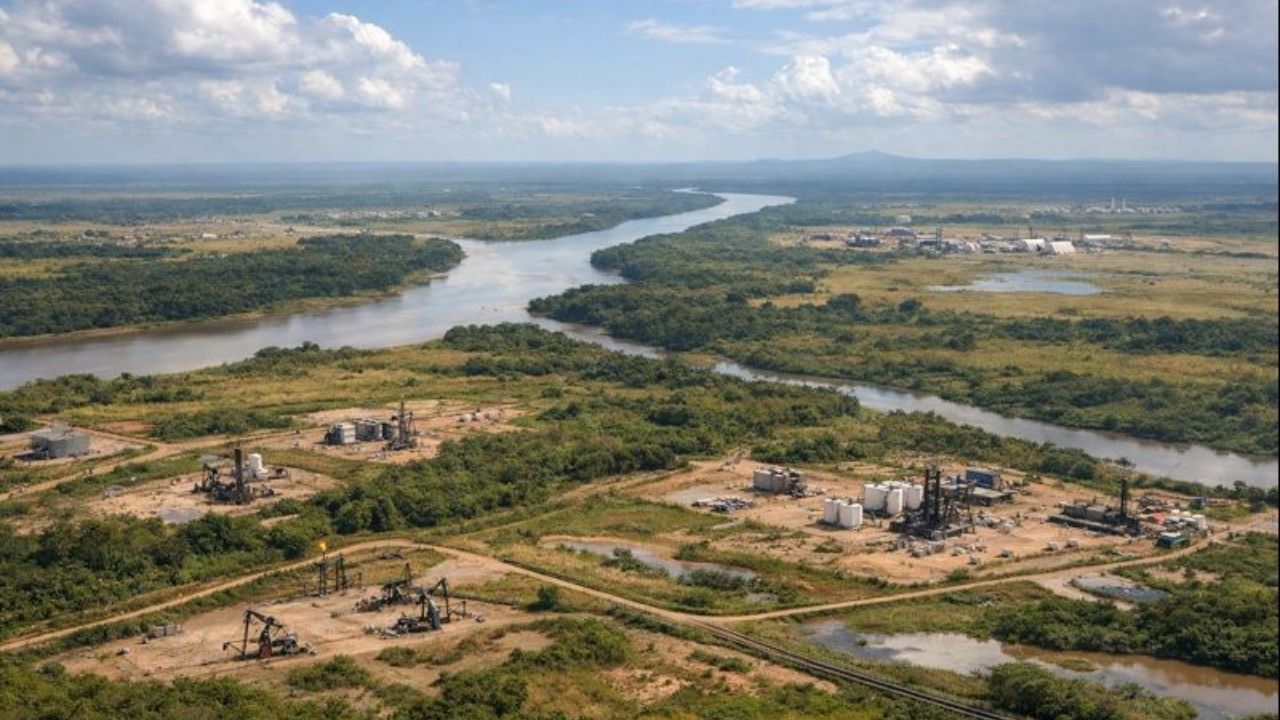

Few Countries Have As Much Oil As Venezuela. The Explanation Lies in Tectonic Plates and Subsurface Formation.
Venezuela returned to the center of international news in early 2026 for two interconnected reasons: the capture of President Nicolás Maduro by U.S. troops and the statements from former President Donald Trump regarding the potential of Venezuelan oil.
The episode reignited the debate on why the country holds the largest oil reserves on the planet, how they formed, and why not all of this volume is easily exploitable.
According to data released by the government itself, Venezuela declares about 300 billion barrels of oil in proven reserves, a number that represents almost one-fifth of all known oil in the world.
-
Real Estate Agent Buys Marvel Movie Subway Car for $5,000 and Converts It into Themed Airbnb
-
Real Estate Agent Buys Marvel Movie Subway Car for $5,000 and Converts It into Themed Airbnb
-
Former Roma and Fiorentina Player Filipe Gomes Returns to Brazil to Found Empório do Galeto, Aiming for $10 Million Revenue by 2026
-
Canada Builds 6.2-Hectare Containment Box to Trap 615,000 Cubic Meters of Toxic Sediment in Lake Ontario


However, experts warn that this figure may be inflated, as the concept of proven reserve requires not only the physical existence of oil but also the technical and economic viability of extraction with a 90% probability.

Even so, despite the questioning, there is no doubt that Venezuela is an oil powerhouse.
The explanation lies less in politics and more in geology, involving millions of years of interaction between tectonic plates, relief, climate, and geological time.
What Are Proven Oil Reserves?
Before understanding why Venezuela has so much oil, it is essential to differentiate geological potential from actual production.
A proven reserve is one that can be extracted in an economically viable manner with the technology available.
In the Venezuelan case, a large portion of the oil is concentrated in the Orinoco Oil Belt. This is heavy and extra-heavy oil, with high sulfur content, which makes extraction and refining more expensive.
Therefore, although the volume is gigantic, effective production faces technical and financial limitations.
The Geography That Favored Venezuelan Oil
Geologically, the territory of Venezuela is divided into two large regions, separated by the Andes mountain range, which runs through the western part of the country.

This configuration, which combines high mountain ranges with extensive flat sedimentary basins, is essential for the formation of large oil fields.
These basins acted, over millions of years, as true natural reservoirs where sediments rich in organic matter accumulated, were buried, and transformed into hydrocarbons.
The Decisive Role of Tectonic Plates
Venezuela is located in a zone of complex interaction between the South American plate, the Caribbean plate, and the Nazca plate.

This constant clash of tectonic plates created deep basins, geological faults, and folds capable of trapping oil underground.
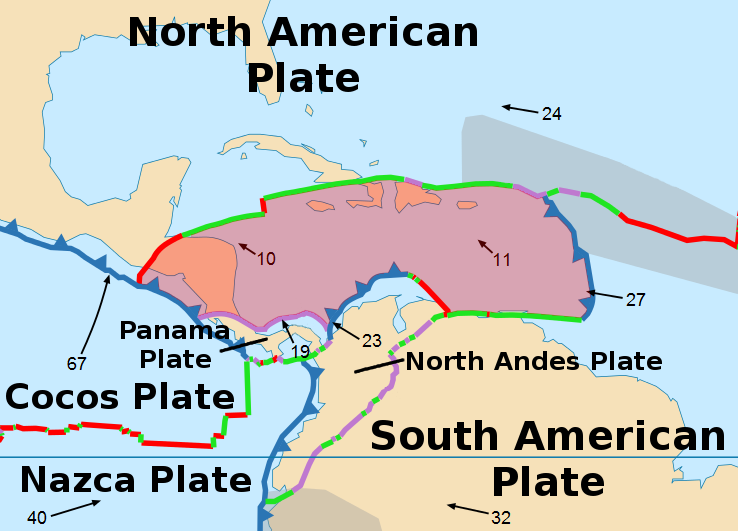
“The tectonic plates push against each other. The edge of the South American plate is being swallowed under the Caribbean plate, like a snowplow piling up rock with literally kilometers of thickness,” explains geologist Philip Prince, professor at Virginia Tech, in an interview with BBC News Mundo.
This process buries the so-called source rock deeply, allowing oil formation.
Over time, the oil migrates through natural faults until it finds geological traps, where it accumulates in large volumes.
Why Is Orinoco Oil So Abundant?
The Orinoco Oil Belt is considered the largest continuous accumulation of hydrocarbons in the world.
Simplistically, it serves as the final destination of oil generated in deep areas of the basin, which migrated over millions of years until it concentrated in this region.
“The vast reserves of the country may be better explained when it is recognized that the current basins are remnants of much larger sedimentary areas,” wrote geologist K. H. James in an article published in the Journal of Petroleum Geology.
The Initial Ingredients of Venezuelan Oil
The origin of Venezuelan oil dates back hundreds of millions of years when aquatic environments rich in algae and phytoplankton covered the region.
This organic material was buried by sediments, subjected to high pressures, and chemically transformed into oil.
“Beneath the Venezuelan subsoil lies a thick sequence of sedimentary rocks rich in organic matter. These small organisms are practically the initial ingredients of oil,” explains Prince.
Additionally, the presence of high-quality Cretaceous source rocks combined with efficient sandstones as reservoir rocks created almost perfect conditions for the formation and preservation of gigantic oil reserves.
An Energy Giant with Challenges
Therefore, Venezuela possesses so much oil not by coincidence, but due to a rare geological combination on the planet.
The interaction between tectonic plates, deep sedimentary basins, and abundant organic matter explains why the country concentrates such significant volumes of oil.
On the other hand, the heavy nature of Venezuelan oil imposes technical and economic challenges, making the difference between declared reserves and actual production a central theme in the global energy debate.